Does Education Matter in the Age of AI? MIT President Sally Kornbluth
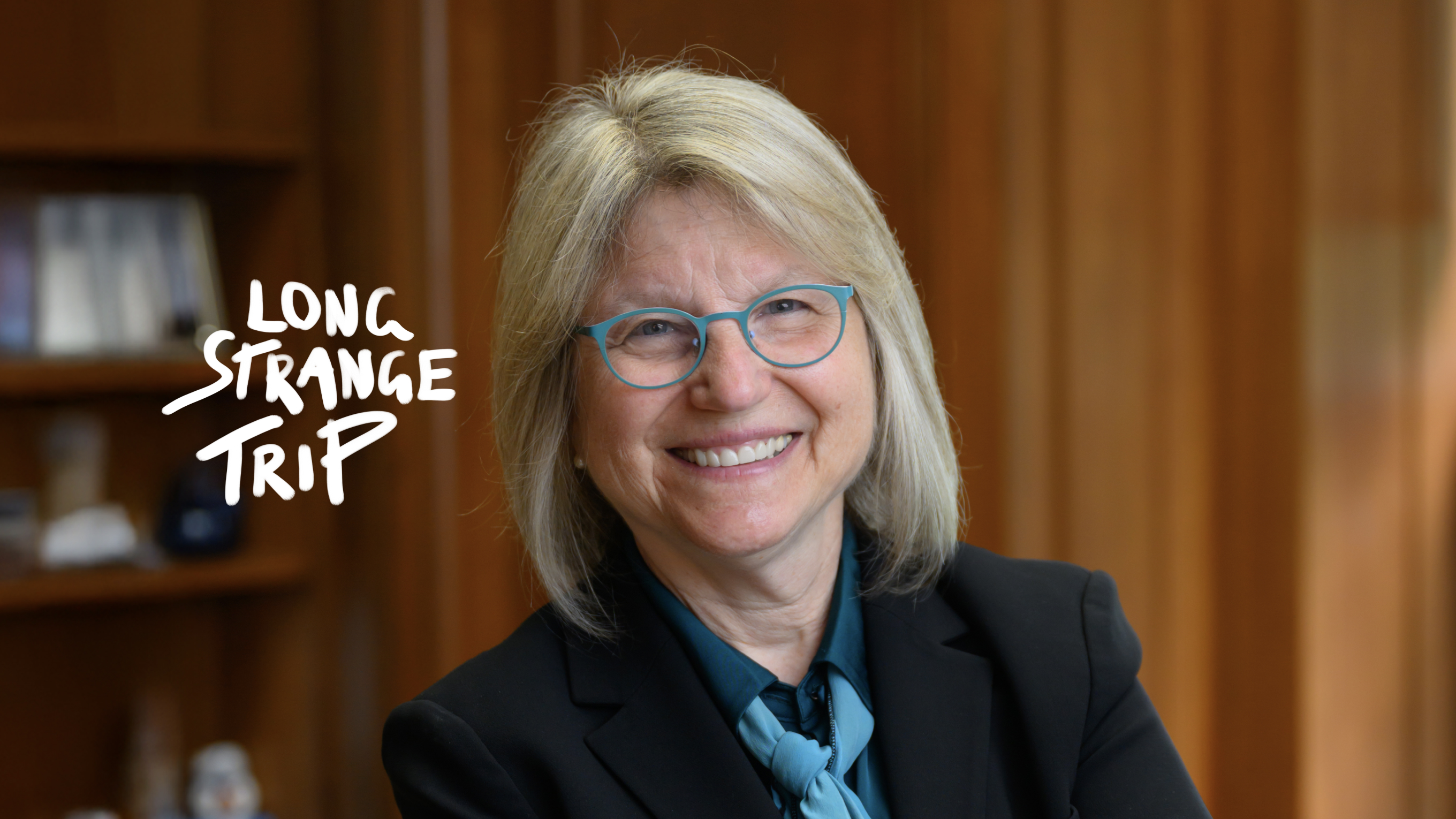
Sally Kornbluth is president of MIT and one of the best crisis leaders I’ve come across. Within a year of starting the job, she got summoned to testify before Congress alongside the presidents of Harvard and UPenn. You know how that went. The others didn’t make it. Sally did, and she came out stronger. Sally has a line I can’t shake: if you take a lick of the lollipop of mediocrity, you suck forever. We get into how you actually hold the bar as you scale, why most founders drop it without realizing it, and what to do once you’ve dropped it.
Watch Now
Transcript
Introduction
Sally Kornbluth: What I learned was that you want things from the people who are working, particularly when you’re starting a lab, their experiments have to work because you’re not doing the experiments every day. And so you have to think about ways to motivate them. And sometimes it feels a little bit Machiavellian, but what it really is about is thinking what can you give them that they need so that you get what you need from it? There really is a huge amount of individuality in terms of what makes people do good work. And I think really getting to know the people individually becomes extremely important.
Brian Halligan: Hey everybody, we have Sally Kornbluth on the pod today. She’s president of MIT and a real gem. She’s had a really interesting journey. Within a year of being hired as president of MIT, she was summoned to Congress and spoke alongside the president of Harvard and UPenn about all manner of things. And you’ll probably all remember Elise Stefanik really asking her some tough questions, and all three presidents not really nailing that. So we get into that and her response to it, and I think her response was excellent. Neither the Harvard president nor the UPenn president made it through that crisis. She not only survived, but she thrived in it.
She also is having more recent run-ins with the Compact for Excellence in Higher Education that the federal government gave her, which was pretty interesting. And her reaction to that I thought was really interesting and showed terrific leadership. It was only 11 or 12 institutions that got it, and I thought MIT shined on that.
She is good in a crisis and talks a bunch about that. Sally and I talked a lot about what I refer to as “sustaining meritocracy.” She’s got a giant organization, and in over 150 years they are synonymous with excellence and synonymous with meritocracy. And the natural state of things is you kind of regress to the mean, and most companies do that. So we talk about how they keep the standards high and how they sustain it over long periods of time. I think it’s super applicable to scaling CEOs.
She’s got a great quote in there that’s stuck in my head: if you take a lick of the lollipop of mediocrity, you suck forever. I think she hits the nail on the head on that one. And then she gets into just some blocking and tackling of how to be a CEO of a large organization, some things that I needed a reminder on, and hopefully they’re useful to you. And lastly, we talked a bunch about how to manage, how to hire a board and how to manage a board and how to get the most out of a board. I hope you like it. She’s a gem.
Main Conversation
Brian Halligan: My nephew Jack is applying to business schools. He’s a wonderful kid, and I really want him to go to Sloan. I went to Sloan, I teach at Sloan. And I’ve worked hard to influence the process. I went through the front door, I went through the back door, I went through the basement and the attic. Every door I go to, they’re like, “We don’t care who you are, you’re not gonna influence the process.”
Sally Kornbluth: A hundred percent.
Brian Halligan: I love that. I love that we were the first place to bring back SATs and ACTs after COVID. I love that we’re needs-blind. Can you talk about that? And, like, it’s easy for companies to be meritocracies like we are. It’s hard to scale it. How do you scale that?
Sally Kornbluth: Well, you know, first of all I should say I had the same experience when I got here, because someone said, “Oh, can you speak to someone about getting my kid into MIT?” And I was like, “Well, I could just tell them to take a closer look.” No.
Brian Halligan: No.
Sally Kornbluth: I cannot. I was new here. They were like, “We do not do that at MIT. We just don’t.”
Brian Halligan: I love that.
Sally Kornbluth: So it is pure merit. You know, it’s interesting. I think the way to scale meritocracy, if you want to extrapolate, is how do you scale excellence? And the thing is that when you start a company or when you start a new team, a new job, you’re probably the best person out there at it, right? And there’s a temptation to just hire people. And honestly, bringing in just people? It’s better to have nobody. The way you maintain meritocracy and excellence is to make sure that each person you bring in—and for us this means all of our faculty, all of our staff, all of our students—we have to consistently focus on excellence. There was a colleague of mine at Duke who had a sign in his office that said, “If you take a lick of the lollipop of mediocrity, you will suck forever.”
Brian Halligan: That’s pretty good.
Sally Kornbluth: And I always liked that. And so we really pay attention that each hire is excellent, so that when people collaborate across MIT, they know it’s not just them that are going to do good work. They know that the people next door are also going to do good work. Or the people down the hall.
So I think that is a very big part of it—just having a mindset that consistency is really important. And to your point about going from one door to another door to another door, it has to be a consistent message across the whole institution, because if one of those doors had been open, then you could bet people would have flooded through that door.
Brian Halligan: I definitely would have gotten through if there was a door open.
Sally Kornbluth: Exactly. Exactly.
Brian Halligan: He did get in. Obviously, I had nothing to do with it.
Sally Kornbluth: Excellent.
Brian Halligan: And I feel bad for him because everyone assumes I got him in. I had nothing to do with it.
Sally Kornbluth: Well, the other thing is that merit can be defined in a number of different ways. I think people think that sure, you’ve got to get high grades to get into MIT. You’ve got to have great test scores to get into MIT. But there are so many dimensions. And I would define it in this way: we want to bring in people who can benefit from the fantastic environment we have and who will contribute to that fantastic environment. And there can be a lot of dimensions on which this is true. They’re not all completely quantifiable. A lot of them come through in the intangible.
Brian Halligan: Is it cultural or is it written down?
Sally Kornbluth: It’s not exactly written down because it’s a little bit like if you know it, you see it. And that obviously could be subject to a lot of objectivity. So I don’t mean that it’s not written down in the sense that we don’t have certain criteria in mind. I just mean there’s some flexibility to it to take into account a wide variety of what you or I might call excellent, fantastic people.
Brian Halligan: Got it. Okay, I coach all these CEOs. They’re terrific. And something happens around 150 employees where the founder no longer interviews everyone, and the bar drops a little bit. And they wake up at 500 employees and they’re like, “What the hell happened to my company?” You’re that CEO, you drop the bar, and then you’re trying to pick it up at 500. What would you do? What advice would you give that CEO?
Sally Kornbluth: Well, I would say this. First of all—again, coming to the fact that in your head or in reality, you may be the best person; you’ve held up that standard. It is a lot easier to stop that slide than to recover from it, as you say. So the most important thing when someone’s starting is to build a strong team to whom they can delegate and who they can trust.
In other words, there’s a little bit sometimes of trust-but-verify at the beginning—you want to see if someone’s really good. But after that, micromanagement is really problematic. And it’s easy to criticize, but you really have to let people run a little bit.
And I think to your point, you have to build a strong structure of lieutenants along the way when you’re getting to 150 to 500, et cetera. And if you can’t convey that message down through the troops, you’re never going to be able to get control of it.
I have to say, even at a place like MIT, we do have trouble sometimes communicating those messages, even if we have a hierarchy. My best example of this was actually from my previous institution. Everyone was bugging us: when are we gonna reopen? This was after COVID. When are we gonna reopen? And we sent out an email to everybody about when we’re going to reopen. It had a 30 percent opening rate.
Brian Halligan: Okay. No one really cared that much.
Sally Kornbluth: They cared, but they still didn’t want to read leadership emails. So I really think that a high-touch series of people who can fan out and carry your message personally becomes really important.
Brian Halligan: Sally, I have trust issues, and I found almost all the CEOs I work with have trust issues, and it’s a very small amount of employees they deeply trust to hire and do things cross-functionally. Do you have trust issues?
Sally Kornbluth: I would say no.
Brian Halligan: Okay.
Sally Kornbluth: In the sense that I try to sort of nip that in the bud up front, which is—again, you know, people criticized me a little bit at first when I came in. Well, why aren’t you turning over these positions? I think I needed time to assess the capabilities of every person. And so when I make a decision, I really feel good about it and have a gut feeling. Now that said, if someone does violate the trust, or if someone is really doing a bad job, I think it behooves you to tell them in a very straightforward, clear way right away.
Brian Halligan: Don’t wait.
Sally Kornbluth: Don’t wait. Because once time has gone on, it becomes harder and harder and harder. You know their kids, you know their family, you know their dogs. “Sorry, you’re doing a really bad job. See you.” You can’t do that. And so I find that really just being very frank when someone’s doing less than I want, to be very clear about what it is.
But also the flip side is to tell people when they’re doing well. And I think that is sometimes hard to remember. It’s very easy to kind of think, oh, they’re doing a great job and I’m doing such a great job. Of course I’m leading such a great team. I think people really, really like to hear it when they’re doing well. And if you can do that, then you can tell people when things aren’t going well.
Brian Halligan: There’s an old CEO trope that you should give praise five times to every one sort of correction. Do you buy into that ratio or is it a bunch of BS?
Sally Kornbluth: Oh, I totally buy into that ratio. I think that’s absolutely right. And you know what?
Brian Halligan: I struggle with that.
Sally Kornbluth: It doesn’t cost you anything.
Brian Halligan: No, it doesn’t.
Sally Kornbluth: If you’re showing gratitude to the people who are doing things, it doesn’t cost you anything. Now if you tell people they’re good when they’re not really that good, just to kind of temporize, that’s where you really run into trouble, because you can’t blame them for thinking they’re doing a great job when you’re just kind of saying that to keep them happy and keep things moving along. So I think that ratio is good if you really believe it, but if you don’t believe it, don’t propagate that message.
Brian Halligan: Okay. I spoke with a bunch of people who work for you to prepare. Did my homework.
Sally Kornbluth: None of it’s true. [laughs]
Brian Halligan: They said wonderful things.
Sally Kornbluth: Okay, maybe it’s true.
Brian Halligan: Somebody said something that was echoed a bunch: that you’re bold, but not overbearing. And when I was a CEO, I was bold and overbearing. What advice would you give to someone like me? I’m like most CEOs. Like, how?
Sally Kornbluth: Well, I have to say that the training of a scientist who was training graduate students taught me a lot.
Brian Halligan: Okay.
Sally Kornbluth: So being a graduate student can be fabulous—you’re doing wonderful things, it’s so exciting, it’s so interesting. It can also be—one of my students called it the “dark tea time of the soul.” You know, you’re slogging away, it’s horrible. But you have to keep pushing. That’s mostly when your experiments aren’t working. When things are working, it’s super exciting and super fun.
Brian Halligan: By the way, same for CEOs and founders. It’s exactly the same.
Sally Kornbluth: But what I learned was that you want things from the people who are working, particularly when you’re starting a lab, their experiments have to work because you’re not doing the experiments every day. And so you have to think about ways to motivate them. And sometimes it feels a little bit Machiavellian, you know? But what it really is about is thinking what do they need? What can you give them that they need so that you get what you need from it? And I learned a lot about individually catering to people’s motivation, trying to figure out what makes them tick and makes them really productive and what makes them happy. Now that doesn’t scale infinitely, but for your immediate team, there really is a huge amount of individuality in terms of what makes people do good work. And I think really getting to know the people individually becomes extremely important in terms of motivating them. And sometimes you’re like, why do they think that’s fun or interesting? But you have to indulge that.
Brian Halligan: Especially here. [laughs] Okay, that’s very helpful. There’s a columnist named George Will.
Sally Kornbluth: Yes.
Brian Halligan: He described it, I think accurately, as “inexplicably ebullient.” And again, I ask from my own perspective, like, my day is like having meetings and reading my inbox. It’s mostly bad news. It’s a lot of bad news.
Sally Kornbluth: Yeah. Sometimes you get really, really annoyed.
Brian Halligan: And you get down. I would get down. And all CEOs get down. Why are you so ebullient in the face of—I’m sure there’s a shitshow going on behind you.
Sally Kornbluth: So in part, I think I’m explicably ebullient, which is, you know, there are some unbelievable things going on here. Every day I hear a discovery that makes my jaw drop. So for me to be able to enable the discoveries of the people around me, I’m essentially helping science move forward. That’s way better than the science I did myself.
Brian Halligan: Yeah.
Sally Kornbluth: So that’s pretty fun. The other thing—two things about it. One is you’ve got to find humor in some of this. You really can’t make some of this stuff up. So that kind of keeps me a little bit up. The other thing is this phenomenon in biology called “receptor downregulation.”
Brian Halligan: Okay. What that means is if you have a receptor for a drug or for any molecule, if you keep stimulating it over and over again, eventually it kind of goes away and downregulates. So the last few years have been just like a constant incoming. And so eventually you’re like, okay, well, I could live miserable all the time, or I can rise above it and find pleasure in all the cool things we’re doing. It doesn’t mean I don’t get pissed off every day about something, because I do. But you can do that without becoming depressed about it if you ignore the fact that a lot of it is pretty annoying.
Brian Halligan: Okay. You’ve been through some stuff. Do you get down?
Sally Kornbluth: I get down when it’s personal. So one thing about the last few years, some of the attacks—so for instance, after I testified in Congress on antisemitism, I got a lot of incoming that was very personal. And I’m Jewish. To be called an antisemite over and over again, I did not find appropriate. And so when it’s personal, when people say negative things about me—some of the emails people sent to me, I was sort of like, wash your mouth out, folks.
Brian Halligan: But would you get down?
Sally Kornbluth: Transiently.
Brian Halligan: Okay.
Sally Kornbluth: I would get a little bit—now I don’t get down about all the other junk that’s coming into everybody in our sector. But yes, I would get transiently down, but the way I deal with it is to just talk to people incessantly. I’m a little bit of a wear-it-on-my-sleeve, get-it-out-of-my-system type. It may wear down the other people a little bit, but that’s definitely how I operate.
Brian Halligan: Okay. You brought that up. You just started, you barely know your way around the Infinite Corridor, and you get summoned to Congress. You did not see that coming, I assume.
Sally Kornbluth: I did not see that coming.
Brian Halligan: When you got the summons, what was going on inside of your head? Who did you call?
Sally Kornbluth: Well, first of all, it wasn’t a choice. People ask me, why did you go? And I went because it said, if you don’t go …
Brian Halligan: It’s a summons
Sally Kornbluth: It’s a summons, and you will be subpoenaed if you don’t come. Okay, that’s the first thing. The first people I obviously talked to are the team, including people like Alfred Ironside, our VP for communications. I talked to a lot of other friends in universities. I did not—I was naive. I think the biggest disappointment to me of that whole thing was not that it was hard to deal with personally, it was that it was theater.
Brian Halligan: It was.
Sally Kornbluth: And I was a political science major in college focusing on American political institutions, and I was so disappointed in the quality of the dialogue and the questioning. I know that sounds really naive, but I thought we were really having an interchange. But it wasn’t. It was political theater. Not that I was ill-equipped. I actually think I was prepared pretty well, and if you listen to the full testimony …
Brian Halligan: Four hours or eight hours?
Sally Kornbluth: Four or five hours or whatever it is, or read the transcript, it was basically fine until sort of the gotcha moment at the end. But it reminded me a lot—you know, I should’ve done—it reminded me, you remember the Michael Dukakis moment, when they were asking about his wife being attacked and he was very factual? I wish—and so I sort of did that. I maintained a very factual response. What I should have said was, “Oh my God, nobody would say that on our campus!” But, you know, hindsight is 20/20.
Brian Halligan: Okay. So you wish you had a do-over?
Sally Kornbluth: Not really, because I don’t want to do it again. But I would have handled it differently.
Brian Halligan: Okay, so I assume you were prepped by your lawyers and everybody for that. And you’re sitting there listening to the president of Harvard and the president of UPenn. You’re watching the whole thing. And then you answer the question kind of similarly to them, a little bit better.
Sally Kornbluth: No, I was first on that question. That was the problem.
Brian Halligan: Oh, interesting.
Sally Kornbluth: They’d been going Harvard, Penn, MIT for every question until that last question.
Brian Halligan: Did you know you had messed up that second?
Sally Kornbluth: No, I didn’t.
Brian Halligan: When did you find out that your 15 minutes of fame was right now?
Sally Kornbluth: Well before I saw it on Saturday Night Live.
Brian Halligan: Did you look at your phone?
Sally Kornbluth: No, because most people who talked to me were like, “Yeah, you did pretty well.” They didn’t realize that that moment would become viral. As soon as I read the newspaper, I saw it. And whenever I start getting a lot of texts from friends from my old days at Duke—how you doing?—I know there’s something really bad out there. When I get, like, 10 texts in a row, it’s like, oh my God. But, you know, survived it.
Brian Halligan: So many of these people that I talk to and have interviewed go through major crises. This is a whopper. What was it like?
Sally Kornbluth: So first of all, I think people want their leaders to be calm and measured. And so first of all, I think no matter what—for me, no matter what I was thinking inside—and a lot of it was like [shrieks].
Brian Halligan: Okay. Fine, I’m happy to hear that.
Sally Kornbluth: Yeah.
Brian Halligan: Because you were calm and measured.
Sally Kornbluth: You have to be calm and measured on the outside. I mean, you have a human reaction. But I felt it was so unfair. And it’s interesting, because one of my biggest—it’s sort of almost a joke in my family—one of my biggest Achilles heels is the notion that I don’t want to be accused of something I didn’t do. And, you know, I even watch lots of crime shows, et cetera, and the ones I can barely watch are the people who are falsely accused of crimes.
So I felt during that whole incident that I was being accused of having certain views or thinking certain things. And people extrapolated from that. And that to me was the crux of it. I felt it was unfair. But we have a lot to do around here, so I had to move past it.
Brian Halligan: I thought you handled the aftermath—and I think this is a lesson for every CEO through crises—like, you clarified your remarks, and you got the focus back on the core mission.
Sally Kornbluth: You just got to focus back.
Brian Halligan: That was one good thing. The second thing that happened is the board publicly came out and backed you. And the other two stepped down shortly after those remarks.
Sally Kornbluth: That’s right.
Brian Halligan: So talk about both those things. Let’s start with the remarks, the clarification. Who did you call? How did you think about that? It was very quick. Like, that was excellent leadership.
Sally Kornbluth: I tried to not create another news cycle. And I think one thing we did for quite a long time was to be very quiet about it. I mean, I wasn’t about to start showing up on TV shows. And I was just very clear with our community. I think that’s the first thing.
But the other thing in terms of our board or corporation being supportive, that is actually the pivotal moment in terms of me surviving at MIT. Because they were like, we just hired her. It was fine, go away. And that really created an environment where I felt I had a lot of support, I could keep moving on with what we were doing at MIT. And to this day when I do something, I don’t look over my shoulder and think, “Oh my God, are they gonna fire me over this?” Because we have a great relationship. Now that doesn’t mean they won’t fire me for something someday, but at the moment I would say I feel like there’s transparency, great interchange. And I knew right away they were supportive.
And the other thing is many, many people on our board did listen to the whole thing, did read the whole transcript. And when people would come to them and say, “Oh my God, how could you not fire her?” They would say, “Did you listen to the whole thing?” And then they would distribute it or talk to people about it. And so it wasn’t only that they were being supportive in voice, they actually were propagating the correct message. So I think that made a huge difference.
Brian Halligan: My takeaways were: you were calm. You were in a crisis, you were calm. You had a good board that backed you—which is invaluable—and you clarified your statements in a thoughtful way. And I think that’s the best practice right there that all CEOs can learn from.
There’s been some similar—I wouldn’t say crisis, actually crisis averted. The federal government sent you the Compact for Academic Excellence in Higher Ed. They sent it to 11 institutions, including us. You were the first to respond, which was interesting. Way before the deadline. And you basically very politely said “No, and here’s why.” Why were you first?
Sally Kornbluth: Well, a couple of reasons. First of all, when I received the compact, I looked at it and I said, “There’s no way I’m signing this thing.”
Brian Halligan: Okay. Right away.
Sally Kornbluth: Right away.
Brian Halligan: Okay.
Sally Kornbluth: And I called Mark Gorenberg, the chair of the corporation. I said, “Mark, I’m not signing this thing.” And he goes, “Who’s gonna make you sign this thing?” So right away I knew I had the chair’s support. And we went to the executive committee. Everyone was supportive. And then eventually the whole board. So that was the first thing.
Brian Halligan: Okay.
Sally Kornbluth: Part of the reason I think we came out quickly rather than collectively is because—this has been true throughout all these crises—every school has a little bit of a different story to tell. And the crux of this, coming back to your first question, was about merit. I didn’t care what the particulars of the letter were. They talked about giving preferential funding based on behaviors or commitments, not on scientific merit. And to me, the bedrock of scientific excellence in this country is scientific merit. Now MIT has a great story to tell in terms of merit.
Brian Halligan: Awesome story.
Sally Kornbluth: Awesome story. No legacy admissions, no development admissions, under $200K family income, free tuition. We reinstated the SATs before other schools, et cetera. We had such a great story to tell that—in terms of merit—I didn’t really have any hesitancy. We didn’t have to think, well, how can we couch this? The story sort of told itself. So I wasn’t trying to make a huge statement or speak for anyone else. I just felt like we had a good story to tell and we’re going to tell it.
The other thing is I didn’t want to poke anyone in the eye. I thought the tone that we were striving for was thanks but no thanks. Like, we’ll compete with other people.
Brian Halligan: The letter was extremely well written. Who wrote that?
Sally Kornbluth: Okay, so we have a fantastic writer, Martha Edison.
Brian Halligan: Okay. She’s a PR team? Should all CEOs have one of these?
Sally Kornbluth: Well, someone should have a great writer to help them, I’ll tell you that. But what Martha did was generate a long draft on all these points, and then four or five of us iterated for multiple days around the clock. I would not have written everything she wrote by scratch, but there are pieces of that that I did write myself. There are pieces of that that various members of the team wrote.
And actually, we came down to very few words at the end—that took us a couple extra days. And we were sitting with the executive committee of our board discussing the letter, and we wanted to get some of the words exactly right. And so we were arguing about different things. And I remember our EVP, Glenn Shore, who was the financial person, finally came up with a phrase and everyone was like, “Okay, we’re done here.” So there was a lot of group thinking about this. And I think we came to a common message because we hang together well as a team, and we were able to be blunt. You know, Martha will write something and I’m like, “That is not what we want to say.”
Brian Halligan: Okay.
Sally Kornbluth: And she’s like, “Okay, tell me what you want to say.”
Brian Halligan: You brought up the board a bunch—more than I thought you would. And all my CEOs have to build boards before they go public. Advice on building a board and managing a board.
Sally Kornbluth: Yeah. So I obviously didn’t build this board, but I do have input via our governance committee now in terms of who joins the board. First of all, we have a very large board—75 people—so that is not like most companies.
Brian Halligan: But you must have a core group.
Sally Kornbluth: We do. The executive committee.
Brian Halligan: Yeah.
Sally Kornbluth: Look, you want a range of expertise, but fundamentally you want people who are smart, with integrity, and open to arguments. If people come in with very strong views, and they’re unwilling to think about other viewpoints, it’s going to be incredibly frustrating. Part of the reason I brought it up, honestly, is because it’s unusual to have a board that you sync with so easily. I have friends all over the country, and some of them have great boards, some of them don’t, and have to always kind of be maneuvering. What I really like is they’re governance but not management.
And so they let me sort of do my job. And so I’ve been pretty lucky that way. That doesn’t mean we agree on everything. In fact, some of the things in the compact letter I had a lot of phone calls with people and said, “No, I’m not going to do that,” or “No, I’m not going to say that.” But it’s kind of an open exchange. I don’t really feel like I have to parse my words, and I don’t think they do either. That’s what I think is critical: people that you can be honest with that’ll be honest with you, and it’s not existential.
Brian Halligan: Sounds like they were all so calm in a crisis.
Sally Kornbluth: They were calm.
Brian Halligan: And boards all deal with crises.
Sally Kornbluth: They were calm, and many of them have been CEOs or are CEOs. It’s not like you want to fill your whole board with CEOs, but you want people who have navigated crises, been on other boards, been in high-stakes situations, and understand that staying calm is a huge piece of managing to navigate crisis.
Brian Halligan: Okay, just kind of bringing it back to MIT, it’s a pretty decentralized place, like really decentralized. How do you decide when it’s like, no, that thing that’s on the edge, I’m going to bring that in the center and we’re going to centralize that? And then how do you decide—like, you’ve got some big initiatives you’re pushing out there, how do you decide?
Sally Kornbluth: Yeah, so the centralization thing is a lot thornier than the question of what initiatives you’re going to do. Everybody wants one of their own everything.
And when you’re in a budget crisis or you really have to trim, getting rid of duplication is incredibly difficult. Everyone views their own research program, their own team as their personal babies, right? And so it’s hard. So we try to do it when it’s absolutely necessary, either for efficiency or financial reasons, or because the function will just work way better. And then you kind of navigate the noise until people realize, like, yeah, actually this is kind of better.
In terms of the initiatives at a place like MIT, a lot of it is from the bottom up in that we look around, we see what great work is going on, and we try to capture it.
Brian Halligan: I see.
Sally Kornbluth: So what I wanted to do with these initiatives—we have a suite of presidential initiatives now—I wanted to encourage interdisciplinarity, and that comes back to everybody being at a high level. So whoever you collaborate with, you’re going to get good partners.
Brian Halligan: Can I interrupt you on that?
Sally Kornbluth: Yes.
Brian Halligan: Every CEO I talk to asks me, what do I do with the prima donna, the brilliant asshole—sorry.
Sally Kornbluth: Yeah. Yeah. Every place has them.
Brian Halligan: We have a lot of prima donnas at MIT. How do you deal with the prima donnas?
Sally Kornbluth: Look, I’ve encountered prima donnas in my career. Most of the prima donnas that I’ve seen at MIT—and there’s not that many compared to some places—at least they have the goods.
Brian Halligan: Okay.
Sally Kornbluth: The worst thing is someone who thinks they’re great when they’re not. Like, if someone wants to come to me and say, “My program is really important, this is really critical and fantastic,” and they’ve just won a Nobel Prize, I’m not going to argue with them. I mean, the stuff here is really amazing. I really haven’t had someone come to defend something that I thought was really low quality. But that does make it harder to take things away.
Brian Halligan: How do you take things away? Like, CEOs all the time, they’re like, we’re decentralizing, decentralizing. And it’s like, no, no, no, we’re going to start centralizing.
Sally Kornbluth: Yeah, it’s hard.
Brian Halligan: Particularly now there’s a thing called “founder mode.” If you’ve heard of it. And you look at Jack Dorsey, for example. He just laid off 40 percent of employees. Micromanagement’s in style. What’s your take on all this?
Sally Kornbluth: First of all, remember that a big part of our workforce is tenured. So that’s a very different environment to navigate in. What I found all along is these roles, you want to say yes a bunch of times, but you have to say no a huge amount of your time. And I found that if you engage someone and really give them a good rationale—you’ve really thought through it, it’s not just like “I don’t like you or I don’t want to do this—” most people will ultimately accept it. Not all people. I’m sure there are people out there that hate me because I said no or took something away. But in general, I think people understand that you have to make these decisions.
Brian Halligan: Yeah. Okay. Education’s at a funny point. It’s an interesting time to interview you. In my world, there’s a lot of criticism of higher ed between the Thiel Fellowships and Marc Andreessen saying to not go to college. Alex Karp has the Palantir Fellowship for people. So all that’s going on, which is interesting. And now we have AI. What the hell does education look like in five years?
Sally Kornbluth: Well, that’s a great question. We’re talking a lot about that. First of all, the college experience is so much more than some specific set of skills. People talk to me, alums talk to me about how MIT changed their lives. It’s not because of some particular class or some particular skill they acquired. It’s the whole environment.
Brian Halligan: My class, actually. It was my class. [laughs]
Sally Kornbluth: It was your class. They say that by name. And the whole college experience is important. But I think …
Brian Halligan: I agree with that. Like, I say Sloan, it’s like I got some pedigree from it, I learned a bunch, and I got a great network. You can learn this stuff anywhere now.
Sally Kornbluth: That’s right. And the other thing is fundamentally, we’re still training human beings. No matter what AI does, we want people who graduate from MIT to use AI as a tool that can augment their performance. And so they have to learn to live in this environment.
So I don’t know how you think about this, but for me I still am not sure how much you need to have in your head to think creatively versus how much you have to offload. When we think about what we need to train our students to do—if you ask an AI agent a question three different ways, you get three completely different answers. And so how do we teach our students to think about that? How much do you have to know to know if AI is hallucinating or just plain wrong?
So there’s a discussion going on among some of our folks about, you know, do our students really need to know basic coding? And yes they do, because they have to know if what they’re looking at is correct, and they have to sort of have a concept in their heads to ask the right questions regarding coding.
Same with writing. Writing is thinking. So to just ask AI to write something for you, it’s not the same as thinking through a draft, thinking through a problem. Yes, you can have AI help you and iterate. So I think what we’re going to see is, first of all, at a place like MIT, really thinking about how you use these tools most effectively. Second thing, MIT has always been this hand and mind kind of place where building things is really important. And in one way AI is forging ahead, but I think physical AI is not really quite there yet. I’ve seen videos of a robot trying to bring a can of Coke across the room, and they turn the Coke upside down and are trailing the Coke. There’s a lot we need to do.
Brian Halligan: Will classrooms go away?
Sally Kornbluth: That’s a good question. I don’t know. I think you could imagine a kind of Oxbridge-style tutorial system coming out where students work in groups with an AI tutor and then go to class and have a discussion with faculty. I don’t know if we’re going to see the traditional didactic lecture survive over many years when there are so many different ways to take in that factual material. But the human interaction, the discussions, the critiques from faculty and fellow students, that really is what produces the college experience and the education that you come out of a place like MIT with. So do I think that’s going away? I don’t think so.
Brian Halligan: Okay. If you had a 17-year-old daughter …
Sally Kornbluth: I did
Brian Halligan: What would you want her to study?
Sally Kornbluth: Oh, that’s interesting. Well, I have a 30-year-old daughter who is a surgeon.
Brian Halligan: That’s not going away, probably.
Sally Kornbluth: I think that’s a pretty good thing to have done.
Brian Halligan: Parts of surgery have actually already gone away, but I don’t think the whole thing. As somebody who’s had a lot of surgery, I don’t think it’s going away.
Sally Kornbluth: Yeah, that seems to be a pretty good thing. Even if—you know, she’s interested in robotic surgery.
Brian Halligan: But if you were 17. You’re 17, you’re going to school, what do you study?
Sally Kornbluth: Yeah, that’s very interesting. I think there are a lot of areas of science that are still—you know, if I were picking an area of biology, for instance, I’m a biologist, I would pick neuroscience. I think the mysteries of the brain. Or immunology, which I think is just going to impact all areas of our health.
Brian Halligan: Yes. So nascent.
Sally Kornbluth: Yeah. There are areas that I think have many, many years of discovery ahead of us. But I would say only pick areas where you really have a passion and you really want to be a thinker. So when I was in graduate school, you could get a PhD sequencing a single gene. And it was technical work, but it wasn’t actually super intellectually engaging. I think now about companies that are—you know, for instance, science discovery companies where the really great student will now have the equivalent of lots of hands at their disposal, but they still have got to be the creative one and do the thinking. If you were just going to be the person who were the hands, don’t do a PhD.
Brian Halligan: That could change five years from now.
Brian Halligan: It could.
Brian Halligan: Google outsourced information. These AI systems are kind of outsourcing cognition. I don’t know. I think it’s going to change a lot. I’m thinking about my course and, like, what do I do next year? I’m trying to think about how I might structure it.
Sally Kornbluth: No, I hear you. I mean, even if you’re thinking about being a physician, think about how much AI is changing image analysis. Would you be a radiologist now? Maybe, maybe not. Would you be a pathologist now? Maybe, maybe not. I don’t know because we still don’t know how much human judgment—we know in terms of, like, is this cancer, is this not cancer? But that’s not the only judgment folks are making. So I think we don’t know enough yet.
Brian Halligan: Okay.
Sally Kornbluth: And I want students to be—what we really want is students to be curious and teach them to think critically. A 17-year-old doesn’t have to pick their career, nor do they have to pick a career that’s going to last the rest of their lives, because people pivot constantly now.
Brian Halligan: Do you care what the vocational path of graduates is? Like, computer science students, a lot of them go into quant shops, a lot of them go and do their PhD, some do startups. I wish more would do startups. Does MIT care?
Sally Kornbluth: That’s interesting. This is not a new question to me, because even when I had a biology lab, about half my students went to industry and half went to academia. And at that time, even that was controversial among a lot of faculty who really thought we should only be spending our time and effort training PhDs who were going to go into academia. I have never particularly cared where people go, except that wherever they’re going to go, they have to be prepared to a level of excellence. So if you tell me you’re going to industry and you tell me you’re going to academia, I don’t care, because while you’re here you have to evince the same level of excellence in your preparation.
And so I think that it’s not like we tailor our education to someone’s specific future career goal. We want them to have the kind of knowledge base and ability to navigate the world that will enable them to do anything they want to do. But that means you can’t cut corners just because someone’s going to do something that you don’t think requires the full suite of educational opportunities.
Brian Halligan: And you talk about—related to this, the CATE initiative you have, which I love. Why are you doing it? And do you care what happens in the city around you? Does that industry matter to you?
Sally Kornbluth: Yes, it really does. First of all, we’ve all seen the impact of biotech on the surrounding area. And you know as well as I do that we’ve seen a lot of the AI action go to the West Coast.
Brian Halligan: Driving me crazy.
Sally Kornbluth: Yeah. And so look, I think first of all, I want our students and our faculty to be able to bring to the world as rapidly as possible their great discoveries. So that’s one. But I also do want to see the people who are here populate our local ecosystem.
Brian Halligan: Okay, you do care about that.
Sally Kornbluth: I do, I do. For a number of reasons. One is just for base economic reasons. I think it’s important for the country—for the region, rather. But another reason is that MIT is part of this rich ecosystem. Students are going back and forth, faculty are going back and forth. I want there to be a continuing dialogue between what’s going on at a place like MIT and what’s happening in the real world kind of thing.
And so proximity is really important. For instance, we’re thinking about whether our students should be doing more co-ops and have more opportunities in these companies. Things have to be proximal for you to be able to do that. So there’s a lot of reasons to want that to happen. And the vitality of Massachusetts has always been about the education economy and cutting-edge tech economy. And I don’t want to see that go down the drain.
Brian Halligan: I don’t either. Sally, my first exposure to you was that congressional hearing.
Sally Kornbluth: Oh, great. You said, “I want to talk to her.”
Brian Halligan: No, and as an alum, my NPS was low on you. That was my exposure. I was like, who is she? I don’t know anything about her. And then how you handled that crisis, how you handled the hecklers at last year’s graduation …
Sally Kornbluth: Oh, right. I almost forgot about that. [laughs]
Brian Halligan: You’re an outstanding leader, and I’m really proud to be associated with MIT.
Sally Kornbluth: Thank you so much.
Brian Halligan: Thank you.
Sally Kornbluth: Thanks very much.
Takeaways
Brian Halligan: Hey, everybody. I hope you liked that interview with Sally. I think she’s a real gem. A couple of my takeaways—some things I learned or maybe forgot from when I was a CEO. She’s handled a couple of whopper crises really well, and several of the other podcast guests have, like Vlad from Robinhood has been through a couple whoppers. And some of this stuff rhymes, and almost all of you will probably go through some major crises.
Some of my takeaways are: even though you’re in an absolute tornado and inside you’re kind of boiling up, you’re losing it, somehow magically you have to show a calm exterior. It is not easy, it’s unnatural, but in a crisis the CEO needs to do that.
If you have made a mistake—like she made a mistake in front of Congress—there’s an expression an old colleague of mine used to use: when you explain, you lose. You’re spinning it, you’re explaining it, and people just tune out. Made a mistake? Just admit it, clarify your remarks if you need to clarify them, and do it quickly. Don’t sit on it.
Another hack she has that we had at HubSpot: have an excellent writer on board, because you have to verbally communicate stuff, but so much is done in writing. And in her case and in HubSpot’s case, many times a very well-written post internally and externally is gold. And we had a couple of moments where that really mattered, and I took a lot of writing classes, my co-founder was a good writer. And we leaned on that heavily. So if you’re not a great writer—it doesn’t even have to be your comms person—somebody on your team should be an excellent writer.
And the last piece is just she has a very good board and her board’s on board with her. That’s underrated. You want your board to be behind you.
We talked about meritocracy and sustaining excellence. My co-founder and I at HubSpot graduated from MIT, and we tried to keep sort of the culture of MIT into HubSpot. And the way I would describe this is: every time I’d visit my mother, all her friends’ kids seemed like they were always looking for jobs, so I’d get a stack of three or four resumes every time I’d visit her. And of course I’d refer them to HubSpot. HubSpot didn’t care that I referred them. In fact, it might have even been a black mark that I referred them. And so much more often than not, they didn’t get the job. That really irritated my mother, but I think was good for HubSpot.
Another thing about this, I think—she didn’t talk about this, but a lot of founders ask me, like, who should I be interviewing, and at what scale should I stop interviewing?
And I’ll give you my two rules of thumb. You should obviously interview the people who are directly reporting to you in the circle and that next level out. I also think that as you’re scaling fast, you can interview everybody up to 100 employees—not the first interview, but the final interview. And a couple of my CEOs are doing that around 100 employees. It starts to really break down there. Like, they have 10-minute interviews on their calendar. But I think you should have veto rights up until about that point on everyone, because you’re kind of setting the foundation.
Two other hacks that we had at HubSpot that really worked on the meritocracy side. One is—she talked about this, but they didn’t necessarily write down this idea of excellence and meritocracy. It was cultural. We had something similar. We had our five values, and in the form you would fill out after you interviewed someone, all five values would be on there and you’d rank them on a scale of one to four. That kind of built the values into the system, and we’d go back later and compare how we were doing on those values. And then for every person we interviewed, we would score them.
And my only advice on interviewing particularly execs is it’s very tempting—and we did this a lot—to hire the person with the least amount of weaknesses that everyone liked, as opposed to hiring the person who maybe has some weaknesses that some people were negative on, but some people really thought were great. When we started hiring spiky people—in fact, Yamini, the current CEO of HubSpot, started doing this—it really paid off for us.
Anyway, those are some of my takeaways. I hope you liked the pod. I think she’s incredible. I’m a proud graduate, and I’ll see you on the next pod.