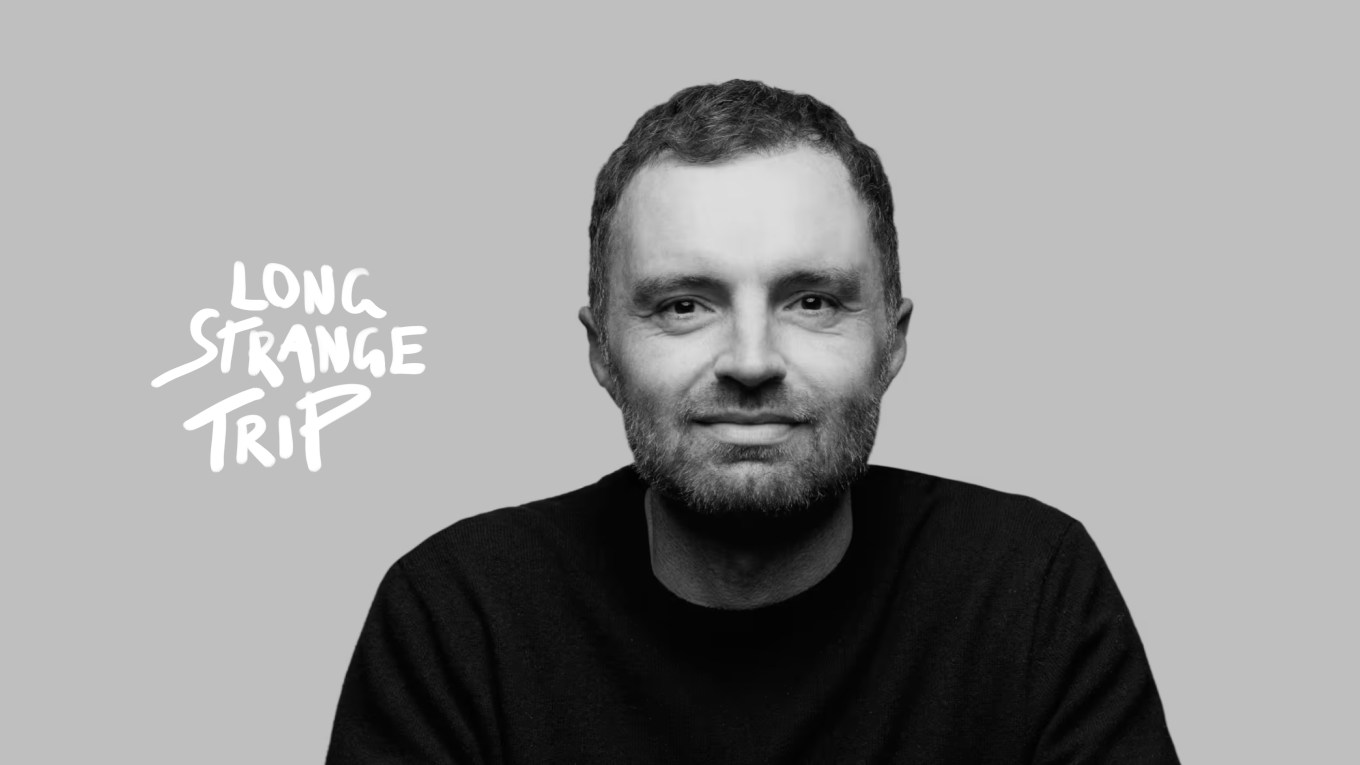
Opendoor’s Kaz Nejatian: The Most Founder Mode CEO Working Today Isn’t the Founder
Watch Now
Summary
Kaz Nejatian reveals how he left Shopify to pull off a highly unusual feat: refounding a struggling public company in just 16 days. From first attempting to take the company private and then becoming CEO, Kaz shares his unconventional playbook and approach to life. We go deep on why most enduring companies are built on “first derivatives” of their core business and not the obvious thing everyone focuses on. Kaz explains why he reads the Bible every day, how overriding life’s defaults requires going full force (not halfway), and why founder mode means taking responsibility for outcomes, not processes. He breaks down the mechanics of the Opendoor turnaround, why he tethered his compensation to stock performance, and how he’s making the company AI-native.
Transcript
Introduction
Kaz Nejatian: One of the things I have come to believe is that most successful companies in the history of the world are built on the first derivative of the core business. Let me give you an example. Union Pacific, railway. Massively successful, made more money selling land and homes than building rail—than carrying stuff on the railway. Google, like, you search, you get ads, like, first derivative. First derivatives are what build enduring companies, and Silicon Valley also misunderstands first derivative businesses.
Brian Halligan: Hey, everybody. We have Kaz on the show today. He was the very long time CTO at Shopify. Recently left, and he’s the new CEO of Opendoor. The reason I wanted to talk to him is he’s the most founder-mode CEO I’ve come across. He’s incredibly aggressive, and he’s not transforming the company, it’s a real refounding moment. He’s kind of rethinking everything from scratch. I think he’s going to rewrite the refounding playbook. And so that part I found very interesting.
He gets into a lot of personal stuff. And CEOs ask me about, like, work-life balance and how do you manage everything outside of being a CEO. It’s pretty all-consuming. And we talk about his faith, his marriage, his ambition, what it was like to be an immigrant. He talks a lot about how he kind of aligns his whole family around his job and the mission of his company. I thought that was fascinating, and I appreciate him getting into it, because one-on-one CEOs ask me about that stuff all the time. I hope you’ll like it. I’ll be back at the end for a little summary. I thought he was terrific.
Main conversation
Brian Halligan: Kaz, great to have you.
Kaz Nejatian: Thanks for having me, man.
Brian Halligan: I’ve been a distant admirer of yours for a long time, and even more so since you took over Opendoor. And in preparation for the pod, I interviewed or talked to a whole bunch of people you worked for—worked with before. A whole bunch of them asked me to ask you about, you know, your first principles for business and life, because they said kind of everything flows out of that. So if you don’t mind, I’d love to hear about this.
Kaz Nejatian: I grew up in the Middle East and I moved to Canada when I was 12.
Brian Halligan: Yeah.
Kaz Nejatian: So one of the things that happens to you when you do that, when you grow up in a culture different than yours, is you get a chance to actually reconsider a bunch of your, like, roots. Like, you get to reconsider the ground upon which you stand.
Brian Halligan: Yeah.
Kaz Nejatian: And because of that, you actually have to be slightly more deliberate about what you believe. I know it sounds odd, but basically every immigrant goes through a version of this, especially ones that successfully assimilate. Like, you have to consider, like, what is—you know, what you want your brain to believe relatively early on. And I thought, like, there’s, like, four core things I believe in and I talk about frequently. So I talk about—I’ll tell you about those four.
The first one is a very good friend of mine once gave me advice and said, “You want to optimize for stewardship rather than status in your life, in your career. You want to do things rather than be things.” And this was very important to me early on in my life, because people would ask me, what do you wanna do? And I would say a title of a job.
Brian Halligan: Yeah.
Kaz Nejatian: And people would say—like, my good friends would say, “What does that mean?” And it just actually tends to be—if you think about that in life, it actually tends to be deeply useful to you to think of yourself as, like, what you are doing and what are you doing that in service of.
Brian Halligan: Mm-hmm.
Kaz Nejatian: Like, people who optimize for happiness end up not being happy because happiness is a state. People who optimize for service end up actually being usually deeply happy. So, like, stewardship over status is like one of the most important ones for me.
Brian Halligan: Okay. I love that.
Kaz Nejatian: Yeah. And there’s a couple other ones we can talk about if you want but, like, they’re essentially stewardship over status, default over everything else.
Brian Halligan: Sorry, I didn’t follow that. Default?
Kaz Nejatian: Default over everything else. Ie. The power of defaults in life is underestimated, but you cannot accidentally overwrite defaults in life or in software, really. Like, what happens is people basically accept every default you give them in software, and usually you accept every default you have in life. And if you start rejecting a couple of defaults, you actually fire the software or fire your current life. So this is, like, one of those other things that’s, like, been deeply important to me. Those two things are probably the most important things.
Brian Halligan: I was saying those kind of rhyme. What—just on the professional side, and just give me an example on both sides. What are defaults that you have overridden or ignored on the professional end recently in the professional or personal? I’m curious about that.
Kaz Nejatian: But what I mean is like, if you want to override a default, you have to do it with, like, all your power.
Brian Halligan: Yeah.
Kaz Nejatian: You can’t choose, like, half-ass it really. I mean, look, I took a job at Opendoor, which was not the default choice for my career. And you cannot kind of accidentally do it. You have to do it full force, otherwise the wall will stop you. Let me give you another example. Like, I went to business school for undergrad. I’ll give you this example. I went to undergrad for business school. And then out of business school, I got a job in a small private equity firm, which was a default choice for going to business school. I lasted 11 days at the firm. Like, literally 11 days. And I resigned after 11 days. I’m like, this is not what I want to do with my life. It was deeply uncomfortable, but I kind of knew the only way I would be able to get off this road was by fighting the safe choice.
Now you can’t do that with everything in your life. You generally can’t, just like you can’t fight your MacBook defaults all the time. You can change one or two things if you’re deliberate about them. And that has been, like, a core part of my life is that when I choose to change a default, I just, like, go at it full speed. And by the way, a lesson for people who build products is that this is why your responsibility in setting defaults is so important, because if you set defaults such that the user has to think about it all the time, they will just fire your software.
Brian Halligan: Yes. And on the personal side, what’s the default thing you’ve overridden or ignored?
Kaz Nejatian: Quite a few, honestly, in that area. Like, quite a few important ones, anyway. Let me give you, like, a real—like, I’m a religious person, where default for people in my—where I grew up and what I do is not to be religious.
Brian Halligan: Yeah.
Kaz Nejatian: Like, I read the Bible every day, go to church every Sunday, and I’ve done that deliberately because I have found that it makes me better as a human being. Just for me, it’s a deeply selfish way it makes me better as a human being. That’s not—I’m not that comfortable talking about this. It’s actually the first time I actually talked about it, but it is a way in which I’m different. Like, there are no other tech CEOs that would talk about this. And that has mattered to me. My wife and I have always essentially decided that we would optimize our lives for a certain set of things that are different than most people’s set of things. And those two combined have essentially allowed me to have the career I have. I generally don’t think I could have had it without those two defaults changing.
Brian Halligan: And why do you I think—you’re right, it’s rare that you meet a tech CEO that reads the Bible every day. When did you say, “Okay, this is me. This is going to inform my life, this is going to inform my work”? At some point did something flip in your head on that?
Kaz Nejatian: Yeah. Look, I mean, like everyone else who grows up as a nerd, I grew up, like, deeply aware of the power of my brain over my life. Like, it just very—people who are not nerds—like, I’m an actual, honest-to-goodness nerd, I started coding when I was six—don’t appreciate that power every day. But for me it was, like, really important, like, very early on. And what happens if you’re not careful in this state—which is what happens to most founders—is depression sets in. This is why many founders end up being relatively depressed, even if they’re successful. This is why so many successful rich people are depressed, because they lose control over what they—like, what their core beliefs are. And then life becomes a rat race. Like, you’re always competing with someone, and guess what? Elon will always be richer than you. And if you’re optimizing your life like that, you will always end up being deeply unhappy.
Brian Halligan: It’s the wrong race.
Kaz Nejatian: It’s just like, it’s not a race you can win. And so you—but you do need some races in your life. And what happened to me early on was I’m like, okay, cool. Let me think about the things that I think will set me up so I can have a contentful career. One where I could be proud of my career and proud of my life. And early on I found, at least for me, that prayer was—even before I read the Bible or I went to church—I grew up Muslim—prayer was deeply powerful. This moment of sitting down saying, “I don’t have control over everything. Let me think and reflect on my day and pray.” I didn’t really know how to do it at first, but I did it every day for a little while and it just worked.
Brian Halligan: I meditate. Does that fit in that same thing?
Kaz Nejatian: Oh, most certainly. Oh, most certainly. Like, I think it does basically the same job with just one tweak. Because I think that is actually—like, most successful people meditate one way or another.
Brian Halligan: Yeah.
Kaz Nejatian: I just happen to meditate with someone else present.
Brian Halligan: Got it. So many of the entrepreneurs I work with are immigrants, and so many of the most successful entrepreneurs, including my co-founder at HubSpot and CEO of Shopify, are immigrants. I think there’s a lot of reasons for that. Is one of the main reasons, though, that when they get to the US—or Canada in his case—just like you have a chance to reset, like hit the reset button and rethink your defaults from scratch? Do you think that’s part of why that’s the case?
Kaz Nejatian: I think that’s a romantic way of putting it.
Brian Halligan: Okay. I’m romantic.
Kaz Nejatian: I think that’s an upside way of putting it. But the real answer for most—for Tobi, for me, for most other immigrants is there is no safety net.
Brian Halligan: Yeah.
Kaz Nejatian: Like, I didn’t have an option. Like, Tobi could not—Tobi couldn’t get a job.
Brian Halligan: Yeah.
Kaz Nejatian: He had to, like, start Shopify. My parents didn’t know anyone. Like, I had to pay for college, so I had to start working, and no one would hire me.
Brian Halligan: Yep.
Kaz Nejatian: So, like, hustling for money and, like, building websites for people, it just became what I did. And I think you typically—like, people who tell me, “Hey, I want to grow up to be an entrepreneur,” my standard default question is just probably “Don’t.”
Brian Halligan: Yeah, because you probably are one already. You started your paper route or whatever when you’re six.
Kaz Nejatian: Yeah. The type of people who decide they want to be founders because they think it is cool always fail. Like, they just always fall, because it’s just—it’s deeply painful and lonely in ways that are—like, most successful entrepreneurs you talk to, if they’re being honest, they would say something along the lines of, “If I knew everything I know now, I would not have done it.”
Brian Halligan: Yep.
Kaz Nejatian: But my answer to this is slightly different in that I don’t know what else I would have done.
Brian Halligan: Yeah. You didn’t have the wider range of options, and so it seemed less risky to be an entrepreneur.
Kaz Nejatian: Yeah.
Brian Halligan: Yeah. Risk-adjusted upside. And when you did the expected value on all the equations, that had the highest expected value for you.
Kaz Nejatian: Yeah. And I think it’s actually a very real thing in life is that, like, human beings structurally misprice risk.
Brian Halligan: Yeah.
Kaz Nejatian: It’s actually the one thing that is in favor of entrepreneurs. The one thing that is structurally in favor of entrepreneurs is everyone else misprices risk.
Brian Halligan: Yeah.
Kaz Nejatian: I think it’s partially because the way we evolved, it was just like, we were just always one lion bite away from dying.
Brian Halligan: Yeah.
Kaz Nejatian: So we’re like, “Ah!” But turns out, like, things going poorly is not as painful as you think it is. You will recover. It’s just far more things will go wrong than you expect them to go wrong.
Brian Halligan: Yes.
Kaz Nejatian: Like, each pain is not as bad as you think it is, but everything is more painful than you think it is.
Brian Halligan: Yes. So I spend a lot of time with CEOs, like most of my life these days. And I look back, the founder mode memo, the Paul Graham memo was a little over a year ago.
Kaz Nejatian: Mm-hmm.
Brian Halligan: And I think it’s had deep impact. Like, it’s the default now, and I don’t think CEOs apologize for that behavior anymore, aren’t trying to—aren’t being talked into manager mode. And you are now, in my head, the poster child for founder mode. How does that land with you?
Kaz Nejatian: I mean, uncomfortably. This is a part of my job I’m genuinely not good at. Like, this talking to people about the job. I’m much more comfortable, like, in Figma working through product problems. So I’m uncomfortable being the poster child for anything, genuinely. But you think about this, I’m 42 now, so I think about my responsibilities to the world—I’m 43. And one of my responsibilities, I feel like—so I had this very weird out-of-body moment where I can remember this. I had a conversation briefly where I was, like, working at a big company. And I came out of a meeting, and my boss at the time told me, “Hey, this is why you will never be an executive at this company.” And I said, “Why?” And my boss said, “Well, because you don’t have an executive voice.” And I said, “What the fuck is that?”
Brian Halligan: [laughs]
Kaz Nejatian: And my boss said, “Exactly.” And that felt deeply painful, just was very deeply painful, because it felt to me at the time, at least everyone else was being told, bring your whole self to work. Bring your whole self to work. That was what everyone else was being told. But if you were slightly disagreeable, or if you cared about the details a little too much, or if you thought, you know, that nine to five was an odd working hour, like if you thought any of these things, you weren’t allowed to bring your whole self to work. Like, you were excluded from this thing.
So I think what founder mode over anything else means genuinely is about the amount of responsibility the CEO takes for outcomes. Like, I’m not responsible. I hold myself responsible for outcomes, not processes. Like, I have a wonderful person who works for me. I’m like, “Your job is process design. My job is outcome delivery.”
Brian Halligan: Okay.
Kaz Nejatian: We have different jobs here. And her job every once in a while is saying, “Kaz, I need you to calm down for a second.” And four out of five times I will. But the main difference between professional managers and founders is professional managers care more about process than truth. They care more about what things look like than what they are, because their source of power comes from management.
Brian Halligan: Yeah.
Kaz Nejatian: And that’s not where my source of power comes from. I don’t have—no one thinks I’m a good manager. Like, genuinely no one thinks that. Like, I’ve had—I’ve managed thousands of people in my job. Like, thousands. And I don’t think any of them would say, “Kaz is a great manager.”
Brian Halligan: None of the people I called said you were a great manager in getting ready for this.
Kaz Nejatian: Like, I think some of them would say, “I would work for Kaz again.” I think many of them would say that. I think they would say “Kaz is a good leader.” But I’m not the world’s greatest manager. But there are upsides that you get with having me as your manager.
Brian Halligan: That process person, has that process person been with you for 10 years, or did you just discover that process person when you joined Opendoor?
Kaz Nejatian: No, it’s been—she’s been with me—her name is Giang. She’s now the Chief Operating Officer of Opendoor.
Brian Halligan: Okay. So she came from Shopify.
Kaz Nejatian: She was at Shopify with me, yeah. And, like, when I was at Facebook, I had a different process person. In fact, my first meeting at Facebook, I hired a product manager. I was sitting in this meeting, and there was a person sitting next to me and then we started running the meeting and this person literally started kicking me under the table. Like, never met this person before, but, like, I’m like, so—and that person also came to Shopify eventually with us. So I need, like—everyone has flaws that we need to be aware of, and one of my jobs is to not make myself well-rounded.
Brian Halligan: Okay, let me ask you about that. A lot of people say you should work on your strengths, and a lot of other people—myself—say hire around your weaknesses, work on your strengths. Do you ever work on your weaknesses? Like, you got lots of feedback over the years. You didn’t.
Kaz Nejatian: I don’t.
Brian Halligan: You lean into your strengths.
Kaz Nejatian: I don’t. In fact, I think this is, like, one of the things that you get wrong early on in your career.
Brian Halligan: Me, too.
Kaz Nejatian: You have a meeting with your manager, and your manager will give you some feedback about what you’ve done over the last six months.
Brian Halligan: Mm-hmm.
Kaz Nejatian: And then you by nature say, “Oh, I’m bad at this. I need to get better.” But what you actually have to ask yourself is is the fact that I’m bad at this the reason I’m good at everything else?
Brian Halligan: Yeah.
Kaz Nejatian: Right? So I have always, basically throughout my career, had someone whose job it was to round me out.
Brian Halligan: Yeah. [inaudible] on time.
Kaz Nejatian: Yeah.
Brian Halligan: When you joined Opendoor, you published a blueprint that I read, which is kind of a user manual for working for Kaz. And it read to me—that’s part of where the founder—it read to me as a founder mode kind of manifesto but, you know, Kaz-ish. Most CEOs are quirky, and most founders are quirky. I was certainly quirky—still am. And should all CEOs write a user manual to themselves?
Kaz Nejatian: Yes, 100 percent. But that blueprint is about a decade old.
Brian Halligan: Oh, okay. You’ve had that for a while.
Kaz Nejatian: I’ve changed words in it, like maybe, like, a dozen words, but it’s about a decade old. Like, I’ve had it for a while. And I’ve given it to—I published it at Shopify, I’ve given it to other people.
Brian Halligan: Got it. Got it.
Kaz Nejatian: And, like, the reason is like, look, if you’re a founder type, you owe it to everyone around you to tell them who you are. Strong attract, strong repel. Like, if you go to a restaurant, if you go to an Italian restaurant and you complain the sushi is bad, that’s your fault. You went to the wrong restaurant. But if you went to a restaurant that says “restaurant” and said “food is bad,” that’s the restaurant’s fault. My job is to tell you what kind of a person I am so you can opt in or opt out.
Brian Halligan: Yeah.
Kaz Nejatian: I intend to change the company. I will work on myself all the time—we all should. We all have flaws. But I don’t intend to fundamentally change who I am as a person.
Brian Halligan: Mm-hmm. Number one on that list caught my attention. It was, “I got your back and I trust you,” which gives me warm fuzzies inside. But at some point you work with people and they let you down, or they didn’t meet your bar or they didn’t scale. And, like, a lot of CEOs talk about they’ll hire slow and fire fast.
Kaz Nejatian: Yeah.
Brian Halligan: If I read between the lines, it sounds like you hire slow and fire slow. Is that fair? Do you have a contrarian view on that?
Kaz Nejatian: No. I think that says something along the lines of—I think the sentence goes: If we work together, I have higher trust than most because we’re on the same team.
Brian Halligan: Mm-hmm?
Kaz Nejatian: It doesn’t say that you will be on the same team—we will be on the same team forever. Like, I start—I find that it is easier—Tobi had this concept, which I thought was wonderful, called “trust battery.”
Brian Halligan: Yes. I totally stole that from him.
Kaz Nejatian: It’s just—it’s deeply useful. And his point was, hey, I usually start at 50 percent trust battery with you. As you build trust, I increase it, and then—as you go deep. I thought about this a lot. I’m like, no, I don’t. I usually probably start with 75 percent trust in you.
Brian Halligan: I see. I see.
Kaz Nejatian: But I deplete it much faster than …
Brian Halligan: I see. Okay. [laughs]
Kaz Nejatian: Because I want to start by being able to allocate risk to you more than you’re comfortable being allocated risk to early on. So I think when I say I got your back, I mean, go take the risks.
Brian Halligan: Yep.
Kaz Nejatian: I’m underwriting you to take the risk. Because otherwise I think what happens is you learn too slowly about what people are. Like, if you were dropped into a hockey team when you’re growing up, like, “Hey, you’re the new left winger on this team,” it’s a really bad idea for you to assume the centerman is a bad hockey player. It’s just bad, because you will overcompensate it for the person that [inaudible] without knowing.
Brian Halligan: Yeah.
Kaz Nejatian: You’re much better off assuming they are very good at their job, and then doing your job well. That’s what I mean. I mean, when I start, I assume you’re here, therefore you’re good at your job. But I have a much different battery depletion mode than most people. Look, if you look at Opendoor’s executive team since I started, so two quarters ago before I joined, there’s one member of the executive team left at the company. That’s just strong repel, strong attract part of the job.
Brian Halligan: Turns out there was a lot of strong repel. [laughs]
Kaz Nejatian: Yeah.
Brian Halligan: You brought up Tobi. He’s on my Mount Rushmore of founders. I think he’s very special. What can CEOs—other than the trust battery thing, which I think is great, what can CEOs learn from Tobi?
Kaz Nejatian: There’s a concept in finance called “discount rate.” Like, what is the discount rate on anything? And most corporate types apply a very high discount rate to outcomes. Ie. If something’s gonna happen in five years, they value it at, like, 20 percent of value. Tobie applies a discount rate of zero basically to the future. Tobi is built for the long term in ways that are very difficult to do in a modern public company. Like, he’s determined to care about what happens 10 years from now as much as he cares about what happens now.
Brian Halligan: Okay. Very long horizons.
Kaz Nejatian: Very long, very long horizon. And it’s deeply useful to think about it, because I think what actually matters generally, I think there are two useful timeframes to think about if you’re managing a company.
Brian Halligan: Mm-hmm?
Kaz Nejatian: This week and 10 years from now.
Brian Halligan: Okay. [laughs]
Kaz Nejatian: Like, this quarter is actually a deeply useless measuring period.
Brian Halligan: Okay, so everyone’s got it wrong on the quarters. All right, tell me why.
Kaz Nejatian: I think weeks are very important. Like, a week is an incredibly important period of time, because you can get a lot done in a week. You can validate most ideas in a week. You can ship most things in a week. But 12 weeks, in my experience, is not that useful in really anything.
Brian Halligan: I see.
Kaz Nejatian: Like, it’s just not a measurable—it’s also, like, not—cohorts don’t bake enough in 12 weeks. Like, they’re just—like, you know what the outcome of most things either in a week or in a very long time.
Brian Halligan: Right. Okay. I like this. What else can people learn from Tobi?
Kaz Nejatian: Building companies outside Silicon Valley is a deeply useful thing. Like, you guys built HubSpot outside Silicon Valley. I think part of the reason HubSpot was successful is because it wasn’t in Silicon Valley.
Brian Halligan: I’ll give you a thesis on that, because Shopify and HubSpot started around the same time. We both started in SMB and I don’t think either company had a choice because Silicon Valley is so allergic to SMB that if we were in the Valley, we probably would’ve either been talked out of it or wouldn’t have been able to raise money. So I don’t think it’s a coincidence that, you know, two pretty big SMB companies get founded in Canada and Boston.
Kaz Nejatian: Yeah. I mean, by the way, I think the same is true for real estate software.
Brian Halligan: Okay.
Kaz Nejatian: Silicon Valley is relatively allergic to it.
Brian Halligan: Yeah.
Kaz Nejatian: So I think this is partially because despite the fact that most Silicon Valley types understand the idea of cohorts and how they bake, they understand it theoretically, but not deeply. Like, the cohorts of HubSpot and Shopify—and by the way, Opendoor—just bake differently. And, like, most—this is why Silicon Valley, by the way, loves enterprise sales companies. They deeply love enterprise sales because they’re like, I understand that model perfectly. I understand the ideal customer, like ICP, ideal customer profile. Like, Silicon Valley loves enterprise software and consumer. Like, those are two things that are like, ah, we’re gonna know how to understand how to underwrite these things. But churn is something Silicon Valley doesn’t genuinely understand.
And the other thing Silicon Valley doesn’t really understand, which is odd, genuinely odd—give me some rope here for a second. Tobi once asked me to take over Shopify’s shipping. He’s like, “Hey, you’re gonna run Shopify’s shipping.” I’m like, “Great.” The first thing I did was I went and read the US Postal Service Act, which was written in the 1700s. I’m like, I’m gonna go, like, read this thing that is the basis of this whole system.
Brian Halligan: Okay.
Kaz Nejatian: I need to understand, like, how the system works.
Brian Halligan: Yeah.
Kaz Nejatian: So I’m deeply curious about the history of things, deeply curious. And one of the things I have come to believe is that most successful companies in the history of the world are built on a first derivative of the core business. Let me give you an example. Union Pacific—railway, massively successful, made more money selling land and homes than building rail—than carrying stuff on the railway.
Brian Halligan: Yeah. And Shopify, you know, started as a SaaS company, as a payments company.
Kaz Nejatian: Yeah. Like, I mean, I think it’s generally a merchant services company.
Brian Halligan: Yes.
Kaz Nejatian: But yeah, like, payments, tax, billing, ads, bunch of other stuff. But this is actually the core—most of the most successful companies in the history of the world—Google, like, you search, you get ads. Like, first derivative.
Brian Halligan: Yep.
Kaz Nejatian: First derivatives are what build enduring companies. And Silicon Valley also misunderstands first derivative businesses, because [inaudible] and LTV is slightly harder to calculate.
Brian Halligan: Yep. Just inside—so I want to get to the shipping thing. At one point Shopify made a huge bet, like, we’re gonna buy warehouses, we’re gonna have inventory, like, we’re gonna do the whole e-commerce stack. And you ran that play for a while. And I was watching from afar like, “Oh, that was an impressive move.” And then at some point you said, “Actually, we don’t wanna do that,” and you divested in that business. Can you just take me behind the scenes to the discussions and when you made that bet? And then even more importantly, behind the scenes of what happened, and how long did the discussions take and what were the protagonists saying when you decided, “Hey, we were wrong. Let’s get out of this business.” That was a very interesting chapter for you guys. And I admired it.
Kaz Nejatian: Getting out of this, the decision to get out of it took about three weeks, I think, four weeks.
Brian Halligan: Where did it start? Did somebody send an email to Tobi like, “We were all wrong about this?”
Kaz Nejatian: So look, I took over as a chief operating officer at a company in, I think, September of ‘22, and we publicly sold logistics in May of the following year. It’s, like, well understood these sales probably take three months to negotiate. So, like, you can figure out when the decision got made.
Brian Halligan: So you thought it was a bad call in the first place. You took over the new job, like, “Okay, I think we should unwind this.”
Kaz Nejatian: I think it’s odd to hold your past self guilty. I think you should try very hard not to hold your past self guilty, because you made the best decision you could have made at the time.
Brian Halligan: Yeah.
Kaz Nejatian: You also owe it to yourself to make a brand new decision every day on facts that you learn. And Shopify needed to focus way more on its core business and less on side quests. And Tobi just genuinely was like, “Yes, we should go on, like, main mission.”
Brian Halligan: And what caused it? Did you feel like your main business was getting wobbly? The cohorts were worse? You had a new competitor? Like, where was the inkling, and what was the meeting like when you were arguing about this? Or you didn’t even argue about it?
Kaz Nejatian: No, it wasn’t—there was no table—pound table fisting thing.
Brian Halligan: Yeah.
Kaz Nejatian: Shopify was a place where we had honest conversations frequently. No, I think what happened was look, facts on the ground changed, right? When Shopify got into logistics, there were no good ways for a small business to do logistics. Like, there just wasn’t any. Like, it was Amazon or bust.
Brian Halligan: Yeah.
Kaz Nejatian: In the four years since Shopify started, a bunch of very good companies got started and were very good. Walmart got into the space, DHL got into the space.
Brian Halligan: Okay.
Kaz Nejatian: Like, the alternative to us doing it changed.
Brian Halligan: Yeah.
Kaz Nejatian: Like, we were not jealous of anyone else’s margin. We didn’t get into this business because we’re like, yes, margin. That’s not how great businesses are built. So the people we needed to serve didn’t need us anymore. So we’re like, okay, great. We don’t have to go buy concrete. Great. Concrete is annoying. Let’s go back and deal with electrons, because electrons behave differently.
Brian Halligan: Was there a shit fight internally, I guess is my question. The person who owned that initiative pushed back hard.
Kaz Nejatian: No, it was very—it was incredibly—you’d be surprised how easy it was to get everyone aligned and execute against it.
Brian Halligan: Interesting. I saw it from the outside as a whopper. Like, I was so impressed that you were like, “We made this big bet. You know what? We were wrong. Let’s not continue to throw bad money after bad money.”
Kaz Nejatian: Well, Shopify is an incredibly good company at successfully discovering things that don’t work.
Brian Halligan: Mm-hmm.
Kaz Nejatian: And being honest with itself.
Brian Halligan: And is that Tobi? Tobi strikes me as, like—Tobi’s one of the very few people on the planet that makes me a little bit nervous. Very few people like that. And then he is just—he’s kind of stern, and he’s kind of tough and he’s very—you know, does that come from him?
Kaz Nejatian: He’s not that stern, generally. I think he’s a kind, wonderful human being, but Shopify is deeply committed to truth above all else.
Brian Halligan: That comes from him, I assume.
Kaz Nejatian: Yeah, of course. Of course.
Brian Halligan: Yes.
Kaz Nejatian: I mean, companies are exoskeletons of their leaders if they’re good.
Brian Halligan: I like that.
Kaz Nejatian: Like, very real thing. Like, every company must be an exoskeleton of its leader if that leader is good.
Brian Halligan: Yeah.
Kaz Nejatian: So Shopify is an exoskeleton of Tobi.
Brian Halligan: Yeah. Okay. You worked for Zuckerberg and Tobi. How did they rhyme and how did they not rhyme?
Kaz Nejatian: I mean, I worked with Tobi much more closely than I did with Mark but, you know, I knew Mark and I know Mark. They’re both deeply product-focused, deeply product-focused in, like, ways that are genuinely impressive. They’re both very, very long-term focused in ways that are just genuinely impressive. They’ve both built companies the hard way. Like, generally, like, if you look at Mark, he lost his entire executive team after he turned down the Yahoo acquisition. Like, all his friends put on him.
Brian Halligan: Yeah.
Kaz Nejatian: Like, how many people survive that?
Brian Halligan: Yeah.
Kaz Nejatian: Like, no one survives that. Like, no one. So they built companies the hard way, and they’re very similar in that way generally. Now I think Mark is more of a product manager at heart and Tobi’s more of an engineer at heart.
Brian Halligan: Mm-hmm.
Kaz Nejatian: So that manifests itself differently in how conversations go. Like, you end up having lots of conversations with Tobi about the [inaudible] API.
Brian Halligan: Mm-hmm.
Kaz Nejatian: But they’re very similar people.
Brian Halligan: Okay. How did it all go down with the—Opendoor is kind of cruising along, very low market cap. And, like, what the hell happened? Keith and the founder and you got together and took over this public company. Like, take me behind the scenes. What the hell happened there?
Kaz Nejatian: I’m genuinely comfortable saying this. I don’t know how this could have happened without someone else’s plan. Like, I was flying back home from Dallas, Texas, in February where I was hosting, like, this event at Shopify called the Top 100, like a typical corporate event. And I, for fun, take apart companies. Like I do—like, it’s just one of the things I do for fun is, like, learn about the history of companies. And on that flight, for no reason at all, genuinely no reason at all, I picked Opendoor. I’m like, let me learn about Opendoor.
Brian Halligan: Okay.
Kaz Nejatian: And then I became—and then I spent every weekend for, like, four weekends in a row, like, modeling Opendoor, taking it apart, thinking through it, thinking through the product, using the product, and got to a point where my wife and I at dinner were basically only talking about Opendoor for a few weeks.
Brian Halligan: You sound like a barrel of laughs, by the way.
Kaz Nejatian: Yeah. Yeah. My poor wife. And then I texted Keith in March.
Brian Halligan: And you knew him?
Kaz Nejatian: I knew Keith. Yeah.
[CROSSTALK]
Brian Halligan: [inaudible] Coastal Ventures.
Kaz Nejatian: I messaged him saying, “Hey, I’ve talked to my wife. We’re going to go all in and we’re gonna spend our entire net worth to take Opendoor private. Like, my wife and I are gonna do it, like sell everything, spend every last penny we have, leverage ourselves as much as we can and take Opendoor private.”
Brian Halligan: And what was the company worth at the time?
Kaz Nejatian: Few hundred million.
Brian Halligan: Okay.
Kaz Nejatian: But I said, “Keith, do you want to do it with me?” Like, that was my point to him. And he said, “Yeah, let’s talk about it.” And then we had one conversation, and then the company did this insane, genuinely insane financing that basically made it impossible to acquire the company and take it private. It was just like—and my plan wasn’t to run the company. My plan was just, like, stay at Shopify, join the board of the company and just, like, yell at them over, like, product choices they were making.
Brian Halligan: Yeah.
Kaz Nejatian: Because I genuinely never thought I would leave Shopify. I just really liked the company. So by April, I mean, I’d kind of given up on it. And then I got a call one Sunday from Paul Daversa, who was a recruiter. And Paul had been trying to convince me to go be a CEO of a bunch of other companies. And I had always said, “Hey, I’m not interested. I love my job.”
And he called me on Sunday, and I picked up the phone like, “Paul, I appreciate you. I’m with my wife. I haven’t seen her for a while. I’m not interested. Whatever it is, I’m not interested.” He said, “Kaz, it’s a public company CEO job.” And I said, “Paul, I’m not interested.” And then as a takeaway I said, “Unless it’s Opendoor.”
Brian Halligan: Okay.
Kaz Nejatian: And he said, “It is. How fast can you get to New York?” I was in New York in about five hours after that. And from that conversation to me being announced as the CEO of Opendoor was maybe 15, 16 days.
Brian Halligan: And behind the scenes, Keith and Eric, who’s the original founder and Keith’s the original investor, were they just baking on it, and did they reach out to Paul and say, “We want to hire Kaz as our CEO?” Like, how did—what the hell happened?
Kaz Nejatian: Yeah, I think Keith and Eric had essentially decided that they were going to, like, rescue the company.
Brian Halligan: Yep.
Kaz Nejatian: And they needed a CEO. And I actually don’t know how the conversations went.
Brian Halligan: Mm-hmm.
Kaz Nejatian: Because I think they were trying to for a while. But I should actually ask Keith how that conversation went. But yeah, my input to it was a phone call on a Sunday from Paul saying, “Hey, like, are you interested in this?” And it genuinely happened very fast, like two and a half weeks, I think was the entire timeframe.
Brian Halligan: And, like, mechanically, you three said, “All right, we’re gonna throw out the CEO.” Did you buy all the shares up? Like how do you take over a public company like that? It doesn’t—I haven’t seen this. I don’t know. This isn’t a common occurrence.
Kaz Nejatian: What happened was, like, I met with the existing board.
Brian Halligan: Yeah. The existing board had a CEO search.
Brian Halligan: Yeah.
Kaz Nejatian: They said, “Hey, under what conditions will you take this job?” And they were incredibly kind and generous. Like, the existing board was desperately trying to fix the company.
Brian Halligan: Yeah.
Kaz Nejatian: Like, they realized that, like, there had been change, and the previous CEO had left. And so I told them, hey, like, I want the [inaudible] board members on the board, and I want you to promise me that you will not care about what it looks like for a while, because, like, I’m not a caretaker type. I intend to build product for a living.
So it was actually a very surprisingly easy conversation. Like, it was whirlwind. And I remember it was like the night before the announcement. I was with my family in New York, and it was 3:30 am, and my wife was sleeping in the hotel room, so I couldn’t be in the hotel room, but I was on a call pacing up and down Central Park West, because I didn’t want anyone to overhear me talking because I was talking about a public company, like, figuring out how to do this. So it was intense, just generally intense. But not hard. Like, it was like everyone was trying to solve a problem.
Brian Halligan: And so you three didn’t buy the company, you all joined the board, you obviously got a bunch of shares, and I guess the other two did as well.
Kaz Nejatian: Well, they invested. They invested in [inaudible]. So they did a PIPE and they invested in the company.
Brian Halligan: I see. And what happened to the board?
Kaz Nejatian: A few of them remained, few of them left. It was like a refresh of the board. The board is excellent, just excellent board now. I’m very happy with them. I would put up our board against any board.
Brian Halligan: You talk about it as a refounding.
Kaz Nejatian: Mm-hmm.
Brian Halligan: Should more public companies do this?
Kaz Nejatian: Yes. Yes. I think it is like you are—look, I think professional managers are good at managing a decline, like a slow decline. You don’t have to—it doesn’t have to be a big decline.
Brian Halligan: Yeah.
Kaz Nejatian: But the exothermic power that leads to extraordinary outcomes is not found in professional managers. It just isn’t. So what you end up having is these periods of, like, up and then very slow decline. And eventually General Electric happens, right? This, like, wonderful, like, American company. And it didn’t have a refounding moment, and it is now what it is. Whereas Microsoft has had a refounding, for example. Like a very obvious one.
Brian Halligan: Yes.
Kaz Nejatian: I don’t think they use that word, but that’s very clearly what happened.
Brian Halligan: Yeah.
Kaz Nejatian: So the question is not whether the founder is there or not. The question is whether the founder’s seat is taken or not. Like, is someone occupying the founder’s seat, yes or no? And otherwise, because what happens—now look, I don’t think every company can do this. I think some companies are structurally not set up for this. Most conglomerates are not. Like, if you’re a conglomerate, it’s very hard to do this. But if you are a product company, you require, like, exothermic pressure on the system. And, you know, it has upsides and downsides. It could go well or it can go poorly, but it is certainly not managing a decline.
Brian Halligan: One of the things that surprised me was you joined, you hadn’t really even said anything, and the market cap went up by, I don’t know, 6, 7x. I know you’re incredibly bullish about it, and you’re very long-term thinker about it and you think it’s an amazing—were you even surprised about how much the stock price went up when you joined?
Kaz Nejatian: This will be odd, Brian, but I genuinely honestly don’t think about the stock price. I really don’t. It’s very—and I know it sounds odd to say, I don’t think about it. I think what I do is correlated over a long term with the stock price and not in the short run. Like, I have talked to the company about the stock price twice since I joined, and both times it has been to say something along the lines like this: The stock price going up 15 percent doesn’t mean we’re 15 percent smarter. It just doesn’t. Like, our job is to create value and solve problems for our users. If we do that well over a long enough period of time, the company becomes valuable. Like, I don’t genuinely understand CEOs that have the stock price on a Bloomberg terminal in their office. Like, I believe I owe a duty to our shareholders to deliver value to them.
Brian Halligan: Or they’ve got CNBC or Bloomberg on, because it just creates a knot in your stomach in such short-term behavior.
Kaz Nejatian: Here’s the thing. Watching ESPN does not make you a good professional quarterback.
Brian Halligan: [laughs] No, it doesn’t.
Kaz Nejatian: Watching CNBC does not make you a good professional CEO. It just doesn’t.
Brian Halligan: I think it makes you worse, because you start to think very short term about things.
Kaz Nejatian: Yeah. Look, I view it as my duty to deliver value for shareholders. I’m not denying that. It’s their money. Like, they own shares in the company, their company. But I think our shareholders should expect me to deliver value over a long period of time, and to be mostly agnostic to day-to-day.
Brian Halligan: Yeah. Okay, in Silicon Valley, in tech, turnarounds are extremely rare.
Kaz Nejatian: Mm-hmm.
Brian Halligan: Like, they’re very rare. If something starts going down, it doesn’t happen a lot that it turns around. Why is it different?
Kaz Nejatian: I mean, there are examples of this. There are examples of successful turnarounds. There aren’t that many, I agree with you, but because most of the teams that have tried to do a turnaround haven’t done it like this. The most successful turnaround, obviously, is Apple. Like very clearly, like—and by the way, Apple was in much more trouble than Opendoor is today. Like, objectively more trouble, like, worse position.
Brian Halligan: Yeah.
Kaz Nejatian: I don’t think there’s that many lessons to be learned about why professional CEOs fail. I think the management types can’t really—like I said, slow decline or slow climb, not significant change in direction. That’s just not …
Brian Halligan: Do you think the problem people— so so many venture capitalists are holding companies that are going sideways, and you think the playbook is okay, bring someone in, but it’s refounding, and really shake it hard. Do it like Steve Jobs. Don’t make incremental change. Don’t change pricing and packaging. Don’t spin out one thing.
Kaz Nejatian: Look, I think the going state of companies, like, the existing inertia is real.
Brian Halligan: Yep.
Kaz Nejatian: And usually when things are going sideways, it’s not because one thing is going poorly. It’s because you’re in a death spiral.
Brian Halligan: Yeah.
Kaz Nejatian: Right? And what needs to change when you’re in a death spiral is everything.
Brian Halligan: Yeah. Got it.
Kaz Nejatian: Everything must change, because the alternative is bad. And, like, what happens unfortunately sometimes is managers are incentivized to delay death. But I think this is actually why RSUs are incredibly harmful to CEOs. I think professional managers, when they get RSUs, they’re incentivized to delay the inevitable sometimes.
Brian Halligan: I couldn’t agree more. I liked the world when it was ISOs.
Kaz Nejatian: Yeah, like it’s just—I think it’s a very bad change in structure. Like, management teams should be incentivized on outcomes, like, performance-based over everything. Because I have zero incentive to manage a decline. I just don’t have one.
Brian Halligan: Okay, so how did you all decide to pay you? Is it an Elon-style package? Not that size but, like, the structure.
Kaz Nejatian: I mean, what I wanted was I asked for a salary of a dollar and options. I’m like, “I would like options.”
Brian Halligan: Okay.
Kaz Nejatian: But the combination of Delaware and SEC have made granting options in this particular way very difficult in public companies. So we essentially, like, constructed a package that looks a lot like just options.
Brian Halligan: You use PSUs.
Kaz Nejatian: We have PSUs with—like, PSUs have zero value below a certain price, some value above a certain price. So I kind of like how it looks like. Some of them have, like, strike prices that are high, some of them—like, just they’re very similar in that structure. I think this is actually, like, the right alignment between me and the shareholders.
Brian Halligan: Mm-hmm. I do, too.
Kaz Nejatian: Because otherwise, like, it’s very—look, Wall Street is full, genuinely full of, like, Harvard MBA types who have driven the companies to zero while getting rich. Like, it’s just—actually, it’s very terrible, man. It’s terrible because you want companies to matter.
Brian Halligan: It’s not all companies. Let’s not exaggerate.
Kaz Nejatian: No, no, no. You want—hey, you want companies to matter. You want companies to matter. Like, any company needs to matter. Now I don’t think all Harvard MBAs are terrible. Clearly not, very clearly not. But I do think there are too many examples of people who got rich destroying companies.
Brian Halligan: I agree. And I feel the compensation plans are all wrong. You’re coming into a company that was probably not AI native, was probably not product-oriented. And you said something interesting. You want to be the most aggressive software company ever. I’m curious about that. I’m also curious about how do you take what was likely a very non-AI company and make it AI native?
Kaz Nejatian: This is the calculated result of what happened. We had a company-wide hackathon 10 days ago, I think. And we have people we call HPMs. These are people who essentially renovate homes. They’re people who manage renovation homes.
Brian Halligan: Yep.
Kaz Nejatian: One of them wrote a piece of software. There’s a guy who was, like, essentially a GC, wrote a piece of software that automated away his entire job. And he’s now a manager of a bunch of pieces of software to do that.
Brian Halligan: Okay.
Kaz Nejatian: This guy had never written a piece of code in his life before. Like, opened up Cursor, opened up Gumloop. And, like, we helped. Like, we had coaching, we had—like, the folks from Cursor and Gumloop and OpenAI were in our offices teaching people how to do things. And so the end result is that I think everyone at Opendoor uses AI every day now.
Brian Halligan: Mm-hmm. And you think the hackathon sparked that?
Kaz Nejatian: I think the hackathon was us testing whether we had built the muscle over the previous 10 weeks. What changed was, like, look, I had a very honest conversation with the company, which is that, hey, like, the first line in your job description is you default to AI. And what do I mean by you default to AI? Because there’s a very real thing that happens. Every company has a performance management system. All of us do.
Brian Halligan: Yeah.
Kaz Nejatian: Most companies lie about the purpose of the performance management system. Like, we’re a professional sports team. The job of the performance management system is to tell you whether you get to play on the team or not. That’s the job. That’s why the company has it. So I will evaluate people at Opendoor about whether they default to AI or not as the first question in the performance management system.
Brian Halligan: Got it. Okay. That’s a good way to do it. So I’m listening to this pod. I’m a VP of XYZ at a public company. I want to do what you did, eventually. What advice do you have for people working in the middle of HubSpot, in the middle of Facebook, in the middle of whatever, Google, if they want to be you someday?
Kaz Nejatian: I didn’t plan to do this. This was—there’s no 10-year secret plan for Kaz to be a public company CEO. That just doesn’t exist anywhere. What I did was I decided I would have a career rather than a job. Like, I didn’t really ever care about how much I got paid. I generally didn’t really, honestly.
Brian Halligan: What’s the difference? You wanted a career, not a job. Just unpack that.
Kaz Nejatian: So a job is something you do for someone else in order to get paid.
Brian Halligan: Yep. A career?
Kaz Nejatian: A career is something you work on every day for yourself. There’s a very real difference. There’s a very real difference in how you react to the thing. And most people have jobs, and that’s totally okay. It’s totally okay for most people. Most people are like, “Hey, I optimize my life for something else other than what I do at work.” That’s totally okay. But I don’t. I optimize my life for my career. And my wife optimizes her life for my career. And I optimized their childhood for this thing we are doing together as a family, right?
My kids know what Opendoor is. Like, I have a conversation about building products with my six year old, and we have—like, this is what we do. This is like our dinner conversations. Like, our job as a family, we’re all in as a family. Like, we’re not like—this is not a—this is our main mission. That’s the outcome of years of essentially saying I will give a lot of fucks about the thing I’m doing at work. Every single day, I will care a lot and I will self-identify with my work, not with my ideas, with my work.
And this, by the way, is very odd because, like, the advice you get when you’re young is almost certainly terrible. My advice to you if you’re young is work all the hours. Like, if your manager is letting you work, work. Just work all the hours, because otherwise you will not become good at the thing that is your craft, your discipline. If you were a woodworker 200 years ago, you’d be in the shop learning what it feels like to, like, cut a piece of wood. The feeling would matter. And you need to discover when you are young what your breaking points are. And the only way you can do that is working hard. Tom Brady threw a lot of passes before he got good.
Brian Halligan: And do you think people, young people should follow their passion, or is that kind of bullshit? I heard Scott Galloway recently talking to a bunch of students. He was like, “A lot of rich people look back and they say follow your passion, but they really didn’t. They were just practical and they dug in on something that was nasty.”
Kaz Nejatian: I think this way you should look for it. You should think, how can I be of service to the world? How can I be of service? And if you think of it like that, I think things usually end up working out okay. If you think, what can I get, things usually end up working poorly. And this is, like, true in relationships, by the way, as much as it is in your career. Like, you want to view yourself as a net addition to other things around you.
Brian Halligan: Okay. You’ve talked about your family a bunch, your wife a bunch. I’ve seen your tweeting about it. I’m 58 and I’ve never been married. Why am I doing it all wrong?
Kaz Nejatian: I mean, I don’t know if you’re doing it all wrong, but if the average person was doing what you’re doing, they would be doing it wrong. I think the averages are, like, important, but there are people on the extreme ends to whom rules don’t apply. I wrote a book about this. It’s called Get Married.
Brian Halligan: Why should people get married early, and why should they design their marriage like yours? You’ve got an unusual setup here.
Kaz Nejatian: I don’t think everyone should design their marriage like me, but I think most—the book I wrote essentially is the health, wealth and happiness impacts of marriage on men. That’s what the book is about. I wrote—I’m a man, so it’s about men. The data is undeniable.
Brian Halligan: Yeah.
Kaz Nejatian: There are types of cancer where being married is as good an indicator of survival rate than chemotherapy. Like, that’s a very real thing. Now I’m not saying all cancers, obviously. I’m not stupid. But if you live in the United States or Canada, if you do the following three things in the following order, your odds of being unhappy of being rich or poor are almost zero. That is: graduate high school, get some work experience, get married before you’re 30.
Brian Halligan: Okay.
Kaz Nejatian: If you do those three things in that order, the odds are, like, you’ll have a real happy, fulfilling life. Now that’s not for everyone. Like, you should know yourself and be good, but you should also be honest enough with yourself to recognize that the odds are you are not special. The odds are the thing that has worked in history for humanity will work for you.
Now some people are different. Like, I’m different in some ways than everyone else. Brian, you’re different in some ways, possibly in this way, than everyone else. We undervalue as a society the importance of marriage, and more importantly, the importance of kids. Like, I am a better CEO because I have kids.
Brian Halligan: Tell me why.
Kaz Nejatian: It is a lonely job. It is deeply lonely. And my kids know the mission of Opendoor and why I do what I do, and they ask me about it and they’re proud of me for doing it. And we have conversations that have nothing to do with work or something to do with work, but it makes the hard less hard.
I’ll tell you a story. There was a day at Shopify where we did a RIF. And I insisted that I would exit the most people. I would have more conversations than anyone. I had rented an office in Palo Alto because I was in Palo Alto, and I got to the office, in that office at 3:45 am, I think, Palo Alto time. And I started having one-on-one conversations, and I finished around 7:00 pm Palo Alto time. I hadn’t left the office. And I hung up my last hangout and I burst out crying.
Brian Halligan: Yeah.
Kaz Nejatian: Just, like, burst out, could not stop myself. And I walked—we were at an Airbnb, I walked to the Airbnb where my son ran and gave me a hug. And it was like, daddy mode kicked in and I was just—it changed the day. That day will still go down in history as the worst day of my career.
Brian Halligan: Yeah.
Kaz Nejatian: I felt a deep pain in a way I genuinely don’t think I will ever recover from it. But, like, I could do it because of my son, and because of my family. That was deeply meaningful.
Brian Halligan: Kaz, you’ve had good karma.
Kaz Nejatian: Yeah.
Brian Halligan: Talk about karma. And I’m gonna give you, like—I was just listening to Ben Horowitz talk about how he’s kind of the opposite on karma. He’s like, “Life is deeply unfair, get over it.” And, like, he didn’t say he doesn’t believe in karma, but I feel like—I happened to be listening to him the other day, and I read about your karma thing. Talk about karma.
Kaz Nejatian: Life’s not unfair. It just isn’t.
Brian Halligan: Okay.
Kaz Nejatian: You are destined for something. Your job in life is to discover that destiny and discover your mission. And you need to work on that and work on yourself until you discover it. And I think that could be different for anyone. And the more good you do, the more good you get back. Now it may be difficult. I’m not saying it’s easy. It may be difficult. It is not unfair. Look, I’m more comfortable with this because of the thing we talked about at the front of the talk.
Brian Halligan: Yep.
Kaz Nejatian: But there’s a deep purpose that I have, and my purpose is to make it such that the average family can afford a good home and raise a good family. And so we can reduce the friction and the cost of homeownership. That’s deeply fulfilling. It is difficult but fulfilling. And I find that difficult and fulfilling are highly correlated.
Brian Halligan: Yes, I do too. Okay. I wish you great karma in your new venture. I appreciate you coming on the pod. You are a very, very unusual, interesting, fascinating person. Thank you for coming on.
Kaz Nejatian: Thanks, Brian. I appreciate it, man.
Takeaways
Brian Halligan: Okay. Hope you like that episode with Kaz. I think he’s awesome. He’s one of the most intentional people I’ve ever met. Never mind intentional CEOs, intentional people. His leadership style, the way his family works, how he defines success, pretty much everything, he overrides every default and he does it over and over again.
Now I actually think this is a very good podcast for existing CEOs. If I were an existing CEO of a company—it’s an interesting time to be a CEO—I think I would approach it and pretend like if today were my first day as an outside CEO joining my company, if I were unencumbered by all the good, bad and different decisions I’ve made, all of the baggage, all of the stuff that’s happened, what would I do if today were my first day as that outside CEO? That’s the way I think people should be thinking today, particularly with all this going on in the world. And if you don’t do that, you run the risk that the board’s gonna do that for you.
And so I like his playbook around that. He’s an interesting guy. It was one of those conversations that really kind of made me reexamine how I’m showing up, not just at work, but everywhere, and reexamining my own defaults. And I wonder if you had the same reaction. Like, what are the defaults that you’re rethinking based on this? Anyway, I hope you liked it. If you want to chat about it, I’m @bhalligan on X. Let’s keep the conversation rolling.