Palo Alto Networks CEO Nikesh Arora on the Virtues of Being an Outsider
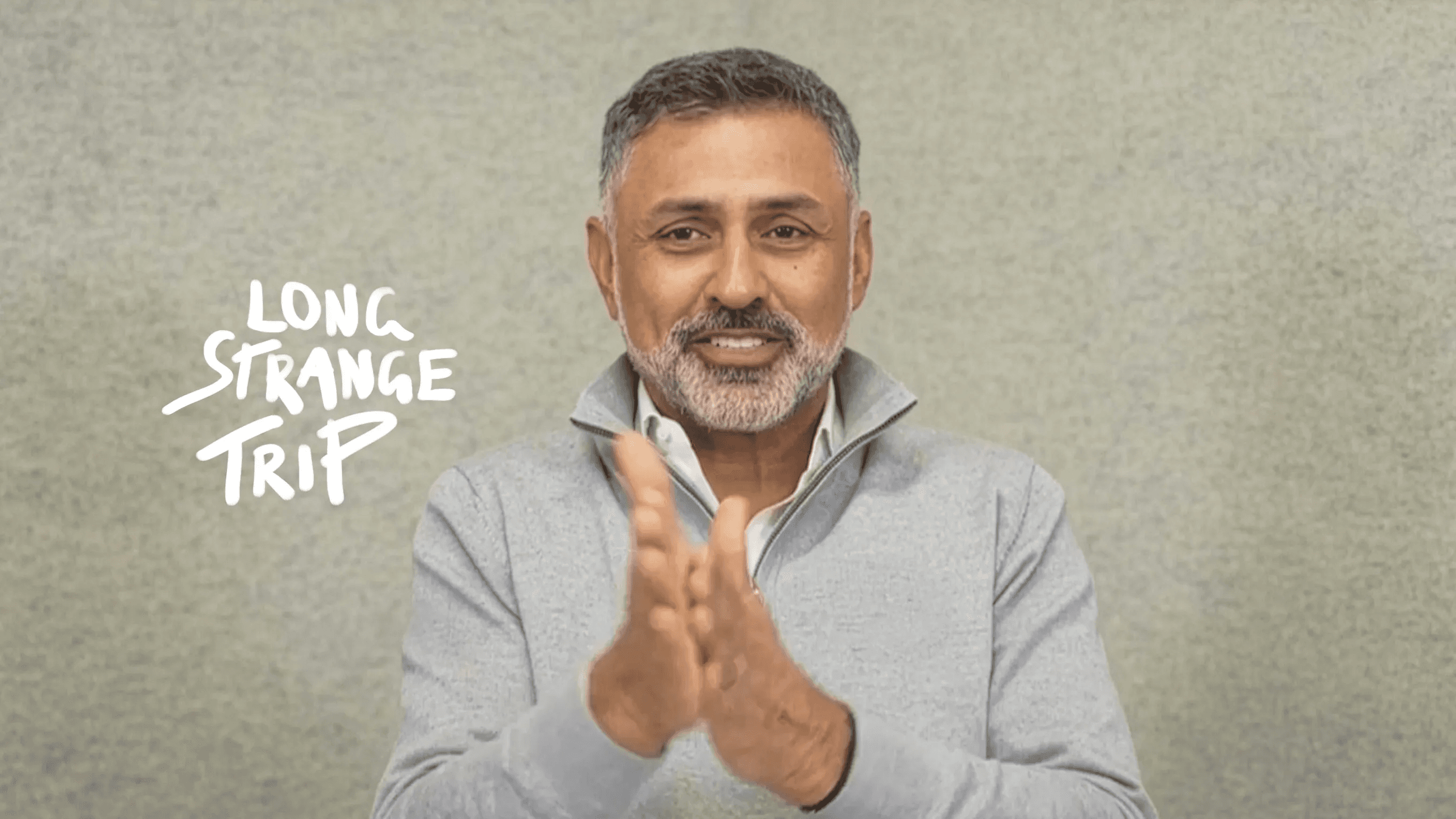
Nikesh Arora is one of the most fascinating CEOs in tech. He didn’t come up through cybersecurity, and when he took over Palo Alto Networks, he openly admits he didn’t know what cybersecurity even meant. Today, under his leadership, Palo Alto has become one of the most successful platform companies in enterprise software.
This episode deep on what it actually means to be a modern CEO: why founders should sometimes not listen to customers, why most M&A fails, and how Palo Alto built a multi-platform business by betting big (and early) on second acts. Nikesh explains how platform companies are built one decisive product insight at a time and why “more features” is often a trap. We discuss leadership psychology: imposter syndrome, conviction, risk appetite, how to project confidence while you’re still figuring things out, and how to remain physically and emotionally healthy while you do it.
Watch Now
Summary
Lessons for founders and CEOs scaling up:
Build your vision first, then listen to customers: Don't fall into the trap of getting customer feedback too early, especially from large enterprise customers who will push you toward "speeds and feeds" rather than a complete product. The best founders spend time building an end-to-end product based on their own vision that solves a real problem before seeking extensive customer input. Early advisory councils from big companies can mislead you into building infrastructure for engineers rather than a deployable product.
Swing big early - you have nothing to lose: As a new CEO or founder in the early stages, take your biggest swings and don't be afraid to fail spectacularly. If it works out, it will work out spectacularly; if it doesn't, you can pack up and move on. The risk-managed approach gives you market returns at best - you need high standard deviation bets to create breakthrough outcomes.
Platform thinking starts with one great product: You can't start as a platform company - you must begin with an innovative MVP that wins customer trust. Once you establish that beachhead, identify lateral products where "1+1=3" and stitch them together so they work better as a unified platform. Customers will never rip out a platform to replace it with six point products, giving you defensibility and low churn.
M&A is about more than the headline number: When considering an acquisition, negotiate beyond just the purchase price - focus on organizational structure (will you run the division or report down several levels?), equity grants (buyers can give 25-40% additional equity during acquisition that they can't give during normal cycles), and product roadmap alignment during diligence. Also consider that passing on a platform acquirer means they'll likely buy your competitor or build the feature themselves, potentially commoditizing your innovation.
Balance product obsession with go-to-market savvy: The best tech CEOs in Silicon Valley aren't pure sales leaders or pure product people - they balance both disciplines. Companies that lose sight of product focus die in the medium term, regardless of sales success. Spend significant time (50%+) on product, acquisitions, and technology evaluation while still maintaining the ability to sell and evangelize effectively.
Transcript
Chapters
Introduction
Nikesh Arora: So many founders get trapped in this idea that I should get customers as fast as I can, I should ask them what they want. I think it’s worthwhile. The best founders should actually spend some time, build a product based on their own vision, show an end-to-end point of view, and solve a real problem.
Nikesh Arora: For everyone who’s listening, every CEO or founder is in the early part, swing big. Swing big, you fail big.
Brian Halligan: If you’re a new CEO.
Nikesh Arora: Why not? Swing as hard as you can, right? Take three swings. Who cares?
Brian Halligan: Okay.
Nikesh Arora: At the end of the day, if it works out, it’s going to work out spectacularly. If it doesn’t work out, pack your bags and move.
Brian Halligan: If you want to hear a master class on how to be a CEO, listen to this pod with Nikesh Arora, the CEO of Palo Alto Networks. We go behind the scenes on Nikesh the man, his remarkable career, the lessons he learned from Larry Page, Eric Schmidt and Masa Son, how he became a CEO, how he actually does the job, and how he earns hundreds of millions a year doing it. We go deep into one of my favorite topics: second acts, and how great companies become platforms, which is often the difference between a really nice outcome and a legendary one—and they’re pulling the legendary side off. And we go very deep on M&A, and we go deep on M and A from his side, the buyer’s side, with some really smart acquisition practices. I really like that, but this podcast is much more for the entrepreneur. So when I come back at the end—by the way, I’m gonna get back at the end with a bunch of takes on this. But one interesting take I’m going to have is I’m going to flip it around and I’m going to talk about best practices on getting acquired from the entrepreneur’s perspective based on what we learned and how Nikesh does it. So I’ll see you in a bit. Hope you enjoy the podcast. Gonna be great.
Main Conversation
Brian Halligan: Okay, Nikesh. You bought 27 companies. Things I get questions on from startups—and we ask ourselves at HubSpot, like, we buy a company and sometimes we kind of throw a lot of it away, keep the domain expertise and the talent, and rebuild it on our platform, because we’re a platform company, and kind of our differentiation relative to Salesforce and other companies is we are kind of all in one. Do you ever kind of throw out a lot of it and rebuild it, or do you kind of keep it all and just keep pushing it in the market?
Nikesh Arora: Look, if you think about acquisitions, they take on different forms. Now cybersecurity is so fragmented that there are actually four or five swim lanes. So you could actually build a platform in every swim lane. For example, you can build an endpoint platform, you can build a SOC platform, you can build a network platform. And these don’t talk to each other as much. You can move data from one to the other but yeah, you shouldn’t build an endpoint stack with five different technologies. You shouldn’t build a network [inaudible]. So there it matters if you’re rewriting on your stack or not. Now, you know, if you think about what inspires you to go buy something versus build it yourself, you know, it becomes an essential feature. You believe you can take the innovative lead in doing that, and the process of integration is three months or four months in that you’re willing to take that hit. Take for example, we were never a player in SASE, which is, you know, a form of accessing your infrastructure remotely. We saw that AI is coming. There are certain use cases which are not satisfied. People have third party contractors, and they try and access your systems. You have to give them a laptop and you have to be secure. And we saw the emergence of companies building an agentic—sorry, a secure browser.
Brian Halligan: Island.
Nikesh Arora: Or Talon, for that matter.
Brian Halligan: Right.
Nikesh Arora: Yes. And I said to my team, “Hey guys, this is going to be important. There’s a browser coming, there are people building it.” I know we’ve had browser fakes, as in head fakes in the market. People have thought about browsers are going to take over the enterprise many times. But I said, “This time it feels real.” So my team is always like what you’d expect from any engineering team, they came in and showed me a plan saying 60 engineers, nine months, we’ll give you a great browser.
Brian Halligan: Yeah.
Nikesh Arora: You know, we’ll get to where these guys are. And I said, “What do you expect? These guys just hang out, wait for you to catch up in the next nine months?”
Brian Halligan: Yeah.
Nikesh Arora: They’ll be again nine months ahead, and their team’s working and they’re going to add more people. So we ended up acquiring Talon. Now we spent some time refactoring it, aligning it with our platform. Because remember, the browser has two parts. The one part is the browser itself, which is the refactoring of chromium, et cetera. The second part is attaching security services for it to be an enterprise browser. And what both Talon and their competitors are doing is they’re buying third party security services from whoever will give it to them so they could focus on the browser part. We had the third party security services. So we have premium third party security services which we can connect to the browser. So we did that in the case of Talon. And then we combined that with our SASE product. So we were able to go off the races from the go-to-market perspective saying, “Listen, we have a comprehensive solution. You can get remote browser isolation, you can get the browser, you can get a VPN client, you can get all of them with one security fabric across the board.” That allows us to be differentiated from our competition for a long time. Now as you can see, perhaps it was the right bet or the market believes it was the right bet, because the competitors valued so highly that for anybody else in our space to compete, they had to put out $8 to $10 billion to compete with us. So that allows us a leg up. Now I think where it’s a comprehensive solution requirement, there’s nobody but us. If somebody’s willing to take just the browser, then there’s another option in the market.
Brian Halligan: Okay. In that particular case, you buy a very hot company.
Nikesh Arora: Yes. Hot technology. What was not clear, we paid a lot less than what the current value is. We paid like $600 or so.
Brian Halligan: Okay. In the current market, anyone you’re buying, it’s expensive and the talent’s expensive.
Nikesh Arora: Yes.
Brian Halligan: One thing we ask ourselves at HubSpot is we buy this company, we want to retain this talent, and they’re incredibly valuable outside and it’s incredibly valuable to them to start a new company. Are you doing creative things compensation wise to the founding teams, the engineering teams, to try to lock them in so they don’t jump at the next huge pay package?
Nikesh Arora: Yeah. So, you know, we’ve had experience now doing this north of 25 times. And we have a simple rule—and we’ve learned this already, this is not the first time we did it. Like, the first time we did it, we were, like, fumbling through this. But there are some fundamental principles which I think distinguish ourselves from what people have traditionally done in M&A.
Brian Halligan: Okay.
Nikesh Arora: One, I have a simple rule. These guys kicked our ass in the market with less resources, moved faster than us. So they must know things better than us. So they have to come and run this instead of our people. Traditionally, companies say, “Oh, meet my senior VP of crypto. And we bought a crypto company and they’re going to report to him.” Well, the senior VP of crypto should have kicked their ass. We had given the resources they wanted. So the founders become the bosses of our people as opposed to the other way around, which our people find a little unnerving to be fair.
Brian Halligan: I would imagine.
Nikesh Arora: But the founders find that rewarding. That’s one. Two, we say, how can we help you accelerate your business? Because we are going to have a drag on them for sure. We’re a larger company. We will slow them down in some cases, perhaps with our processes, perhaps another way. So the first question is, how do I accelerate your business? Typically it’s “Get me more engineers.” Right? “I want to move faster. Or let me do this.” Now the third thing we do is we spend the diligence period designing a joint product roadmap. We didn’t do that the first two times.
Brian Halligan: Okay.
Nikesh Arora: So when we bought the company, the founder said, “Dude, thanks for the money and thanks for letting me come here, but I want to build what I want to build.” Like, “Dude, no. I just paid you a lot of money. You’re going to build what we agree.” I’m happy to agree with them. And if you don’t agree, good news is you don’t have to sell to me.
Brian Halligan: Okay.
Nikesh Arora: So we design an agreed product roadmap before we sign the final term.
Brian Halligan: Okay.
Nikesh Arora: And the most importantly asked question on Talon, right? Again, I say we’re buying half product and most talent, because these things are three years in, two and a half years in. And I think it takes four to seven years to build a good product in tech. So we still have two or three years to go. I think the shelf life or half life of founders is about three years in the company.
Brian Halligan: Okay. And do you do a three year vest or something?
Nikesh Arora: So we do an unvest.
Brian Halligan: Okay.
Nikesh Arora: We tell the founder we’re buying your company.
Brian Halligan: Yeah.
Nikesh Arora: You have to unvest half your stock.
Brian Halligan: Oh, that’s brutal! [laughs]
Nikesh Arora: For three years. But we will top it off between 25 to 40 percent depending on, you know, the economics that are at play.
Brian Halligan: I see. Okay.
Nikesh Arora: So we’ll give more equity to them. That’s the only time I can give them tremendous amounts of equity as part of a structured deal.
Brian Halligan: And what about a frontline engineer who’s just really good? Like, you’ll buy a company, it’s got 30 engineers. The founder is one thing, but all those engineers are really smart and have domain expertise. Do you do clever things with them? Do you roll them back?
Nikesh Arora: We roll some of them back. Some of them are newer to the company than the founders, so usually they have a year or two remaining. We generally try to lock them in for the first three years.
Brian Halligan: Three years.
Nikesh Arora: Yeah.
Brian Halligan: And then what percent do you think leave after three years, roughly?
Nikesh Arora: You know, if you think about founders, for some bizarre reason there’s typically more than one in tech. There’s usually two on average. Usually one of them works harder than the other one.
Brian Halligan: Okay.
Nikesh Arora: And you’ll find that. Look around you, think about all the tech companies which have gone through the process of multiple founders that eventually success. Whether it’s a Facebook, whether it’s, you know, a YouTube. You look around you, all these companies where there were multiple founders, eventually there’s one founder front and center and the other founders kind of don’t want to do that and they go off and do different things. So typically you’ll find that in every stage of a company. You’ll find a four-year-old company where one founder is working hard. Rarely do you find a company where all two or three founders are working equally hard. But anyway, let’s assume that there’s one or two. It doesn’t matter for these purposes, right? Those founders are the ones we will then find a way to work with to find and identify the engineers that are needed. I think at Palo Alto, I want to say the primary founders have almost all lasted the three years we’ve asked them to last. And there are a few that have lasted longer. There’s some founders who’ve made more money being part of Palo Alto than in the seven years they ran the company.
Brian Halligan: [inaudible] Incredibly well.
Nikesh Arora: Yes. Yeah, but if you get a lot of stock at Palo Alto and we say you can’t sell it for two years, sometimes you do a lot better than they would have done if they’d hung onto it.
Brian Halligan: Yeah. Okay, related to this, like at HubSpot we do some version of horizon planning—H1 near term, H2, H3. How do you guys do that, and how do you do it when, like, shit’s changing so fast right now? Like, it’s really sped up. How do you guys think about that? Where does M&A kind of fit into all that? Or do you not do it at all?
Nikesh Arora: I’m trying to interpret your version of horizon planning in terms of …
Brian Halligan: Well, like, at HubSpot we look at our—like, what is HubSpot going to look like in a year? We want 70 percent of our resources on this in the next year. We want 20 percent on stuff that’s two, three years out. We actually want 10 on stuff that’s going to be five years out.
Nikesh Arora: Got it, got it. Yeah, we do it because we have now multiple platforms. In each platform there’s a core part of the platform which is where typically 60 to 70 percent of resources are deployed, because they’re constantly adding features, constantly adapting to certain customer requirements. There’s 10, 20 percent of the people who have to be working on new features to be launched, right? I want to see a 12-to-18 months rolling roadmap saying what cool thing are they going to show me? Because if you’re not working on some cool thing, somebody else is. So there’s a team that works on the cool things, and then there’s the—five percent is the hardest part. The five year out problem is the hardest problem, because that’s where I think is where we end up relying on M&A.
Brian Halligan: Yeah.
Nikesh Arora: Where there are people out there, thanks to the thriving venture community. You guys are doing such a wonderful job in seeding all these research labs that I still see a few hundred companies a year. And the good news is they’re so great, they come and share what they’re working on, their ideas. Because, you know, I share the view. If I was so smart that I could take something from a startup and go build it faster than them, then they shouldn’t be in that business anyway.
Brian Halligan: Fine. A lot of the founders I coach are building apps, and are trying to go on to their second app and want to build a platform. And there is a saying kicking around, either you are a platform or you get eaten by a platform. I feel like under your watch, Palo Alto became a multi-platform company. Advice to founders thinking about second acts, thinking about going from, you know, a point solution to a platform.
Nikesh Arora: Look, we didn’t start as a platform company. We started as a firewall company.
Brian Halligan: Yeah.
Nikesh Arora: When I came to Palo Alto, you know, the last major innovation that was launched to the markets was four years before I arrived. And they hadn’t done a lot of launches, because they’re very happy with the fact that firewalls were selling and we had four subscriptions and there was amazing organic growth.
Brian Halligan: Yeah.
Nikesh Arora: And I said, “Then what’s the next act? What are you going to build?”
Brian Halligan: Yeah.
Nikesh Arora: Now that’s where it becomes important to have some guidelines as to what’s useful, what is not useful. So I’ll tell you a funny story. I was sitting in the room—and I knew nothing about cybersecurity. And I’m sure we’ll talk about this.
Brian Halligan: Yeah.
Nikesh Arora: And I said to the head of product, Lee Klarich, I said, “So what are people working on? What’s going on? What are people working on? We haven’t launched anything for a while.” “Well, you know, we have this big release we do every year which is a software release for all of our firewalls.” I’m like, “That’s great. So what are these people doing? There must be, like, 500-600 engineers.” So Jesse Ralston, our head of engineering, came in, and he brought two of his colleagues just meeting the new CEO and he’s going to tell him what to do. So I said, “What are you working on?” I was very excited.
Brian Halligan: Okay.
Nikesh Arora: “I’m working on 60 new features for our new software, for a new software upgrade for the firewall.” I’m like, “That’s cool. Is that going to help you sell more firewalls?” “I don’t know.” And I was kind of like, “Sounds like a lot of work for 600 people.” And I’m like, “So am I going to make money?” He goes, “We’re going to sell more firewalls.” Okay. I said, “Can you do me a favor? If you’re working on it six months,” I said, ‘here’s the marker, whiteboard. Just write down the 60 features.” So they got exhausted after 37.
Brian Halligan: Okay.
Nikesh Arora: I said, “You do realize we’ve got a problem.” He said, “What’s the problem?” I said, “I got salespeople out there, they got to sell this stuff. You’re building it. You’re smarter. You can’t remember past 37, how the hell are my salespeople going to learn 60 new features which are going to be for free?”
Brian Halligan: No way.
Nikesh Arora: This is a problem. And this just tells you how marginally competent I was. On that 37 things, there were seven lines which said “DNS” on them. “That seems to be a bit thematic. Talk to me about DNS security.” So they told me about DNS security, told me about Infoblox, told me about all the stuff that was going on. I said, “So can we replace a DNS security vendor if you do this?” “Oh, no. We solved 60 percent of the problem, but the other 40 percent is harder and requires a little more work than what we can do in the OS.” “60 percent is not good enough, bud. Like, what am I going to do with the other 40 percent?” So that day, we redirected the rest of the effort for the next four months into making the DNS security more robust. That was the first piece of innovation we launched at Palo Alto.
Brian Halligan: That was your second act.
Nikesh Arora: That was my first.
Brian Halligan: Your first act, the company’s second act.
Nikesh Arora: Well, that was the beginning of the company’s second act.
Brian Halligan: Got it.
Nikesh Arora: The reason I tell the story is that was the beginnings of the idea of a platform, which means if you have a firewall which is being deployed by our customers, they trust us to go in and get in line. They buy four subscriptions from us. What other sliver feature industries as part of our ecosystem can we eliminate by giving them a fifth, sixth, seventh, eighth, ninth or tenth? So actually, over the course of the last seven years, we launched six others. So we have 11 subscriptions now that can be sold on the platform, Ie. you buy the hardware box, and now I can do 11 different things, which are all $11 billion, you know, lateral markets that get consolidated on the platform. So that was kind of the beginning of the idea of a platform.
Brian Halligan: Yeah.
Nikesh Arora: But I sat there and said, “Look, how many cybersecurity products are there?” And there are a lot. There are five swim lanes, There are many products. And I said, “We’re only in one magic quadrant. Looks like this is something important.” I was, like, feeling my way through cybersecurity through enterprise. Like, why can’t we be on more magic quadrants? So today, we’re north of 24 magic quadrants.
Brian Halligan: Okay.
Nikesh Arora: That was great. Very good, very well done. Lots of point products produced by Palo Alto. And I said, “By the way, the problem is each of these requires their own validation, their own specialist, their own convincing the customer.” I said, “This is not how we’re going to do it. Let’s make sure now that we have 24 great products, we stitch them so that they work better together.” Which became sort of the next push behind platformization.
Brian Halligan: When was that?
Nikesh Arora: This was about three years ago when we started stitching them to three platforms—our network security platform, our cloud platform, and our Cortex SM platform. And then you discover that when you talk to customers about the platform, it was open season. There was nobody else in the conversation, because we were going and saying, “Listen, we don’t want you to buy just a point solution. Look, these six things work together.” And once you get people convinced of the platform, then they start a journey in moving to Palo Alto, which is great because we have very low churn on our platform sales, and their customers are happy, they get deployed. And they would never rip out a platform, go back and say, “Oh, let me go build six point products and go replace Palo Alto with those six point products.” So it kind of worked out. But you can’t start there.
Brian Halligan: Yeah.
Nikesh Arora: You have to start with an MVP, with something that’s innovative, that’s going to make you win. And then customers, you get their trust and say, “By the way, I also do this. And what I do here is also as good as everybody else, if not better.”
Brian Halligan: Yeah, you have to get the table stakes at some level.
Nikesh Arora: That’s right. And that’s where if you’re building the next app, if you have one app, the question is: what is a lateral app where—to use the cliché—one plus one is three? If your app and this other app works together, does it create a better outcome, and does it allow me as a customer to replace that?
Brian Halligan: When you’re planning this stuff, how much of Palo Alto is you or your team looking around a corner, versus “You know, we just gotta listen to customers and build what customers want.”?
Nikesh Arora: That’s a tough one. You know, you want to say we listen to customers. So we do.
Brian Halligan: Yes.
Nikesh Arora: But my customers are not going to tell me that browser’s next.
Brian Halligan: Yep.
Nikesh Arora: Right? Literally we had our summit last week in Napa, and we had a bunch of CIOs there. And literally showing them the browser, showing them the value of the browser and, you know, they were, “Oh my God, this is cool! Can you spin up one for me?” Literally spinning up tenants for our customers to try the browser, and they look and say, “Holy shit, why are we not doing this stuff?” So they wouldn’t be telling me, because they would tell me the 27 reasons why browsers never worked in the enterprise for many years. But now I tell them, “Really? You don’t think in six to twelve months from now you’ll have multiple agentic browsers who will want to take over credentials and do tasks for you, and you don’t want to find a way to control them?” “Oh shit, you’re right. We better go get our act together and go figure the browser stuff out.” So I think in many cases you end up with customers who either will tell you incremental features—like, I had a customer once. I was sitting there and saying, “Listen, we’d like you to take this network security platform from us. And by the way, we have telemetry, we have metering, we have observability in the platform, and we have all this cool thing that [inaudible].” And he says, “Where do I manually do traffic steering in your platform?” I’m like, “You want to do what?” Said, “I want to do manual traffic streaming.” I said, “You run a very large network. You actually believe you have the mental capacity in your team to do manual traffic switching? There’s no such option.” Now the problem is the risk is sometimes—this one was obvious, but the problem is there are many times the customers ask you for stuff that is something they’re used to doing in a different product or a different way. And now you’re suddenly working backwards, creating backward compatibility. So you got to watch out, or what the right balance is between sort of, you know …
Brian Halligan: Don’t listen too hard.
Nikesh Arora: Yeah. You have to adapt to their requirements to some degree so you can make that stuff work, but you got to be careful about getting full feature knowledge about the future. Because you take the example—the reason, by the way, that this is pertinent to cybersecurity, cybersecurity founders have this strange affliction. They will start building, and they want to go out there and talk to customers as quickly as they can. It’s, like, literally three, six months in, they’re talking to their buddy’s CISO, they have these customer advisory councils. They bring all these people in, give them some advisory shares and ask them, “What do you think?” Now typically, people who have their free time are large enterprise, C source or CIOs. So they’ll hang out with you, they’ll come to your off site, they’ll give you advice. Large infrastructure people don’t want UI, they want speeds and feeds. So typically, they point the founders towards speeds and feeds. Founders feel really happy. “Oh my God, I’ve built speed and feeds. And look, this bank is using me because the bank’s got 15,000 engineers. They want speeds and fees because you found some threat vector, and they’ll take the speed and feed and put it in their system.” The problem is that’s not a product. That’s not a product an enterprise can deploy or work with or use effectively. So many founders get trapped in this idea that I should get customers as fast as I can, I should ask them what they want. I think it’s worthwhile. The best founders should actually spend some time, build a product based on their own vision, show an end-to-end point of view and solve a real problem.
Brian Halligan: That was the case with HubSpot. We built stuff that first of all, investors thought we were stupid.
Nikesh Arora: [laughs] I’m sure they love you now, because you did a great outcome for them.
Brian Halligan:Yeah, we did our series A …
Nikesh Arora: It’s easy to change their mind. Customer’s a little harder.
Brian Halligan: Yes, we did our series A, it was five out of 6 pre. Give away a lot of the company on series A.
Nikesh Arora: That sounds like an angel check right now.
Brian Halligan: Yeah, totally. As I listen to you and I think about your journey, there’s a couple things I think are great and unusual about you. One is they hired you from the outside, and you weren’t a security guy, and you had to figure it out.
Nikesh Arora: I wasn’t an enterprise CEO either.
Brian Halligan: Right. And so I have a lot of questions along this line, but you figured it out. Like, you’re in meetings with the team. And I’m sure [inaudible] you know what the hell they were talking about.
Nikesh Arora: I still have that sometimes.
Brian Halligan: I guess, how do you walk that line? How did you learn? How did you keep—how did you not lose credibility and have them eye roll at you?
Nikesh Arora: I think all of that has happened.
Brian Halligan: [laughs] Okay.
Nikesh Arora: I’m pretty sure the eye rollings happen. I’m pretty sure it’s still happening. Well, you know, a little less now.
Brian Halligan: Yeah.
Nikesh Arora: Because like you said, the stock’s done well, the company has done well. So people like to win, and they figured that somewhere in my madness there is a way to win, so they go with it and give me the benefit of doubt because it’s worked out so far. But yes, if it doesn’t work for a while they start wondering what the hell is this guy doing again.
Brian Halligan: Yeah. When you first came in, though, like, you didn’t know a lot about it.
Nikesh Arora: Nothing. Let’s be clear. You don’t have to be polite. I didn’t know anything, okay? I literally thought cybersecurity was two different words. So I didn’t know there was one word.
Brian Halligan: Okay.
Nikesh Arora: Right? And I walked in and I’m talking about, like, executive security or whatever. Like, I didn’t know what cybersecurity was. And I’m sitting there talking to our friend Jim Goetz or Asheem Chandna who were part of the hiring committee. I think I got hired because he had risk-taking venture capitalists on the nomination committee, which is a good lesson by the way for companies. They should have some people who have a higher risk appetite in their non-gov committees to hire people, because otherwise you fall into the trap of very traditional people who are checking boxes to hire people and they don’t …
Brian Halligan: I violently agree with that.
Nikesh Arora: Yes, I think so. That’s kind of an interesting—you know, and of course …
Brian Halligan: And generally, non-in gov people are not risk-seeking types of people.
Nikesh Arora: Boards are not, right? They’re a public company board. You’re getting paid nothing, right? You have zero appetite to take risk. You can only get into trouble for making a bad decision. You don’t get rewarded for making a good decision, so what do you do? You risk manage. And risk management, you know, the most risk managed portfolio is the S&P 500. It gives you market returns. So you risk management hiring, you end up with market returns. That’s a good outcome.
Brian Halligan: We have a section in our board meeting once a year. It’s the ERM, Enterprise Risk Management.
Nikesh Arora: Yes.
Brian Halligan: And my co-founder made a joke. He said those are your three least favorite words in the English language. [laughs]
Nikesh Arora: I think we have one of those, too.
Brian Halligan: You didn’t know what you’re doing. You join. How did you—what the hell were you doing? First of all, why’d you take the gig?
Nikesh Arora: You know, I was home for a year and a half. And you’ll be surprised, not many people want …
Brian Halligan: An outside CEO.
Nikesh Arora: … a CEO from the outside for a substantive business. Usually they’re very broken, and you sit there and say why would anybody touch this job?
Brian Halligan: Yeah.
Nikesh Arora: So you don’t want those. Or they have—currently in the current tech environment, usually there’s a founder who doesn’t like doing certain parts of the job, and they want to hire someone to that part of the job but they still want to be around and run the company. I’ve been there, done that, ticked that box. And then sometimes you find these gems where—which are fully public, there’s no controlling shareholder. The founder has never been CEO, doesn’t want to be CEO. He wants to be a technologist. And it’s a well-run company, decently run company. It was—you know, Mark McLaughlin, my predecessor was an amazing guy. He built this on a very high integrity culture, so you had something great to work with from sort of the bones of it. And then you’re in a market which is going to be amazing because cybersecurity is a market which is going to keep growing. As tech keeps growing, cybersecurity is going to keep growing. And then sort of the icing on the cake is like, it’s got one and a half percent market share, which means this is an industry ripe to consolidate in some way, shape or form. Why can’t there be a 10 or 20 percent share player in this space, which is traditional for most tech? That was my thesis walking in. So I actually didn’t study cybersecurity to understand Palo Alto. I sat there and said, “How do the enterprise companies work?” If you do enterprise math, it kind of falls into two very simple places, right? So any founder who’s thinking about scaling their company has to think about two different scenarios. One scenario is it works in the, I call it product-led growth model where you build a great product, people adopt it, your cost of sales are de minimis, whether the [inaudible] of the world or the Adobe, one part of their business. Or the Dropboxes of the world. There’s that. And they usually struggle to do the larger enterprise deals, because the product’s not designed for that as well. The enterprise guys want way more features, want way more adaptation, so usually end up doing really well in the packaged software, packaged solution business, and with some sort of little dials. But your UI is pretty, because you want to convince customers, you know, almost like a consumer company in a product-like world. That’s kind of one part of the business. That’s good, because if you look at the other side, I have very simple math. So I’m looking and saying, “Look, if you look at the enterprise business, sub-billion dollars, your cost of sales, marketing and support is 60 to 80 percent.”
Brian Halligan: Yeah, it’s huge.
Nikesh Arora: That’s what it is. The rest of it is only 20 to 30 percent. And even at scale, that goes down to 18 to 25, percent, so there’s not much spread there. All the profit is made in optimizing that 80 percent.
Brian Halligan: How do you do that without crushing growth?
Nikesh Arora: That’s a good question.
Brian Halligan: Thank you. [laughs]
Nikesh Arora: You don’t crush growth. You need to be of a certain size and scale. So the first thing I did, amongst many things, is I took our operating margin down from 20-plus percent to 17 percent. I actually invested 500 basis points more into growth. It’s like, we’re not investing enough, right? So that coupled with no knowledge of cybersecurity really made people’s eyes roll.
Brian Halligan: [laughs]
Nikesh Arora: Shit. This guy just walked in and wants to hire more engineers, buy more companies, use up the company’s cash and reduce our operating margin. That sounds great.
Brian Halligan: Yep. Really popular.
Nikesh Arora: Very popular. And then I walk in. I literally just walk in the company saying, “What am I doing here?” To your point. The first six months I didn’t …
Brian Halligan: Did you feel that way?
Nikesh Arora: I did, yeah. I walked in. But remember—I’ll tell you a different story. So this was taught to me by a fund manager. My first job in the United States—well, my first job which I loved was I was a buy-side analyst. And I walked in, and my job was to analyze stocks, stand in front of very opinionated portfolio managers and tell them why to buy the stock.
Brian Halligan: Yep.
Nikesh Arora: And it didn’t really matter. I mean, come on, you’re reading about the stock. There was no ChatGPT to summarize stuff for me. There was no Google search. Then you had to go read a bunch of financial reports, put it together, do a spreadsheet, put a model together and tweak some numbers and say, “I think we should buy this stock.”
Brian Halligan: Yeah.
Nikesh Arora: And you have to do that based on some speeches of the CEO and CFO had made, or you’d met them once for half an hour. That’s kind of like pretty out there to go do that stuff. Anyway, we did that. The problem was, two weeks later, they would do something different than your thesis. Now you had a choice. You could change your opinion based on that and get buffeted by that, and go to the person and say, “Hey, I was wrong. I change my opinion.” Then two weeks later they do something else. Or you could have to deal with all the uncertainty inside and still maintain your thesis in some way, shape or form. So you had to decide what a long-term thesis was and deal with the uncertainty amongst yourself without making it visible. That’s what I learned when I was way younger than today. It’s kind of like walking into college. I felt the same way. It was like, I had to keep my insecurities inside me. I had to keep my convictions inside me. Sort of be like a duck, you know, like be serene on top, but paddle furiously underneath and try and get my shit together.
Brian Halligan: Okay.
Nikesh Arora: That’s what I was trying to do. And I used to call Nir Zuk, our founder, either in the morning or in the evening on my way to or from work. And I used to call Lee Klarich, the Chief Product Officer the other time. And I’d spend half an hour, 45 minutes asking them all kinds of questions. And then I’d call Mark McLaughlin sometimes, because he was still available as an advisor board member. I’d call Ashim, I’d call Jim. I’d be calling these people all the time. I don’t know how many phone calls I made. I saw 300-plus cybersecurity startups in the first six months I was there because I was just trying to learn, absorb.
Brian Halligan: Yeah.
Nikesh Arora: So that allowed me to start building a mental framework as to how this thing should work. But I knew we were subscale, less than $2 billion in revenue with SBC north of 15 percent. We were not set up as a good, long-term public company. And watching, you know, the half cycle of a cybersecurity company is 10 years. In 20 years, they’re gone.
Brian Halligan: Yeah.
Nikesh Arora: So we’re already past our halfway mark.
Brian Halligan: Yeah.
Nikesh Arora: So I’m like, oh my God! This is a known formula. You take a look at the Semantics, the McAfees of the world, a whole bunch of, you know, carcasses and enterprises which didn’t cross the $10-15 billion rubicon of market cap. So we got to go get past that. The only way to get past that is to grow our way out of our space in the market. We were one of seven companies below $20 billion, above $10.
Brian Halligan: Yeah.
Nikesh Arora: Like, we got to get past this $20-, $30-, $40-billion mark, because the only way to get there is through revenue growth. Once you get revenue growth, then you can start worrying about optimizing your sales and marketing costs, because then you can see how to. So my only focus when I started buying stuff was I’m like, “Listen, when you walk into a customer and you have an expensive salesperson, the most expensive resource, and they walk and say, ‘Hey, would you like a firewall?’ Guy said, ‘I just bought one.’ I was like, ‘Oh, shit, I can’t go back for seven years to this guy.’”
Brian Halligan: Totally.
Nikesh Arora: So your conversion rate is very low.
Brian Halligan: Yeah.
Nikesh Arora: Let’s say you don’t want a firewall. You want endpoint security? If you don’t want that, you want some cloud security. You want that? You want some SD-WAN? I got something to sell you.
Brian Halligan: Yeah.
Nikesh Arora: It’s just higher conversion, amortize my salespeople a lot easier. So that was a very simple insight. I walked in saying, “If I can sell more stuff to the same customer, there’s a higher probability I can get through my operating margin dilemma.”
Brian Halligan: Back to you.
Nikesh Arora: Yes.
Brian Halligan: It sounded like you have a little—or at least had—imposter syndrome and you hid it pretty well. I have it. I have it right now, actually.
Nikesh Arora: [laughs]
Brian Halligan: I’m a little bit nervous interviewing you.
Nikesh Arora: Oh, you shouldn’t be nervous. We all have the fear of what we don’t know and fear of making the wrong choice. There’s a balance. There are some people you can show your willingness to adapt or uncertainty, if it depends on how you want to call it, or the respect for their superior knowledge. And then you have to hold it off from the others. So with Nir and Lee, I was very comfortable talking to them—or Mark—I was very comfortable talking to them about what I was learning, because they needed to understand. They were aware of it. And by the way, they knew when I interviewed the first time when they offered me the job, I said, “Actually, I want another set of interviews.” They’re like, “What?” I said, “I want to go back and talk to Nir and Lee and Mark.” So actually, when the job was offered to me, I said, “Hold the offer. I’m going to go back to talk to them.” Because the last time they were interviewing me, this time I want to interview them. So I went back and I said, “Listen, guys, you do understand what you’re signing up for? I do not understand cybersecurity. You get it?” They’re like, “Yes, we get it. We have 5,000 people who do, and we’re still trying to make sense of it.” I said “Okay, that’s good. One.” I said, “Two, remember this is going to be one company. It’s not going to be one sales company and one product company. So I’m not coming to fix sales. I’m trying to run the company.” So I literally had Lee and Nir commit to the fact that they were signing up for the unknown entity known as Nikesh who didn’t know anything about cybersecurity. And they’d guide me and work with me for me to get to a place where we can make this work. So I was very comfortable sharing with them what I was learning, what I didn’t know. And that kind of gave me some comfort and courage. But you can still walk into meetings where you have a distinguished engineer sitting there saying, “Who is this guy? Why did he show up here, and why does he get the big bucks to go tell me what to do?”
Brian Halligan: Okay, so you showed it to a small circle, but to the company you didn’t show that imposter syndrome.
Nikesh Arora: No.
Brian Halligan: You [inaudible] confident.
Nikesh Arora: I was learning. Look, I joined in April. September, we did a [inaudible] and put out a target saying to do a billion dollars of next generation security ARR, which we didn’t have a next generation product, we didn’t have anything—we didn’t have salespeople. We’re going to build a billion-dollar ARR business in three years. We built a larger than billion dollar business in three years. So sometimes, you know, you—I think, look, my rule is very simple. I did this before. I used to work at T-Mobile, I took a job at Google, I took a pay cut and I didn’t know how to sell advertising. I didn’t know how advertising was sold.
Brian Halligan: Yeah.
Nikesh Arora: I ran Google Europe. You all sold advertising, and I had to figure it out. And my view for everyone who’s listening or every CEO or founder is in the early part, swing big. Swing big, you fail big.
Brian Halligan: If you’re a new CEO.
Nikesh Arora: Why not? Swing as hard as you can, right? Take three swings. Who cares? At the end of the day, if it works out, it’s gonna work out spectacularly. If it doesn’t work out, pack your bags and move.
Brian Halligan: Okay, let me ask a related—I have, like, a million more questions, but related to that, when we would hire people at HubSpot, we had this thesis like give them a lot of time, let them interview and slowly come up to speed. But actually, the current CEO of HubSpot joined, like, the week before COVID. And she got thrown into it and she did great. What is your sort of philosophy on that kind of thing? Like you got thrown in.
Nikesh Arora: Yeah.
Brian Halligan: And you went after it. You’ve got an amazing exec team there. You bring someone in from the outside, do you kind of slow roll them or you throw them in the fire?
Nikesh Arora: Look, it’s very hard to fly a plane by sitting next to the person flying the plane.
Brian Halligan: Yeah.
Nikesh Arora: So if you are going to fly the plane, if you’re competent, you know how to fly it, you got to go sit in the pilot’s seat. So you can’t, like, slow roll a CEO into the role. Now look, when I took the job at Google, for three months, I didn’t …
Brian Halligan: Decide anything.
Nikesh Arora: I just said, “You guys keep doing what you’re doing.” Look, most companies will run for two, three months without interfering—anyone interfering. Like, the biggest decision I had to make when I walked in was, oh my God, it’s performance season. We have this money left on our equity budget. We’d like to give it. Like an idiot, I said, “Sure, go right ahead.” And then I had to go fight SBC after. So, you know, I had to pay for my bad decisions. But the point is I didn’t have to make any important decisions for the first three months. Things were working, people want to do their jobs and it ran in a very non-interfering way. So I think most companies should be able to run three to six months on autopilot, within reason. But after three to six months, the lack of strong decision making, those periods start to show up. You start to have an impact. So hopefully your predecessor set it up in a way that it’s still rolling on good decisions that were made before. Now you got to go jump in and see which decisions do I need to make? So I think there is some time that people can take to figure stuff out.
Brian Halligan: Just kind of back on you personally. You strike me as—I don’t know you super well, but you strike me as being very calm, and you don’t seem stressed out. And I coach tons of CEOs. They’re like all Sequoia CEOs. They’re stressed.
Nikesh Arora: Stress for what?
Brian Halligan: They’re just stressed. Like, existential levels of stress. Like, am I correct? You strike me as a pretty cool customer.
Nikesh Arora: My work doesn’t stress me.
Brian Halligan: Has it ever? Or did it at the beginning, and now you kind of got your legs under you?
Nikesh Arora: No, my work’s not stressed me. And, you know, even my wife wonders, like, where do you get the conviction from?
Brian Halligan: Where do you get it?
Nikesh Arora: I don’t know. Belief in myself?
Brian Halligan: Where did that come from?
Nikesh Arora: Maybe growing up?
Brian Halligan: Mom? Dad?
Nikesh Arora: It’s kind of like I was that kid. I was that kid who’d get home on time, get my homework done, not worry about my parents telling me to do it. You know, make my bed, be the good kid and get shit done. And it’s kind of like, you know, in a way, sometimes your parents actively encourage you, sometimes they don’t interfere and they let you do your thing, because they believe, but you know they have your back. So I think knowing that somebody has my back and I’m well protected, well covered, is usually what’s made me do better. And at Palo Alto, the best part is I have an amazing board, and I know my board has my back. And I think that’s kind of important in any management lesson, whether it’s a board, whether it’s a CEO or their colleagues or whether it’s whoever, you’re a manager, your people need to know you have their back. Because it’s kind of like, think about it. Like, if you’re hanging out of a plane, and if you’re doing something and somebody else is holding a rope, you got to believe this person is going to pull me back in when things get rough. If I trust that person is going to pull me back in and protect me, I will go flail and do whatever I need to do. So I’ve always felt that when somebody’s had my back, I can do well. What’s the worst that could happen?
Brian Halligan: Got it. You’re kind of—a lot of your career, you’re running sales organizations.
Nikesh Arora: Funny enough …
Brian Halligan: Or go-to market org.
Nikesh Arora: Well, let’s see. I was an ad …
Brian Halligan: You ran Google Europe. That was sort of go-to market.
Nikesh Arora: Yeah. But it’s kind of interesting. I did run Google Europe.
Brian Halligan: Yeah.
Nikesh Arora: But when I inherited Google Europe, we were 20 percent of the company’s revenue.
Brian Halligan: Yeah.
Nikesh Arora: When I left, we were the largest business of Google, which is very rare for an American company to have a larger European business than a US business. So I had to come back here and increase the growth rate here in the US. But you don’t do that by being just a go-to-market person. You have to run a cross-functional play, because it’s kind of like if marketing is not doing well, it’s impacting my business. How do I get marketing? So as the only go-to-market guy at Google who marketing reported to ever—before me, marketing reported directly to my boss, and after me marketing reported to the CEO. When I was at Google, both marketing and sales reported to me. So you have to be able to run a cross-functional playbook if you want to be successful.
Brian Halligan: Okay. But I guess my question to you is, like, I look across the industry. There’s not a lot of kind of people who grew up in go-to market as CEOs.
Nikesh Arora: Well, I don’t know if I’m grown up yet, but let’s go back. I started my …
Brian Halligan: [inaudible] Bill McDermott at ServiceNow. I kind of throw you -ish in that bucket. There’s very few. Why do you think that is?
Nikesh Arora: Yeah. But I don’t see myself as a go-to-market guy.
Brian Halligan: Okay.
Nikesh Arora: I can do go-to market. I’m not a go-to-market person.
Brian Halligan: Okay.
Nikesh Arora: I am.
Brian Halligan: You’re an athlete.
Nikesh Arora: I spend 50 percent of my time in product.
Brian Halligan: But you grew up running big go-to-market orgs. You did a lot of stuff.
Nikesh Arora: I did all kinds of stuff. I was an analyst, marketing officer. I was a product guy at T-Mobile. I did IT, I wrote code when I started Fidelity. So I kind of like, did a whole bunch of things badly, and then eventually they decided I wasn’t good at one thing.
Brian Halligan: Okay.
Nikesh Arora: I got to do everything.
Brian Halligan: I’m a VP at XYZ company right now.
Nikesh Arora: Yes.
Brian Halligan: And I want to be CEO of a scaled company. I don’t want to found a company. What advice do you have for me?
Nikesh Arora: Get lucky.
Brian Halligan: [laughs]
Nikesh Arora: I think I’m luckier than good in some of these scenarios. But on a more serious note, in Silicon Valley, most companies which lose sight of a product focus over time die.
Brian Halligan: Yeah.
Nikesh Arora: So that’s why I’m fighting you in characterizing me as a go-to-market person, because I don’t see myself as a go-to-market person versus other people you’ve named. I have a lot of respect for Bill and Mark. They’re probably the two best sort of sales leaders in the world for the enterprise business. But I’m not them. I’m not as good as them at doing what they do. But I think I balance product and go-to market well enough that it allows us to run as a cohesive company. I build product half the time. The acquisitions are done by me and a bunch of people. I don’t have an acquisitions team. It’s me. I sit down with the CEOs, I look at the tech. I look at all the …
Brian Halligan: I see.
Nikesh Arora: But this is something I learned at Google. Larry Page had a very clear view. Companies that don’t focus on product lose sight of product. And, like, you know, the best compliment or the worst sort of compliment Larry ever gave me, he says, “Oh, no company in tech failed because of sales. So you’re running sales. I don’t have two hours. If I had two hours, I could make you do your job better. But I have to go focus on product because that’s why companies fail.” So he just told me to go away. I think it was a compliment. I think he meant I was doing my job well. But he did say that Bill Campbell and Eric Schmidt told me do your job well, so go do what you’re doing and don’t waste my time because I’m focusing on product. But he kind of told me to go away. And I believe what he said. Like, if you don’t make sure you’re obsessive, paranoid about your product, you’re going to fail in the medium term. And you get complacent. And look, you know, I’ve been there for seven years. I’m still chomping at the bit. I’m still looking at companies, I’m still meeting—I’m at three today, right? Just to understand what they’re working on, what’s interesting. I go back and process in my head. Is that going to be big? Is that interesting? Is that a feature? Is that a platform of the future? Is that going to be big? And it’s kind of interesting. There are many examples out there, even in cybersecurity, which people have generated, you know, billions of dollars of private valuations that have gone back to nothing in some cases. I think there’s a few out there, but I’m constantly evaluating them, trying to analyze, will they get there, will they not be able to get there? And I think I have a reasonably good hit rate in my brain in terms of what works, what doesn’t work.
Brian Halligan: Just back to my question. I’m an up and comer.
Nikesh Arora: Oh, okay. You want to go talk about the VP? Yes.
Brian Halligan: And I need some advice from—you know, I’m a founder. I’m a little bit of a different animal than you, but let’s say I’m an up and comer and I want to be you. Like, what do you do? Okay, you’re 30.
Nikesh Arora: Yeah. Well, you have to have product savvy. If you don’t understand product in your industry or product in where you want to be, it’s going to be hard in Silicon Valley, right? You need to understand product. You have to be able to sell. At the end of the day, even my head of product sells, because you’re trying to solve a customer’s problem. You can have great product vision, you can do a whole bunch of stuff, but if you’re not able to sell, we don’t need you, right? So there’s a combination of being able to sell and being able to build product. I think if you’re in any other function in a tech company, we shouldn’t make you CEO, right? We shouldn’t make the finance guy the CEO, we shouldn’t make the marketing guy the CEO or gal. We just have to make sure you have your deep technologists and you can go innovate your way out of everything, and people are going to be buying us whether they like us or not, because we have the best innovation on the planet. Or you’re able to balance that innovation with good UI, as in you’re a good person, you can sell as well.
Brian Halligan: Yeah.
Nikesh Arora: And I think that’s the magic formula.
Brian Halligan: Okay. You brought up Larry. You’ve worked for some interesting people.
Nikesh Arora: Yes.
Brian Halligan: You worked for Larry. You worked for Eric.
Nikesh Arora: Yes.
Brian Halligan: You worked for Masa.
Nikesh Arora: Yep. Sergey Brin.
Brian Halligan: Yep. What have you taken from them? Is there a common thread that we can share?
Nikesh Arora: The common thread is all of them to some degree have had high standard deviation.
Brian Halligan: Okay, what do you mean by that?
Nikesh Arora: What I mean by that is that they’re not your run-of-the-mill, down-the-middle people. They always have some things that they’re so focused and so good at that they ignore the other part.
Brian Halligan: They’re obsessive.
Nikesh Arora: Obsessive, or they have focus on one thing which then they can ignore the other things and not worry about it and somebody else takes care of it. Larry was very obsessed about product and innovation. And, like, literally you talk to him, you’d be going in there showing him a sales plan. He wants to talk about, you know, tunnels that we can run on 101 to reduce traffic. Or we were flying to Spain once, and he literally came with the idea of Google Maps on the plane saying, “Oh, you know, how many miles of roads are there in the United States? Maybe instead of trying to get cartographic maps and being held to ransom by the mapping authorities of countries, let’s go ride our own cars around the streets. We’ll cover them.” When he was doing the math, how many cars, how many drivers he needed, or how many cameras do we need to buy to go take a photocopy of every book in every library in the world?
Brian Halligan: How about Eric?
Nikesh Arora: Eric, I think, was spectacular for Google. I think what he did, being able to get the best out of founders and put some structure around them, Eric was the best interface between two young founders who had never run a company with people who were used to structure and used to companies. And he was the best kind of foil, interface, encourager, mentor, because Eric was very true to what the founders wanted. He always found a way of exposing and capturing and encapsulating what they wanted and translating it to the rest of the organization. So he was amazing at—I think he’s the one reason, one of the many reasons why Google went from being that small sort of search white paper to being effectively what is now a multi-trillion dollar company. I think his incubating it was amazing, and his ability to sort of take himself out of the equation in a self effacing way. Even then he has opinions, and he would find a way of sort of couching his opinions in a way that it would feel like the founder’s idea. So he did a really good job, I think, of translating their wishes and being able to get what they wanted at the same time.
Brian Halligan: Have you taken a lot from him in Palo Alto?
Nikesh Arora: I think so. Look, we all absorb certain behaviors from different people.
Brian Halligan: Sounds like you absorbed a bunch of him.
Nikesh Arora: Him. Larry and Masa.
Brian Halligan: Tell me about Masa. What did you take from him? What can we all learn from Masa?
Nikesh Arora: Look, I told you we should hit hard and, you know, hit big in the first …
Brian Halligan: Early, yes.
Nikesh Arora: Early. [CROSSTALK]
Nikesh Arora: I’ve said it before. You know, we bring up our kids and we teach them, we risk manage our kids. You know, our kids grew up saying don’t cross the street, be careful, look left, look right, don’t jump in the pool without a floaty. We’re literally constantly risk managing our children until they grow up and say, “Oh, good. My kid’s a good kid. He comes home and does his homework like me, you know, and doesn’t get into trouble.” That’s risk management. Masa does not do that. Masa is the opposite. Masa says, “Okay, we can borrow more money. Okay, let’s go double down on this asset. Don’t worry about this one, let’s go do this one.” And he’s like a kid in a candy store. He will go bet big every day, and that’s kind of how he operates. So his risk appetite is fundamentally different than anybody else I’ve met in my life. And it’s kind of like that kid who falls and stands up every time, takes another punch in the face, because he knows one of these punches is going to not land, and he’s going to win.
Brian Halligan: My Mount Rushmore of CEOs are Steve Jobs, my dad and Jerry Garcia. Who do you follow? Do you follow it—like, my generation—I think we’re similar ages. Like, Steve Jobs was kind of the guy. The younger generation seems to follow Elon. Is there someone, is there someone now you’re learning from or watching?
Nikesh Arora: It’s kind of like this. This is an interesting question. I struggle to encapsulate everything I want to learn into one person, okay? And I think if you look at some of the great CEOs out there, each of them have some amazing set of attributes we can try and look at and say, “Oh my God, this person’s great.” I mean, look at Elon. Like, you know, he’s the most innovative person in the world. Now there are certain things I wouldn’t want to sort of take from him, but his ability to think out of the box, his ability to think big, his ability to go solve a really hard problem. And he’s proving that look, you solve a really hard problem, you go at it for five, seven, eight years, you find the resources, everybody else is eight years behind.
Brian Halligan: Yeah.
Nikesh Arora: The question is can you capitalize on that and monetize that? Whether it’s a car or whether it’s Starlink, whether it’s Neuralink, whether—I don’t know. I saw a company yesterday that he’s launched, it’s called Macrohard. Should be interesting. I don’t quite know what it does. So his ability to just think so far ahead and try and go after meaty, big problems, very fundamentally different than half the founders showing up saying, “I’ve got an app which optimizes your sales flow.” Dude, how many more of those do I need? Right? So I think watching him think about trying to be a true entrepreneur, I think, is bar none, right? You just named Bill McDermott and Mark Benioff. I think they’re the two best enterprise sales evangelists in the world. I mean, you can learn from them, because they know how to go take something, turn it into a platform, how to work the system, how to build go-to market, how to lead their teams to greatness, right? I mean, look at the other side. There are some amazing founders. I was with Ali Ghodsi last week. I think he’s amazing. He’s doing a phenomenal job at Databricks. He’s hardnose, he knows what he wants, he’s gunning it out and he’s building something that’s going to—look at Sam Altman. And nobody in their right mind can imagine what he’s up to, right? Like, about two and a half years ago, he just launched Chat GPT. Today we’ve got $100 billion deals. I mean, these are big deals by any imagination. And he’ll do three in a row in a span of four weeks or six weeks. There’s people out there doing big, gutsy, meaningful, meaty stuff. Some of this still remains to be seen where it’s going to land. But it’s just …
Brian Halligan: Is there a common thread?
Nikesh Arora: Appetite for risk?
Brian Halligan: They’re all very different. When you went through them, like, they’re all very different.
Nikesh Arora: They’re all very different. And I think that’s the beauty of …
Brian Halligan: Yourself. Everyone else is taken.
Nikesh Arora: You know, it’s kind of like you’re very right in the way you say that. If you’re not yourself, the risk is you’re going to do a shitty job of trying to be somebody else. So you might as well keep doing a good job of being yourself. And if that works out, it’s good.
Brian Halligan: When I was CEO of HubSpot, I had this ratio of the average HubSpot employee was X, and I didn’t want to be more than 30X. Why was I wrong about that?
Nikesh Arora: 30X of what?
Brian Halligan: The average. So if the average Hubspotter was making, you know, $100,000, I didn’t want to be more than 30X. You’re one of the best paid CEOs in history. Tell me your philosophy on pay.
Nikesh Arora: Well actually, you know, funny you should—and I’ve never talked about this publicly, but I didn’t set out to be that. When I met the board of Palo Alto, I said, “Listen, you pay your CEO $20 million bucks a year. I plan to be here for seven years. Just give me seven years’ worth of stock now and you can take it away if I leave sooner at any point in time.” That’s the only thing I said.
Brian Halligan: It was a seven-year vest.
Nikesh Arora: Yeah, it was a seven-year vest.
Brian Halligan: I see.
Nikesh Arora: And it’s $20 million bucks here, which is what they paid Mark. So I didn’t ask for any more than what they were paying Mark.
Brian Halligan: Okay.
Nikesh Arora: I did add a twist. I said, “Listen, I don’t need money. Why don’t you do it all on options?” They got cold feet. They gave me half in options. Those half options turned out to be a tremendous amount of money because of the fact the stock moved up six times. But I set out to be exactly what they were paying somebody else relative to the benchmarks in the market.
Brian Halligan: That’s how you did it. You’re advising a CEO today, how should they think about comp? Like, should they be doing it like Elon? Like, you really pay a lot for great performance, you don’t pay that much for mediocre performance. Should you be heavy on ISOs vs non quals vs PSUs? You have long vests, short vests. Like, you’re advising a board.
Nikesh Arora: The balanced approach is that you have to have enough on the table that the CEO—or the employee, for that matter—doesn’t feel like they can leave and go if things don’t work out.
Brian Halligan: Yeah.
Nikesh Arora: You want enough skin in the game that even in a reasonable scenario, I’m going to make a reasonable amount of money so I don’t feel I need to go somewhere else. At the same time, there should be adequate reward for hitting a home run. I think that’s the balance boards need to strike. There’s lots of models out there in terms of how it’s done. There’s a combination of RSUs and PSUs that people do. There are three-year vests people do. There are cumulative vests, There are stock prices. So there’s many different tools in the toolkit to make it happen. I think that’s not kind of where it actually matters.
Brian Halligan: Okay.
Nikesh Arora: I think where it matters is—I’ll say I’ve seen this many times, because obviously my packages are public, and I’ve had many CEOs call and say, “How do you structure this?” The CEOs actually have to have a conviction of what they believe the business is capable of, right? Elon just didn’t go ask for a package. He actually said, “I believe I can do this to the business,” and he actually achieved that. And then he got in trouble because it wasn’t fully done the right way. But he had a conviction. Many of the people who have taken packages like Elon haven’t fared as well because they didn’t get there. So you have to have a very reasonable sense of scenario planning. How can my business get there? I can tell you how Palo Alto can go from now what is a $140-billion company to half a trillion dollar company in 10 years if certain things work out right. I have a view as to how to get there. I know the math to get there, and the question can I execute to the math? If you have a math, you can execute the math, you’ll get there. But I’ve seen CEOs who say, “Oh, my math is because I’m a, you know, thinly-traded stock at five percent, just went public. I think I can triple the [inaudible].” Well, but that thing can go down as quickly as it goes up. And it’s fully 100 percent public. Go do the math. So I think many people don’t do the math of what the feasible set of outcomes is and what the probability associated with them is. Once you do the math, understand the probabilities, then you can go take whatever …
Brian Halligan: I think the thing that’s broken out of it is like most public companies, they look at your comps.
Nikesh Arora: Yes.
Brian Halligan: Similar market size companies. And then every couple of companies says, “We’re going to the comps and we’re going to pay at the 75th percentile.”
Nikesh Arora: Yes. But after five years, the 75th percentiles moved up because everybody’s now at that 50th percentile.
Brian Halligan: Absolutely. [laughs]
Nikesh Arora: Don’t tell everybody that.
Brian Halligan: Yes. Okay, last question.
Nikesh Arora: Yes, sir.
Brian Halligan: You’ve got a very—I don’t know you well, but my sense from talking to Jim and others, you have a very vibrant, interesting life outside the spreadsheet.
Nikesh Arora: [laughs]
Brian Halligan: And I’m just going to rattle a few things off that I know about—and I know there’s a lot more. You purchased a cricket team.
Nikesh Arora: Yes.
Brian Halligan: You won the Amex Pro-Am golf tournament pretty recently.
Nikesh Arora: Blind squirrel theory. finds an acorn.
Brian Halligan: Yep. You married what seems like an amazing woman from an amazing family. Had an amazing wedding ceremony.
Nikesh Arora: Yes.
Brian Halligan: And it kind of goes on and on. Most of the CEOs I work with, they’re pretty obsessed with work and don’t really have much of a vibrant life outside. Particularly now. Like, it seems like people are kind of following the Elon playbook and the nine-nine-six playbook. Tell me about your life and how you think about it. Give me some advice.
Nikesh Arora: Oh, look, When I turned 40, I invited 40 of my friends for my 40th birthday. I took them away and we had a great time.
Brian Halligan: How old are you now?
Nikesh Arora: I’m 57. It’s public, so there’s no harm talking about it.
Brian Halligan: I’m the same.
Nikesh Arora: Okay. And I actually spoke about every one of the 40 people who were there at my 40th birthday. And I found that amazing. And I said, “I hope I can do that when I’m 50 and I can do that when I’m 60.” And it’s kind of like you can’t do that if you don’t invest in them. So I like to invest in my friendships. I spend time with my friends. I check on them, they check on me. They know I’m there for them. So that takes up a reasonable part of my life. I have three amazing kids, making sure they get my attention.
Brian Halligan: I met one of your kids at the airport.
Nikesh Arora: Yes, you did. You did. Yes, you did. And I have two others who you haven’t met. But all three of them are amazing, and I want to be able to spend time with them. I also promise myself—I try. I try. I can’t say I’m a hundred percent on this. I try not to do dinners. I don’t do work dinners.
Brian Halligan: Oh!
Nikesh Arora: Which is hard, because a lot of people want to do work dinners. But sitting and talking business after having worked the whole day, it’s not my cup of tea. Now once in a while, I have to do them. Last night I went and spoke to 12 CEOs over at my wife’s restaurant, so I had to go do that. But I asked her to come join me afterwards and had dinner with her. So I will always try and find a way. And by the way, this is not just there. At Google, it was a rule, if you worked at Google in marketing, every event for customers would have to have “with spouses” so I could bring my spouse to dinner.
Brian Halligan: Okay.
Nikesh Arora: So I find a way of making sure I’m not without my family at dinners. I try to do that. I kind of have a rule that I try not to work weekends, which is hard. Which I still do about two, three hours a weekend, but I want to work my 60 hours between seven and six.
Brian Halligan: Is it about 60 hours you figure you work?
Nikesh Arora: I think so. I think so. Now my wife will tell you that probably my brain works way longer than that 60 hours. And, you know, she always sort of questions me why did I join two different boards in addition to Palo Alto? I’m on the board of Uber and Rishimon. But, you know, it keeps me intellectually honest. I see other businesses.
Brian Halligan: What’s your day like? So tell me about today. What time did you get up?
Nikesh Arora: I woke up at 5:30.
Brian Halligan: Why?
Nikesh Arora: I go to the gym at six. I watch CNBC for a little bit.
Brian Halligan: Okay.
Nikesh Arora: I unwind.
Brian Halligan: CNBC doesn’t unwind me. [laughs]
Nikesh Arora: Well, I watch it to see what’s going on in the world so I can kind of keep track of what’s going on. But I usually go to the gym. I’ll go and work myself for five or six minutes. I’ll do a little bit of weights. I’ll do a little bit of stretching. I go to get myself stretched, et cetera. Work my way back to my kids at seven. They wake up at around seven—they’re young—and chat with them a little bit.
Brian Halligan: Yeah.
Nikesh Arora: Then I came to work at 8:30.
Brian Halligan: Okay.
Nikesh Arora: And I talked to three different customers. I talked to two startups.
Brian Halligan: In the day, is it you booked every half hour? You have big openings, you have time to think?
Nikesh Arora: I usually am booked every half hour. Sometimes it’s an hour. I usually have a half an hour gap here or there.
Brian Halligan: Do you get exhausted during the day ever, or are you just up?
Nikesh Arora: I can power through the day. It’s pretty—look, my superpower is context switching and being able to focus.
Brian Halligan: I think that’s a key thing.
Nikesh Arora: Yes.
Brian Halligan: Yeah.
Nikesh Arora: I’m the best consumer of slides or PowerPoint that you can find.
Brian Halligan: Okay.
Nikesh Arora: I can absorb 20 in under a minute and tell you what the problem is.
Brian Halligan: Oh, that’s …
Nikesh Arora: Pattern recognition.
Brian Halligan: That’s a superpower.
Nikesh Arora: It’s pattern recognition. Yes.
Brian Halligan: Lots of inputs coming into you, like millions of friggin’ emails and Slacks and texts and phone calls and requests for your time. How do you manage just the hurricane of chaos?
Nikesh Arora: Good news is unless it’s a customer email, you can ignore it.
Brian Halligan: Okay.
Nikesh Arora: Unless somebody really needs something, you can ignore most of them. Half the inbox is full of junk.
Brian Halligan: Yeah.
Nikesh Arora: Probably 10, 20 percent is people telling me what’s going on, and I’ll read through them and I kind of get the gist of it. If it’s a customer I’ll respond. I did learn a trick which I do in my personal inbox, because my personal email is a lot less, you know, noise in them. Every time I’ve actioned an email or I don’t need it, I either archive it or delete it or file it.
Brian Halligan: Okay.
Nikesh Arora: So my personal inbox is always less than a hundred emails.
Brian Halligan: Your inbox zero-ish.
Nikesh Arora: A hundred emails is pretty good. And usually I’ll go review it once in a while, and some of them will go away and I’ll action them.
Brian Halligan: Yeah.
Nikesh Arora: Because that I keep pretty well managed. In the work one, I do it right then. If I don’t do it right then there’s a risk that it slips.
Brian Halligan: What advice do you have to the founders who are really committed to nine-nine-six and their teams on nine-ninesix?
Nikesh Arora: What is nine-nine-six?
Brian Halligan: Nine-nine-six is they require themselves …
Nikesh Arora: Sounds like a new Porsche or something.
Brian Halligan: No, no, no. It’s they require everyone for 9:00 am to 9:00 pm six days a week in the office. That’s kind of in fashion with the startups now. And it’s most of them.
Nikesh Arora: Yeah. I think there is tremendous amounts of impatience out there, because people somehow believe that every minute that they’re not trying to further their objective they’re going to not win. And I think that’s a fallacy. I think some amazing businesses have been built because their idea was so different. I don’t think people would have outcompeted Starlink even if they weren’t working nights, even though Elon does for the most part, because he’s trying to get somewhere. He’s got six different companies to manage. But I just think working smarter might be better in balance than working harder. You run the risk of burning out. You run the risk of burning people out.
Brian Halligan: Yeah.
Nikesh Arora: I don’t see the value of nine-nine-six.
Brian Halligan: I appreciate you coming on the pod. You’re kind of the renaissance CEO. I just came back from Florence, and you’re kind of a renaissance man CEO. I appreciate you coming on.
Nikesh Arora: Thanks for having me. I appreciate it.
Brian Halligan: Thank you very much.
Takeaways - What You Can Learn From Nikesh
Brian Halligan: Thank you very much. Okay. Hopefully you liked that episode with Nikesh. He’s terrific. And you probably noticed we talked a lot about M&A. It was a little self serving because HubSpot’s done a bunch of M&A and I wanted to learn from him. He’s done a ton of it, and it’s largely worked. But what I wanted to do for you guys is to kind of turn it around and use what he said as, like, what would I do as a founder thinking about selling my company or getting interest in selling my company? How might I think about that, and how might I negotiate with someone, for example, like Nikesh? Now first, there are several reasons you might consider selling. One is if you’ve got a big platform player like Palo Alto or Salesforce or whoever it would be, and they come knocking and you pass on them, there’s a decent chance they buy your competitor. And if they don’t do that, there’s a decent chance they build it themselves. It can take them a while, but that big platform player could be hard to deal with down the road. And, you know, one of my things is either you become a platform or you get eaten by a platform, and that could easily happen to you. And so don’t underestimate that. The other thing he said on the call that was interesting is if a sales rep selling his product, and it’s a platform and there’s 10 different products on top of that platform, that 11th product, yours, Palo Alto doesn’t need to out innovate you, doesn’t need to be beyond you in terms of features and functions. It needs to be at table stakes and the buyer will want to continue to buy from that platform vendor. And so don’t underestimate if you pass on it, the trouble that could come down the road. The second obvious reason is you make a ton of money if you sell the company, and if you’re young, you can put that money to work and start another company. I’m old. And the third really nice thing about selling your company is you get massive distribution for your invention. You invented this amazing thing. You’re working on distribution, you’re probably not enjoying that. And you can get huge distribution from the platform better. And that certainly happens with Palo Alto. So those are kind of the reasons to do it. So let’s say you’re thinking about doing it. I think a mistake a lot of founders make is they overthink the headline number. Like, we got bought for $5 billion—whatever the number is. And if you look at it from Nikesh’s side, there’s other things you can negotiate other than the headline price. So let’s dig into if I were negotiating with somebody to get acquired, some of the things I might want to do. First thing he said that was interesting is typically when they buy a co-founding team, one wants to stick around and the other doesn’t. And I found kind of the same thing when we acquire companies inside of HubSpot. So maybe one thing you negotiate is there’s one comp plan for you if you want to stick around and one comp plan for your co-founder or one vesting schedule for that one that wants to get out. And no matter where you are on that, I think you want different terms. That might be one you want to work on. The other thing he said that’s kind of interesting is when he buys a company he typically rolls back some of your shares and gives you a three-year vest on them, which is a little harsh, but everyone kind of does it. But what he said on top of that was he typically sticks a bunch of new options on top of you from Palo Alto network up to 30 percent. So that’s definitely something you can negotiate. He also said it’s very hard to give massive grants to somebody during the normal board cycle. This is the time he can kind of get away with it. So you might think about that if you’re getting acquired. You also want to think about the position. Like, most companies, when they acquire you, you get knocked a few levels down in that org chart. I like the way he thought about it, like, hey, we were trying to get into the space, you guys were crushing us. We’re going to put you on top of our team. You might try to negotiate that. I think that would be a very nice thing to do. And the last thing he said that was brilliant that I want to start doing in HubSpot is during the diligence process, you basically envision what the roadmap will look together so there’s no big surprises. But during that you might come up with some really good ideas that make you more excited about it. Those are some of the tricks. So if the headline number is important, it’s good for your ego, but there’s a bunch of other important things that you want to negotiate when you’re going through the due diligence with someone. Okay. One of the things I really like about Nikesh is he’s—unlike I was, he’s very focused on work life balance. He works Monday through Friday. He tries to work 60 hours a week, and he doesn’t do business dinners. I think that’s a pretty good hack. I do a lot of business dinners that I don’t need to. I wonder for myself and I wonder for you if you took Nikesh’s approach, like, would your company split in two and fall apart, or maybe would the company be better off? Would you give a little room for your brain away from the company and the day-to-day tactics to really think and concentrate? He talked a little bit about luck, and I feel like I’ve been very lucky and I want to wish you the best of luck on your CEO journey, and I’ll see you on the next edition of the Long Strange Trip.

