Partnering with Mecka: Bringing AI to the Physical World
AI took the digital world by storm in a few short years, and we are still only scratching the surface. Each time digital AI has moved to a new phase, from pretraining to reinforcement learning to deployment, spend on compute and data has not plateaued. It has accelerated.
Bringing AI into the physical world will be a wave of comparable importance to digital AI, if not larger, but the infrastructure required to get there will be harder to build and scale, and that already shows at every stage. In pretraining, language models benefited from decades of text accumulated on the internet. Robotics has no comparable, ready-made collection of the movements, interactions and sensory information needed to understand the physical world. That experience has to be captured before it can be learned from. In reinforcement learning and deployment, digital AI operates in clean, structured environments that are easy to scale. Physical AI lives in the noisy, unpredictable, operationally complex reality of the real world. It operates in the field, not in the cloud.
To reach physical AGI, the industry has to build both the brain and the body. The brain needs data that wasn’t collected. The body needs someone doing the work on the ground.
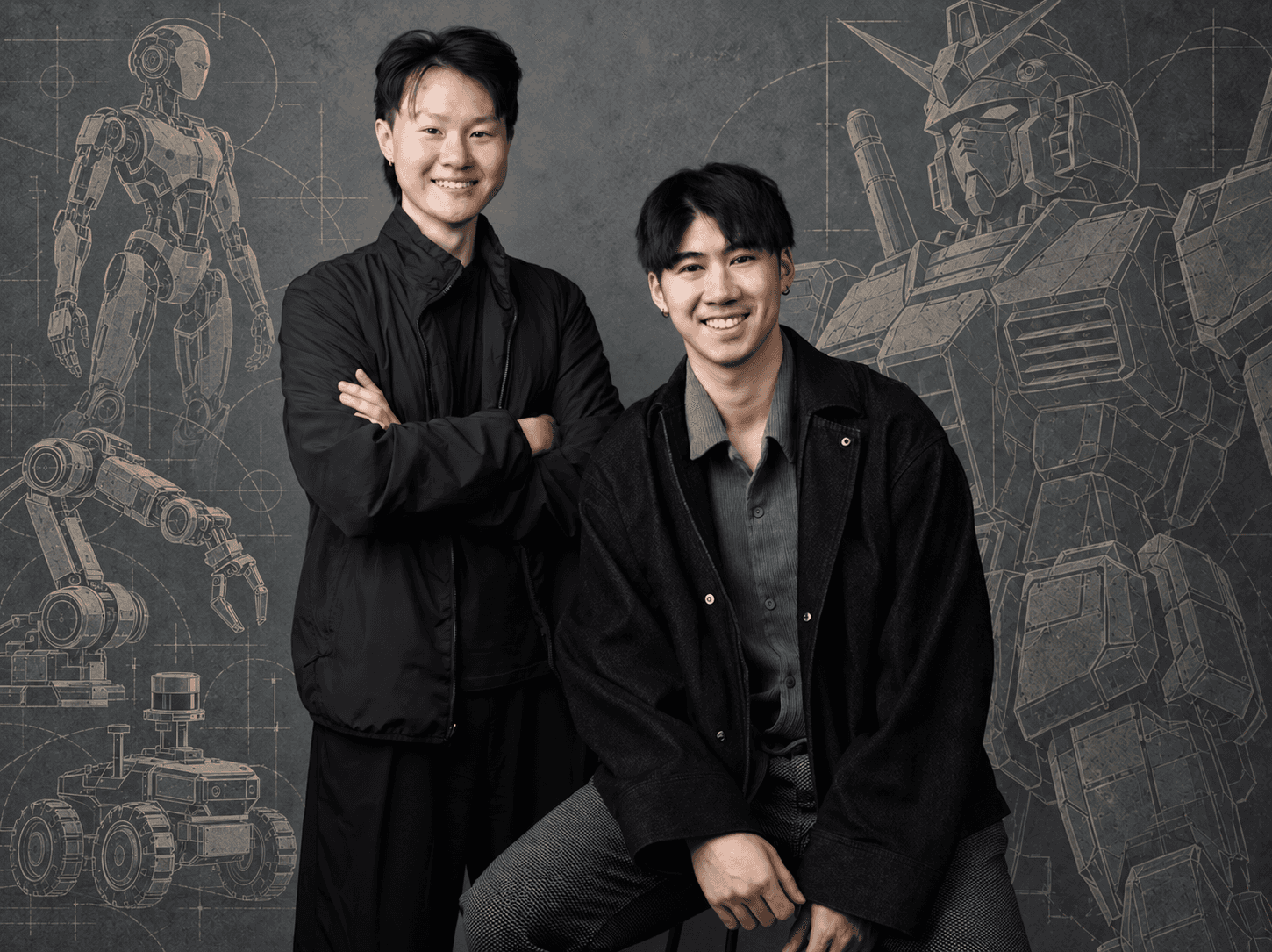
That is the mission Josh, Jason and the Mecka AI team have taken on: helping physical AI labs, robotics companies and end enterprises reach physical AGI and put it to use, by being their partner for training data, reinforcement learning, and deployment.
Delivering on this mission requires developing several muscles across disciplines, all at once and all at scale:
Research: Identify the next wave in robotics, and what it will require, before it arrives.
Hardware: Once you see the wave, design the bespoke hardware and wearables to capture the data, then manufacture them fast, economically, and at scale.
Operations: Run large-scale global operations to collect the data. Volume alone is not enough; the data has to span every job in every industry.
Software and digital AI: Turn the raw output, which is far more voluminous and complex than text (e.g., multi-camera video, body and hand tracking, sensor streams), into high-quality, training-ready data.
Deployment: Put robots in front of end customers, for reinforcement learning and production deployment.
Each of these muscles is difficult to develop on its own, but to win, you need not one but all of them, working together and at scale. Training data today, for example, has to be high volume AND high diversity AND high quality AND delivered fast AND at a good price. It is easy to do one of these at small volume, but it is incredibly difficult to do all of them at once and at scale, and that is what it takes to help partners reach physical AGI. In the same way, it is easy to start a food delivery business that delivers a single dish from one restaurant to one apartment block, but it is incredibly difficult to scale it into a DoorDash.
Mecka's founders and team understood this and moved fast to build all five muscles, finding differentiated edge in each and executing on it. The result is a strong, scalable and flexible platform that has enabled them to win over many of the leading AI labs and robotics companies and quickly become the emerging leader of this category.
What drew us to Mecka is not that they made the right bet on the right form of data (although they did). Robotics is still early relative to digital AI. The form factor of the data might change. The form factor of the robots might change. What matters is that they built the machine that scales with the industry and its partners; regardless of how the input changes over time, the output will be what their partners want. In the same way, DoorDash built a system where, whether the input is a pizza or a laptop, the customer gets the same delightful delivery experience. And when something in the physical world has high barriers to scale, it is an opportunity for the right team to build a large, durable business with moats.
That is why we are excited to back Josh, Jason and their fast-growing team. We see in them the special ingredients that will keep compounding over the long term to win this category and help their partners advance the mission of building and deploying robots at scale around the world.
And it is why others have joined us, from strategics like NVIDIA, Samsung, Microsoft and Qualcomm to the founders and operators who scaled some of the most defining companies of their generation and excel in many of the disciplines required in Mecka’s business: Tony Xu, founder and CEO of DoorDash; Frank Slootman, former CEO of ServiceNow and Snowflake; Milan Kovac, former head of Optimus at Tesla; Christopher Payne, former President & COO of Doordash; Jonathan Chadwick, former COO and CFO of VMware and board member at Databricks; and many more.
Related topics