All Systems Nominal
by Harry Spitzer
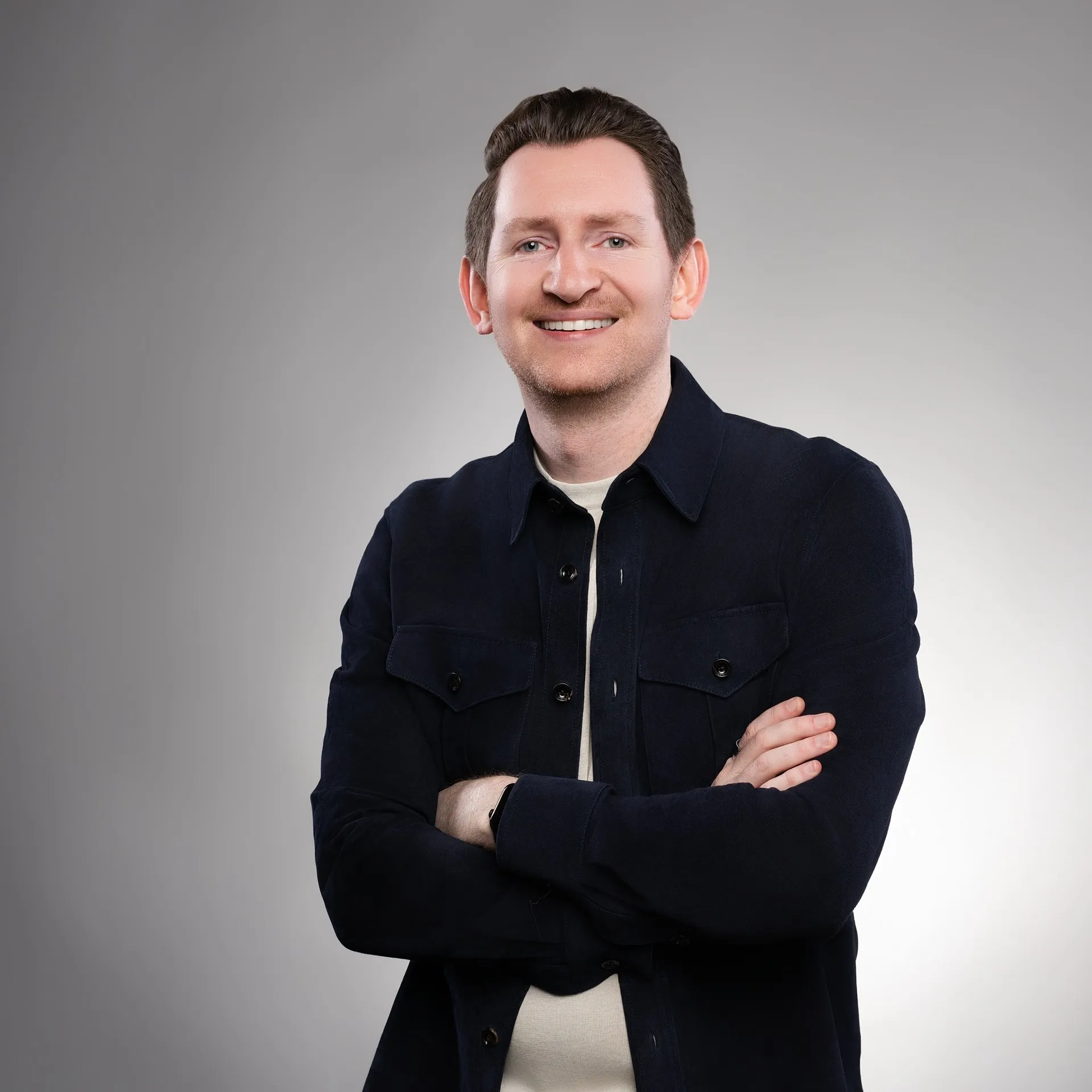
Although Cameron McCord wasn’t himself present at Edwards Air Force Base, what was about to transpire that May 2025 day in the Mojave Desert would still make it one he would never forget. AJ Piplica, CEO of Hermeus, was huddled with his team on the tarmac. No matter the outcome of the day’s flight test, he too was going to have a company-defining day. After years of labor, Piplica and his team would be testing their new hypersonic airplane engine, first taxiing down the runway, and assuming that went well, actual liftoff.
Even more nerve-wracking than the prospect of fundraising if the test failed was that of the dual taxi and liftoff test in a single day, a feat that would have been unthinkable even a few years ago. “Our data from the taxi needed to give us confidence that we’re not taking a dumb risk by attempting takeoff and landing. And that’s a huge amount of data to review, that historically took weeks, if not months, to parse between high-speed taxi and first flight,” Piplica says. The time they’d been allotted on the runway for both tests: two hours.
But his team had a new secret weapon. After years of employing a messy patchwork of data review tools that were not designed for hardware testing, Piplica had recently signed a contract with McCord’s Nominal, a company whose sole focus was testing hardware for real-world deployment. Hermeus had seen success with the platform for preliminary Hardware-In-the-Loop (HITL) tests in their Atlanta warehouse, but never in the field with the Air Force breathing down their necks, and certainly never with such high stakes and so little time.
As Hermeus’s plane started taxiing smoothly down the runway just under liftoff speed, data began to stream in through Nominal’s platform: the health of the brakes, actuators, avionics, electronics, control surfaces and more—terabytes of data giving a real-time window into the system’s health. As the plane slowed its taxi on the end of the tarmac, Piplica checked in with his engineers, hoping for good news. “Data review was done by the time we’d towed the airplane back to the other end of the runway,” he remembers, “everybody was thumbs up, so we concluded that, and we were at a safe level of risk to attempt a flight.” Minutes later, their Quarterhorse Mark One was in the air for the first time. When it landed, Piplica snapped a picture and texted it to McCord, Nominal’s CEO. Under the photo it read simply, “Hey, we got it back.”
***
McCord’s Mojave flight test assist was far from his first brush with the Armed Forces. He was raised on stories about his grandfather, a greatest generation archetype, who had been rushed through the Naval Academy in three years to join the war in the Pacific, witnessed the Japanese foreign minister sign the instruments of surrender, had seen nuclear weapons detonations, and flown the longest flight in history over the South Pole. McCord’s father was a federal attorney in the Department of Justice, and his mother was a special needs teacher. In their home, being of service was a mantra, and an action; most days, McCord and his siblings were explicitly urged by their parents to question how they were being a force for good in the world. For McCord, inspired by his grandfather (and uncle and cousins in the Navy), “Good,” meant joining the Armed Forces.
He paid his way through MIT by doing ROTC, which is where McCord “got bitten by the entrepreneurial bug,” he remembers, but more via osmosis than in practice. In addition to ROTC, he played varsity soccer, double majored in Nuclear Engineering and Physics and minored in Political Science, for practical reasons (“All of this engineering, how do I transition that into something that impacts the world?”). Between training and practice and problem sets and lectures and more lectures, McCord observed his classmates tinkering and creating. In particular, he remembers not infrequently passing by his fraternity brother, Jason Hoch at 4 a.m.. Hoch would still be awake, finishing a CS problem set or hacking away at a new idea as McCord, just up and in uniform on his way to ROTC training, urged Hoch to get some sleep. He admired his classmates’ will to build and create, knowing it was an exercise he couldn’t yet fully embrace, but one that he filed away to explore in some eventual, less time-constrained future.
Within days of graduation, McCord was onboard the USS Helena, SSN-725, the newest officer on the submarine. Any notion that respect would be granted by virtue of his positional authority or pedigree was quickly disabused. “You just start from scratch with first principles—how do you build trust, rapport, and respect with these people where everything you were is stripped away to zero?” says McCord. He did manage to win over his crew after they observed that what he lacked in revolutions around the sun, he made up for in thoughtful leadership, attention to detail, and commitment to understanding the nuances of the underwater behemoth they called their home. “It was my duty to understand that complexity,” says McCord. “Especially for those around me that were relying on me.” Before his service was finished, he’d have a chance to prove just how well he could navigate that complexity.
***
“We think it’s his appendix,” one of McCord’s crewmates informed him, as a fellow sailor nearby doubled over in pain. “It seems bad.” A few years had passed since McCord was the ‘new guy,’ during which he had experienced a midnight fire, a change in presidential administrations, and hundreds of nights underwater—but this was new. “Appendicitis on a deployed submarine on a mission is not a good thing. So the time was ticking,” says McCord. The ship’s only medically trained officer was not equipped to perform emergency surgery, and since the sub was mid-clandestine mission in North Atlantic waters, reaching a hospital before rupture meant navigating the vessel through Nordic fjords. McCord was tapped to ‘drive.’
Assuming the Conn (naval parlance for, “control of the ship”), he checked above water conditions: temperatures hovered around zero, and a blizzard made visibility nonexistent and conditions turbulent. But despite inclement conditions, this time, McCord wasn’t at a loss. Anxious, certainly, but his years of training, and his dedication to ensuring that he could be of service to his crew, paid off. “Because of my familiarity by then with all of the complexities of the submarine, I was able to gut into how to do this,” says McCord.
By then, McCord was accustomed to managing machinery designed during the Cold War, but that didn’t mean he relished the challenge. “We had to do a lot of very unnatural things with the submarine to get through this fjord and open that rear hatch.” When they neared the shore, a particularly burly soldier “essentially threw the sailor over to the Norwegian coast guard, who picked him up and rushed him to a hospital,” says McCord. Twelve hours later, a WhatsApp message from their new Nordic friend gave them the all clear health-wise.
For two more years, McCord lived many of his days underwater. In his free time, eager to stay apace with the outside world, McCord Coursera’d. “I would watch pre-downloaded Andrew Ng Stanford AI classes. This was in 2015, 2016, and I would be teaching myself and actually building out early models.” His autodidactic afternoons keeping up only reinforced how far his surroundings had fallen behind. “Learning AI, and then going into the control room where you have 1970s software, old hardware—it was a crazy cognitive dissonance.”
As he neared his five-year mark on the sub, it began dawning on McCord that the model of service and impact that had worked so well for his grandfather and uncle, both with decades-long careers in the military, might not be the right fit for him. “The military allowed them to make a huge impact on the world over 30 or so years,” says McCord. “But in today’s world, technology seemed like the way to make that impact. I wanted to use service-aligned technology, but I was not cool with the idea of having to wait 30 years.”
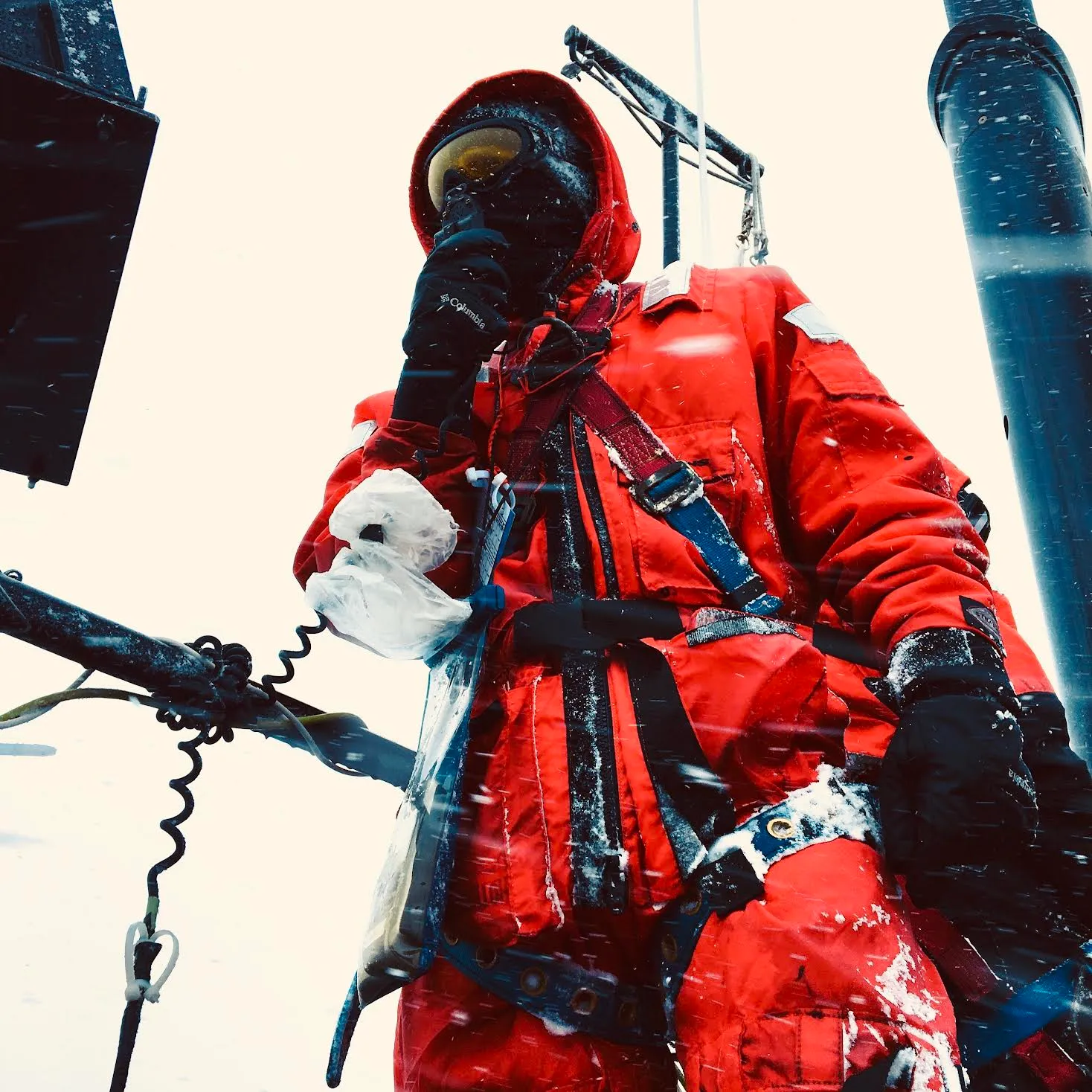
McCord on USS HELENA the day of the rescue mission
McCord had put in his time, “but then this incredible opportunity came by,” he says. He was selected to be one of the Navy’s liaisons to the House of Representatives. Between 2017 and 2019, McCord got a front-row seat to another deeply complex system. “You get to understand how a bill becomes a law,” says McCord. “But you also get to understand the personalities, the relationships, the executive branch, how budgets get passed, the back doors on The Hill—how it actually happens. I lived that viscerally for two years.”While his job description was to “sort of be a good steward of the Navy, tell war stories, build support,” he also made time for an extracurricular: “I was someone that members of Congress and staffers could go to to understand cutting-edge technology,” says McCord. “I think it’s hard for them to find, frankly, a low-threat way to do this. I developed this reputation of, ‘Hey, you can actually just go down to the Navy liaison shop and there’s this MIT guy Cameron who can just explain LLMs or cybersecurity or why technical stuff in this bill is relevant.” In 2020, capping off his career in public service, McCord’s technical acumen earned him an invite to help develop the House Armed Services Committee’s report on how technology was going to change the nature of warfare (and world). “It’s a little bit crazy to say now, but it was really some of the first governmental writing about AI,” says McCord, whose name is listed in the footnotes among four-star admirals and heads of agencies.
***
From his years on the sub, McCord was no stranger to waking up at the crack of dawn, but now he found himself doing so in a decidedly more terrestrial context. It was 2020, and he and his first private sector team, Anduril’s drone defense system engineers, were cruising through California’s Central Valley towards the desert to test their system. When they found a suitably remote, dusty patch, they unpacked their hardware—a tower covered with cameras and infrared sensors and miniature drones—and set up their Wi-Fi ‘pucks’ to run flight tests. These sessions would often last days, with team members camping in their trucks to avoid the sunrise commute. Each morning, they would begin tests anew, generating telemetry and sensor data and logs and video and images. “And it was so difficult with the tools we had to capture that data, intuitively organize it, and just answer the question: Did the test work?” As the Product Manager of the system, he led his team in long whiteboard computational sessions, hours in MATLAB, or dated academic graphing software. “None of this was production scale. And none of this was modern in any sense,” says McCord.
The process itself he enjoyed—the rolling up of sleeves, the camaraderie—all of that was pleasantly, arduously familiar. But day after dusty day, McCord remembers feeling renewed shock at the state of hardware testing. Here he was, working in a startup ecosystem where software innovation thrived on cycles of rapid iteration, but hardware testing was stalled in a different century. And it wasn’t lost on him that if Anduril, a company with “all of the venture dollars in the world and incredibly smart people had challenges getting this right, what is like at old organization X or massive company Y? In the back of my head this was just so clearly an area where better software could improve quality of life, and improve outcomes,” says McCord. “To be clear, I didn’t have the answers, but I just was obsessed with the problem.”
McCord first attempted to solve that problem with emerging data technologies: tools built for business intelligence, data marketing, SQL-based tools. In short, nothing “built for the types of telemetry and high-frequency sensor data that robotic hardware systems generate,” says McCord. “So they don’t work.” After fifteen months at Anduril, McCord couldn’t ignore his obsession any longer. Eager to get his bearings in a new complex system—the world of entrepreneurship and VC funding—McCord pitched his rough idea, improving hardware testing, and himself as a part-time entrepreneur-in-residence, to Josh Wolf at the VC firm, Lux Capital. In return for an opportunity to speak with dozens of hardware CTOs to pressure test his thesis, McCord offered to help Lux develop a dual-use, government-private sector business strategy.
For a year, co-enrolled at Harvard for his MBA, McCord effectively moonlit for Lux. “This was only possible because COVID was happening,” says McCord. “I would do Zoom classes and I would shut my Harvard Business School laptop and open my Lux laptop and basically alternate between the two.” HBS is where McCord first encountered Bryce Strauss, a kindred spirit with an aerospace background. McCord asked him to coffee, expecting a 30-minute conversation, and the pair ended up venting for nearly three hours. “It was this winding back-and-forth where we both obsessed about post-test analysis and data review, and how it’s essential to quickly get insight into performance data —whether you’re building an airplane, a car, a nuclear reactor, a drone, or a robot. Every person that builds hardware does this thing,” says McCord. “And we’re like, if we could just make that process 10 times better, we think we can build something valuable here.”
Strauss concluded they needed to turn this idea into a company together, and he wouldn’t take no for an answer. “I’m always doing a lot of things, and Bryce was this incredible unifying north star that was like, ‘Cameron, when we graduate, we’re doing this,’” says McCord. The duo decided to enlist a third, software co-founder. For McCord, there was really only one choice: “I was like, ‘Hey, I know this guy, Jason Hoch from MIT. He’s the smartest software engineer I’ve ever met. I think he’s the person to be the third leg of the stool.’” Strauss, the aerospace expert, came up with a name, a play on “All systems nominal,” common parlance for “all good” during rocket launches. 30 days before graduation, Lux Capital wrote Nominal their first check.
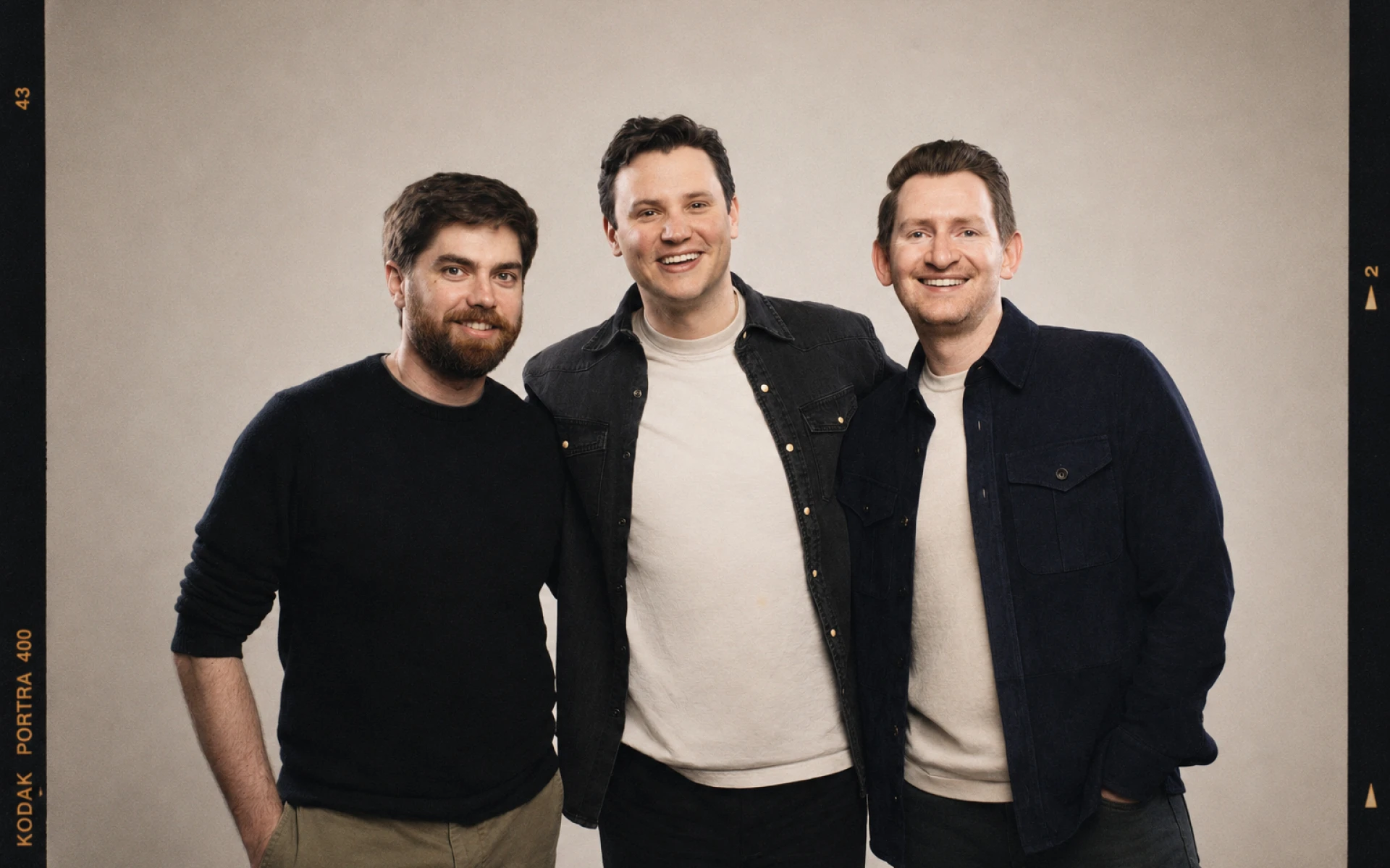
Nominal Cofounders Jason Hoch, Bryce Strauss, Cameron McCord
“There’s a bug,” Hoch said from the backseat of their rental car. Six months into their tenure as co-founders, the trio had flown to Los Angeles to demo an early prototype of Nominal’s hardware-in-the-loop (HITL) testing system for a major satellite company, who they hoped would be their first paying customer. “Something’s off with time synchronization of different data sources,” added Hoch. With 20 minutes to go before their pitch, he’d have to do some en route hacking.
When they arrived, the trio walked into a boardroom to find roughly a dozen company leaders waiting. Strauss demoed their product, demonstrating the speed with which it would allow engineers to manage and interpret satellite test data. The last minute hack held, and the time sync across different data sources—telemetry, engine health, computation speeds and more—worked. The trio was ecstatic, even when the satellite company only signed on for an unpaid pilot of their software. “They took a bet on us and they let us learn with them, frankly, which is more valuable than anything,” says McCord.
With some assurance their product worked and had utility for customers, McCord, Hoch, and Strauss decided to hire four more full-time engineers. Still the latter days of COVID in fall 2021, everyone worked remotely half of the time, and would converge in Austin every other week, rent an Airbnb, and build from wakeup to well into Wendy’s-fueled late nights. As the company grew, their Austin reunions became every third week, then once a month. “Finally, we reached a point when we had around 40 people where we declared, we’re not going to have regularly scheduled Austin weeks anymore.”
When he wasn’t sleep deprived in Austin, McCord lived in Washington, D.C., a home that allowed him to leverage his public sector connections while growing his private sector customer base. That’s where he first met AJ Piplica for coffee at Commonwealth Joe’s. Before witnessing the pain of hardware testing as CEO of Hermeus, Piplica had experienced it in the public sector working for NASA. “Within the Department of Defense, which is a very vast test infrastructure—all the data is siloed,” he says. “You were literally moving CSVs around by hand and opening things in Excel.” After witnessing Nominal’s utility during his first Mojave flight test, Piplica recognized the step change it could represent for all hardware development. “Any organization that’s taking data out of the real world, which is, like, every major company in the world could benefit from this,” says Piplica. “Yeah, robotics and AI are cool, but what’s actually cool is when you put them together. That nexus between the digital and the physical world is what really unlocks a huge amount of growth for humanity.”
***
Ten days before his wedding in January 2025, McCord got a call from Alfred Lin, partner at Sequoia. Nominal was eyeing another round of fundraising to support the expansion of their team and their product. Lin, who had met McCord during Nominal’s Series A process but ultimately deferred investing (“We wanted more evidence in support of his hypothesis before investing”), understood the tailwinds accelerating Nominal’s growth, and wasn’t about to let another round pass him by. “We are living through a hardware renaissance, and we were looking for a new platform that supports modern hardware engineers on this journey”, says Sequoia partner, Anas Biad.
McCord wanted to work with Sequoia, but he wanted to get married first even more. “I told Alfred, look, I’m getting married. But can we schedule time for me to come to SF right when I get back? I will walk you through everything in the business.” Lin agreed, and as promised, McCord flew straight from honeymooning in New Zealand to meet with Lin and Biad. The partners were impressed by McCord, but told him they needed to do their due diligence on the product before any decisions were made. “For days, Anas basically didn’t sleep. He called every single one of their customers,” says Lin. In the end, McCord was reassured by the seriousness with which Sequoia took the whole process. He found it grueling, but ultimately affirming. “There was something pretty powerful in having Sequoia come back and be like, we spoke to 20 customers. People really did love the product.” Ten days after their SF meeting, McCord had a term sheet from Sequoia in hand.
***
At the time of the final interview for this piece in late March 2026, the war with Iran had started just days earlier. News had just come out about the first casualties on both sides of the conflict, among them, three US soldiers. That reality was weighing on McCord for many reasons, but resonated particularly in the context of his chosen means of service and field of impact. “I’m obviously reading about those casualties and I’m thinking, could it have been prevented? Could Nominal’s technology in some way, shape, or form, have improved the hardware they were using and helped prevent their deaths? I have no idea,” says McCord.
He’s acutely aware that the state of the world has changed the way people think about hardware manufacturing, and he’s ambivalent about what it took for that shift to occur. “I don’t like that there’s a global land conflict in Ukraine and a war in Iran, but the reality is that it’s happening,” says McCord. “And I think it is pushing everyone to rethink and say, ‘Hey, building physical things is critical.”
McCord sees a silver lining to this macro shift in attention to hardware development. He’s hopeful it will enable innovations outside the realm of defense and war, and is actively expanding Nominal’s capabilities for teams building rockets and medical devices, tools for water desalination and electric vehicles. The shift is also apparent in Nominal’s rapid growth: as of May 2026, Nominal has achieved unicorn status, with 75 global customers across aerospace, defense, energy, and transportation, a rapidly growing team, and a constantly expanding product surface area with an eye towards enabling anyone to build hardware efficiently and intelligently. His team is integrating AI to further speed up data collection and analysis, and enable edge computing for systems operating beyond connectivity range—particularly essential in aeronautics and astronautics. McCord understands that service is an ongoing act, and the urgency his parents instilled in him to do something has only grown more acute with time. With each innovation, McCord returns to a mantra, one influenced by his upbringing surrounded by people inspiring him to be of service. “I call it the grandpa test. I basically ask myself all the time, ‘how will I feel when I’m old and sitting in my chair and the grandkids are around?’” says McCord. “I think I will look back very fondly if Nominal played a part in moving the physical ambitions of humanity forward. We talk about flying cars, but yes, there’s also defense, and advanced energy, and compute to power this next generation of AI. There’s advanced transportation, mobility, and water purification. There’s so much we want to do.”