The Wartime CEO: Vlad Tenev of Robinhood
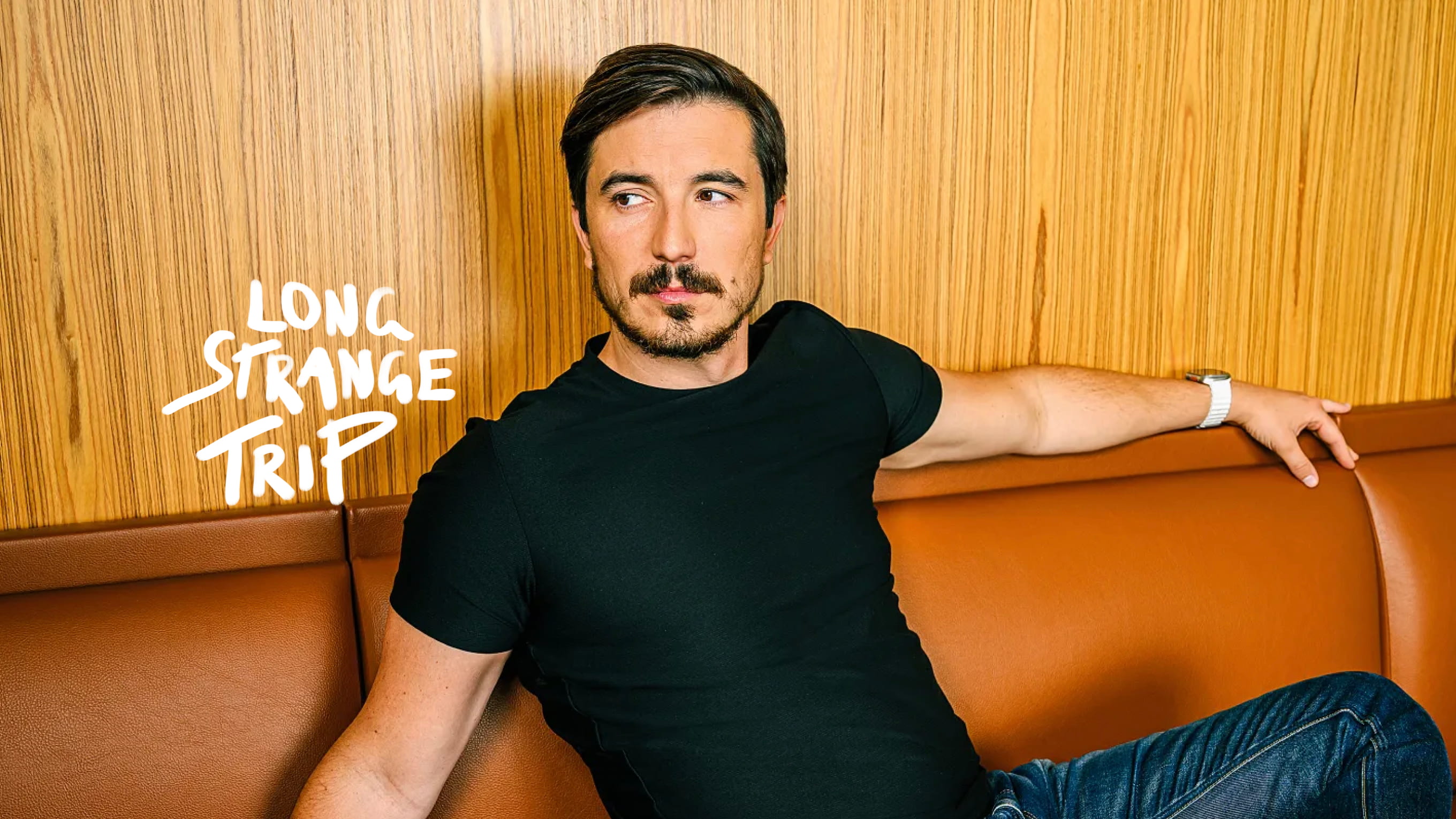
In this episode, Vlad Tenev pulls back the curtain on what it takes to lead through the kind of crises that would break most CEOs. From waking up at 5 AM to raise $3 billion in a few hours during the GameStop frenzy to navigating a 90% stock price drop, Vlad shares how he stays unflappable when everything is falling apart. We go deep on why “it’s always wartime” should be your default mindset, not the exception. Vlad breaks down how he maintains breakneck speed at scale, why he limits planning to days instead of weeks, and the mechanics of rebuilding trust after very public failures. Essential listening for any founder trying to build resilience, any operator at a scaling company, or anyone who wants to understand what separates good CEOs from legendary ones.
Watch Now
Transcript
Introduction
Vlad Tenev: At the GameStop stuff, for instance, the things that I had to do was figure out how we communicate to the public what was going on with this very complex situation, and then also raise billions of dollars overnight.
Brian Halligan: You’re woken up at 5:00 am by a telephone call saying you need to raise $3 billion by the end of the day or you’re toast. It’s a CEO’s worst nightmare. Vlad, the CEO of Robinhood, lived through this story, came out the other side stronger than ever. Vlad’s become legendary for this unflappable leadership through some of the most intense crises in startup history. Robinhood’s now a financial services juggernaut, but Vlad’s journey was a rollercoaster from the start. From the GameStop trading frenzy that made headlines worldwide and landed him testifying before Congress to a full-day outage during the COVID pandemic, to navigating the 2022 market crash that saw their stock price plummet by more than 90 percent, Vlad’s been in a 4D CEO rollercoaster.
While most CEOs panic under pressure, Vlad gets clarity. While others make reactive decisions, he builds methodically with a long-term roadmap. Today you’ll hear how to stay calm and make clear decisions when your company is in crisis mode, why wartime mentality should be your default and not the exception. The art of rebuilding trust after public failures, how to maintain speed and urgency as you scale to thousands of employees, and how to balance long-term vision with short-term agility. You’re a founder trying to build resilience into yourself or your company, or if you want to understand what separates good CEOs from legendary ones, keep listening.
Main Conversation
Vlad, good to see you again.
Vlad Tenev: Good to see you.
Brian Halligan: My partner at Sequoia, Andrew, said of you you’re the steadiest hand he’s ever met. What do you think he meant by that?
Vlad Tenev: Maybe compared to him. He can be a little bit jittery.
Brian Halligan: [laughs]
Vlad Tenev: Bit of a jittery guy, always nervous, when am I gonna get the next deal? But I love Andrew. I think what he probably meant was he’s seen Robinhood go through some downs, not just ups. And maybe a lot of people would have just called it in and given up, but we persevered and we worked through it, and now I believe we’re a much stronger company than we’ve ever been.
And I think that’s an important quality of a founder. It’s really just about how do you handle the situation when things are maybe unexpectedly getting worse and you have to respond and make changes, and also unexpectedly getting better, because that can also be an opportunity. You know, things change. Maybe your business gets some tailwinds, and you also have to be in a position to kind of capitalize on that without being distracted. I think maybe by “steadiness,” he refers to being able to capture things when things are going in our favor, and also not getting too discouraged and being able to pivot strategically when things are not.
Brian Halligan: I think so, too. When I look back at HubSpot, I used to describe HubSpot as a rollercoaster. You guys are more like a 4D rollercoaster where you’re upside down the whole time. Like, there’s been a lot of …
Vlad Tenev: Those are my favorite ones.
Brian Halligan: [laughs] And you’re in one. And, like, just to name a few. Like, every year for a while, like, you had one. The beginning of COVID, you guys had that big outage for a whole day. 2021, of course, all the GameStop stuff. They make a movie about you, you’re testifying in front of Congress. 2022, the economy shifted, you lost half your users, pivoted the whole darn company. 2023, the SVB stuff was pretty bad. Which was the worst, and can you talk a little bit about, like, what it was like, going through it, and how kind of your body reacted and how you engaged with the company and the market when that was going on? Because most people freak out.
Vlad Tenev: Yeah, a lot of people, I think, when they talk about our crises, they probably would say GameStop, because that was the most public. And I think each one tends to drown out the previous one. So before GameStop, there was a lot of chatter about the outage right at the beginning of the COVID pandemic that you mentioned.
Those things, I think, in hindsight, weren’t that bad to navigate through because it was an acute moment. The worst of it is right at the beginning, and then once you kind of, like, make it through and you’re in the clear, it’s cleanup. You’ve probably been through some of those yourself.
I’d say 2022, the market turning, was more extreme for me, because that was like a little bit of a slow burn. First, there was signaling by the Fed that interest rates were going to go up because inflation was looking bad. So it started out as this general signaling, but the market got it. Right? And I would say as one of, like, the recently IPO growth companies of that era, end of 2021, we kind of got hit first, because when people start taking these macro things into effect and, you know, adjusting their portfolios, they take risky assets off first. And so you have crypto for those that are interested in that. And recently IPO growth stocks are in that bucket.
And, you know, we were among the most recent IPOs. We just, like, snuck in kind of right at the end of that window in hindsight without realizing it. I think that if we had waited a couple more months, we probably wouldn’t have been able to go public until maybe 2024. And so yeah, it was just a slow burn. Stock price consistently and steadily decreasing from a high of, I think, in the $80s, right after our IPO to below $8, I think maybe even below $6 would have been our all time low. We were trading below cash.
And that was tough because you have employees wondering what’s going on. The street just, like, turned very bearish. But behind that was a business whose fundamentals worked very, very well in a zero interest rate environment where there was a lot of trading, but in a high interest rate environment we weren’t really built to succeed in that environment. And I took a little bit of solace in the fact that I felt like we had a lot of levers. We ultimately used that as an opportunity to diversify the business. And a lot of other companies didn’t have those levers. So if you were a mortgage company, you basically had to batten down the hatches and figure out how to make it through ’til rates went back down again, which still hasn’t really happened. So I think those companies had a tough situation. But it was painful throughout, and that was a little bit more of like, okay, each day is a little bit worse than the last, and there’s a lot of challenges. And that goes on for 400 to 500 days at least before you start seeing some of the fruits of the labor that ended up turning things around.
Brian Halligan: And, like, inside of your body, you get a call probably at 2:00 in the morning about the GameStop thing. Going on in your head, do you get clarity? Do you get confusion? Do you bring your team together? Like, do you remember when you got the call?
Vlad Tenev: Yes. You go through a few things, right? Are the best people awake? Are they in need of anything? And of course if the answer to the first one is no, you have to make sure you get them in the room, get them right away. And you have to know who the best people are, which I think requires being intimately familiar with the details. And if they need anything, we drop everything and make sure they have those things. And then are there things that I need to do that perhaps only I can do in that situation? At the GameStop stuff, the things that I had to do was figure out how we communicate to the public what was going on with this very complex situation, and then also raise billions of dollars overnight.
Brian Halligan: Yeah. [laughs]
Vlad Tenev: And then that was actually kind of nice because those were pretty clear goals.
Brian Halligan: My guess is when those things are happening and you gathered the team at five in the morning on a Zoom, I would imagine people are pretty panicked, and that my guess is what Andrew meant is in the face of big adversity and some weird shit going down that you didn’t expect, you get clarity, and you’re very clear with your team and you calm them down. I think that’s the opposite reaction of 99 percent of humanity.
Vlad Tenev: Yeah.
Brian Halligan: And I think that’s part of your special sauce.
Vlad Tenev: Yeah, I think that’s right. And I wouldn’t oversell it too much. I mean, I don’t know if I always make the right decisions in that moment, but probably the variance between a decision under fire and one where we’re just, like, in a normal meeting is a little bit lower.
Brian Halligan: I think of HubSpot, we had times of relative peace and some times of war. I kind of enjoyed the wartime. Do you think about it like that, or is it always wartime, or how do you think about that?
Vlad Tenev: I think it’s always wartime.
Brian Halligan: Yeah.
Vlad Tenev: Ideally actually, the wartime is internally created, because then it’s under your control. You’re not subject to, like, some other people’s wars that are being imposed on you. I think if you get into oh, this is peace time, you know, things are going smoothly. In hindsight, I’ve had moments where, you know, I’m sitting around the table with my co-founder or my executive team and it’s like, “Oh, there’s really not too many problems going on right now.” And at the time it felt good, but in hindsight I was like, we probably weren’t executing aggressively enough.
Brian Halligan: I see. And in all of these cases, you sort of tested your customers’ trust in you. And you kind of lost a ton of trust in all those cases, but built it back. Can you just talk about how you thought about building that back? How do you build that trust? What metrics are you looking at? Like, you’re obsessed with NPS or—it’s easy to lose trust, it’s very hard to build it back. And you’ve done it multiple times here. What advice do you have for others on this ship?
Vlad Tenev: Yeah, we do look at NPS. And, you know, NPS definitely took a dive during the COVID times, during GameStop in particular. You see it in these public incidents, whether it’s the outages or sort of like the GameStop incident.
And it’s true that it can go from very high to low practically overnight, but the reverse is rare, right? I mean, maybe if you have a really big announcement that people get excited about, you’ll gain five points of NPS. But the gains are always slower and more gradual than the losses.
I didn’t really believe it when I heard it that, you know, trust is easily lost and hard gained. But I think it’s true in the data. So we kind of like look for magic bullets. Like, can we say these magic words or issue a blog post and make everything okay, or come up with some gesture. But really what it is is just improving your products over time. And if you keep doing good things, invariably there will be some mistakes along the way for sure, but minimize those mistakes. Make sure you don’t do the same mistake over and over again. I think that’s a big killer. Then you see that gradual increase, and over many, many years that compounds and you could be back at all-time highs.
I think you’ve seen it happening with some of the great companies. Nike had their challenges back in the early ‘90s. Apple certainly had their challenges. Domino’s Pizza—or was it Papa John’s? One of the two, I think, was a famous trust case study. The pepperoni wasn’t that good, but they really just fixed it, so it can happen.
Brian Halligan: So in all those cases, trust took a hit, NPS went from way down. In your head, you’re like, “In 12 months I can get it back up to where it is.” In six months, or—like, how do you think about that? So we had a few of these. We had an outage at HubSpot in 2019 on the last day of the quarter, and we lost a lot of customers, our NPS tubed. And it was about a year and a half before the NPS caught back up to where it was.
Vlad Tenev: Yeah, I think it can take years. Of course we have goals. We try to minimize it, but there’s really no better way that I’ve found than just improving the other things other than, you know, maybe the acute brand episode that you had. I don’t think you can kind of counteract that. But if you just keep making your business better, then the effects of, you know, any individual crisis over time will fade. But then the effects of improving your product are persistent, right? Those just will continue.
Brian Halligan: Okay. I spend a lot of time, Vlad, coaching about 20 different scale-up CEOs. A lot of the companies as they’re scaling get frustrated that the intensity in the company goes down, the tempo goes down. My sense of you guys is the tempo has stayed high and you’re very quick. Like, Kalshi got approved as a trading platform, within a couple weeks you were live with that system. What advice do you have for founders that are scaling that don’t want to turn into a big, slow company?
Vlad Tenev: I think the main thing is you actually have to care about it. You know, a lot of these people are sitting around the table saying, “Gosh, you know, we’re moving a lot slower now.” They complain about it, but do they really care enough to fix it? I think that you have to talk about it, not just to the public or to your friends, but also to your team. You have to measure it. So if you say we want to move faster, we want to have high velocity, we want to ship more, how do you do that, and how do you know that you’ve got that? So I think measurement is important. You have to communicate that it’s important. You have to measure it. You have to have strategies for how to improve it, right? And that involves looking at areas where maybe it’s not doing so well, and comparing it with the areas where you are moving a little bit faster, and seeing what are those folks doing over there that you should incorporate.
Brian Halligan: There was always a struggle in my mind at HubSpot. Like, we’d roll something out, and some things take a while and sort of a tension in my mind between kind of urgency and patience on stuff. Do you feel that tension in your head? Like, you got to be patient. This is going to take time. It’s a big initiative. It’s going to take a while. Versus always pressing and creating urgency on everything.
Vlad Tenev: I think that there’s sort of a difference between the tactical and the strategic urgency. I think that if you have a lot of uncertainty in what the right thing to do is, it makes sense to gather more information. When the right thing to do is clear and everyone is aligned, at that point, you have to move through with maximal urgency.
And I think a lot of times what can be a trap is sort of like urgency-quality trade off, right? If we move fast, we’ll end up having to cut corners. My experience is you have to demand both. It’s like you have to move fast and I don’t want any corners cut.
If you look at a really good engineer, the best engineers move the fastest and also have high-quality code with no bugs. It’s not really a trade off. It’s sort of like you can find it within one person, and then if you get a team of those people together and you sort of, like, create the right incentive structures for you to have an incredibly high density of great people like that, then I think you don’t have that trade off. You know, for some people, moving faster does lead to more mistakes, but not for everyone. And I think you have to find—for the best people it’s not true.
Brian Halligan: I used to call that “the tyranny of or.” Everyone would bring me “or,” and I’d be like, “How about an and? Just once. Let’s do an and.” [laughs]
Vlad Tenev: Yeah. And they also say if you need something done, give it to your busiest person, right? So there’s some counterintuitive advice there where, you know, great people just find a way.
Brian Halligan: I kind of agree. Okay, one of the hacks that some of these founders are doing is they’re requiring people to be in the office seven days a week.
Vlad Tenev: Yeah.
Brian Halligan: What’s your take on that? What I noticed, like, my generation, we sort of followed the Steve Jobs playbook. It feels like this generation follows the Elon playbook. And both playbooks are great. Elon’s playbook is a little bit of, like, you’re working 180 hours a week. You’re in the office, you’re sleeping in the office.
Vlad Tenev: Yeah.
Brian Halligan: And a hack is a minimum of the 9-9-6, nine to nine, six days a week. But a lot of them are, like, seven days a week. And it doesn’t scale, but I’m seeing them push it beyond 100, 200 employees. It’s interesting. Any take on that?
Vlad Tenev: That’s an extreme approach. It works for some people. The trade off is you’re not going to get people that are sticking around the company very long, right? Because it’s hard to work seven days a week for 10 years if, you know, you want to have a girlfriend or children that you see. So there’s an extreme, for sure. The right balance is, like, some number greater than 40, but perhaps less than 180. And I’m not exactly sure what the number is. I mean, obviously, we like to push it and work hard here and hold ourselves to a high standard.
Brian Halligan: Okay. Related to this, I met with the founder yesterday of a red hot AI company. And he showed me his phone, and he just showed me all the Slack messages, all the email messages, all the texts, all the WhatsApp, and he’s like, “Since we closed our round and we’re getting a little bit famous here, I’m completely overcome and inundated with just inbound stuff. And I spend all my day trying to get through that.” And he said, “Brian, how did you manage the chaos?”
Vlad Tenev: Yeah.
Brian Halligan: I thought that was a good question. I’m curious how you’d answer that.
Vlad Tenev: There’s really a finite amount of time and a finite number of those messages that probably deserve and benefit from the founder’s attention and decision-making ability. It’s tricky because you want to see them. You know, sometimes automatic delegation doesn’t work because someone’s not going to know how to handle it. But you don’t want to spend all of your time processing them. So I think the best way is to just have people around you and, you know, if you don’t add them one at a time deliberately, that you can offload the majority of that work to.
Brian Halligan: You seem to be very good at aligning your vectors over there. How do you decide which bets to play? How do you keep your vectors aligned? How often do you rejigger the priorities? What’s your planning look like? Like, how’s all that work as you’re scaling it up?
Vlad Tenev: I think it depends a lot on what’s going on, like market conditions, what we see doing really well in the business, what we see that we create that we could devote more resources to. I think a lot of times you’re kind of like beholden to a structure, right? Annual planning or quarterly planning, MBRs, QBRs, monthly business review, quarterly business review. There’s these structures that make it so that you either have to plan when you don’t really need to plan, or you’re just waiting too long to respond to things because maybe you know something happened, but you just had your quarterly business review where you fixed the plan and it’s locked in and it’s this heavyweight thing.
My push has been to just minimize the time spent planning. Minimize it to, like, a couple of days. That’s the goal, rather than having it be this multi-week waterfall thing. Can we do all of our planning in, you know, less than a week, and then just keep pushing on that until you reach a point where it’s obviously too little, and then we can readjust.
Brian Halligan: How’s this cycle work with your fiscal year? Like, how do you actually do it?
Vlad Tenev: Usually what we do is we have kind of our long-term vision that goes out 10 years.
Brian Halligan: How often do you change that?
Vlad Tenev: I think from time to time. When something major changes, like, we have a very clear epiphany or some data from some projects that are at some level of maturation, there can be a pretty big change. So we had a pretty big one a couple years ago, and it then led to an overhaul of our vision and how we communicated.
And I think the core of it was the same throughout the entire life of the company. We knew where we wanted to get to, which is just everyone using Robinhood for all of their financial needs. The path became more clear, we got better at articulating it. And it culminated in an investor event that we held in New York in December of last year, where we actually invited our public company analysts, retail analysts as well, this community of folks on YouTube that analyzes companies. We had a nice event where we sort of like brought out our general managers. We talked a lot about the arcs of our business, we answered some questions. I think that was very, very good.
Roughly every year we try to look at the document, revisit it, we get our best people around the company. I try to get together people at all levels who are just, you know, the highest performers. That’s about 150. And we like to—and, you know, there’s individual contributors, there’s folks that are more junior, and we like to bring them together from time to time, too, usually once or twice a year.
Brian Halligan: How painful is it coming up with that list, and how pissed are people when they’re like a director or VP and don’t get invited to that and the individual contributor that works for them does?
Vlad Tenev: You just have to make it as meritocratic as possible. And generally, I find people know who the best people are. If you ask someone, they’re like, “Oh yeah, of course. That person should be in that gathering. I feel better as, like, a shareholder and an employee, knowing that they’re in the room.”
Brian Halligan: I often found that the individual contributors were the best in those settings.
Vlad Tenev: Yeah. What you don’t want is just like a meeting of the top executives at the top of the org chart.
Brian Halligan: Right. I agree with that. Okay, so once a year you do it. So your fiscal year starts, is it the month before, is it three months before? And how rigid is it when you set it for the next year?
Vlad Tenev: I think there’s a couple of things, right? So we have the financial plan, and the financial plan I think we try to hold ourselves to. We have the vision, which is a slightly higher-level document where we kind of talk through the big trends that we have in our business and macro, how we’re going to respond to them. And then we do a diff, essentially. We say, “Okay, this is what we thought the world was going to be and our business was going to be last year. This is where we were wrong.” And that happens about once a year. I’d say that’s the first part.
Then it feeds into sort of like a resource allocation financial plan that we try to hold ourselves to, because it ends up being what analysts actually start modeling. And, you know, you’re public, and you have to have some level of revenue and cost predictability. For a while that’s been headcount, resource allocation, what bets are we funding?
Now we’ve been moving towards thinking of AI as another component of that. So how much compute are we investing in? Can we actually track each department or business, and compare them to businesses that, you know, we consider best in class that are using AI as another point of leverage? That’s starting to, like, get into the planning a little bit more. We try to limit the blast radius. So I mean, with the financial plan and the projections, the finance team’s very tightly involved, and everyone’s aware of it. But it’s not like thousands of people are collaborating to create this artifact. I think the folks that own it, it’s a relatively limited group of people.
Brian Halligan: We sort of did the same. And then beneath the financial plan, it was like, what are the bets this year? What are the things we want to, like—when we do the diff, there’s a big diff year on year. We’d have three or four. I have a comment and a question about that. One of my comments is it seemed as we got bigger, we could do less of those big things, but we did them very, very, very well. Like, they actually worked. Like, ironically, as the bigger you get, the less you get done. But man, is there a lot of leverage in it. Do you feel that?
Vlad Tenev: One thing that we’ve experimented with relatively recently, and I think has worked well, is having these product events. So this started for us early 2024. We’re like, “We should have a product event. We have some cool products that are very close to being announced. Can we do it a little bit better than just blog post and, you know, I post a few tweets on social media.”
Brian Halligan: Right.
Vlad Tenev: And that became our first gold event, which we called “The New Gold Standard.” It was in New York. It had kind of an art deco theme. We had a lot of fun with it.
Brian Halligan: I thought it was unique.
Vlad Tenev: Yeah. We announced the gold credit card, the Robinhood Gold card, and then that product has done very, very well. So I think it helps when the first event has, like, something very nice you can announce.
And then we followed that up with Hood Summit, our active trader event last year where we announced Robinhood Legend. And that was very good, too. That was a little bit of a different vibe, because we invited our best customers, our active traders to the event. And so it wasn’t just a keynote where we announced products, but there was also community building, and they could talk to each other. And we had lunches where I would talk to the customers. And that was very good. That was in Miami.
So we did two last year, and this year we’ve already done three, with Hood Summit V2 coming in a couple of months. So we had our crypto event just now. We had a small active trader livestream which we’re experimenting with as well. Can we do an event where we announce products but it’s not, like, huge production value where we’re flying people around? I think that worked very well. And we brought our gold event to San Francisco. I think it’s been fun, and it also lets you put a specific deadline where external things happen. I think that can be very, very effective where you’re trying to move fast, when you know there’s a deadline and you have to have things ready, and they have to be ready in a state where you show them to customers. That can be a powerful forcing function.
Brian Halligan: Okay. So underneath the planning process is, “Hey, we have these deadlines we need to meet. Let’s make sure we nail these projects.” I got that.
Vlad Tenev: Yeah. A lot of the planning when I meet with the individual GMs and teams, the event provides some structure around that, right? It’s sort of like, what are you going to have ready for a Hood Summit 2025? And increasingly it’s like, let’s look ahead to how Hood Summit 2026 can be even better than that, because we have to put the pieces together for that. We haven’t started thinking about Hood Summit 2030 yet, but I think that’s probably the sign of an organization that’s functioning very well. You should also have a view as to what the long-term event is that you’re culminating towards, and it could be multiple years of work.
Brian Halligan: And talk about slack. Like, the world of AI is changing extremely fast. Even within your annual planning cycle things change, are important, I’m sure, to you. And even that Kalshi thing around the election, like, that got approval and within a couple weeks you did it. Like, you must build in some slack so you can spin up teams to do things outside of the normal big launch events and things like that. How do you do that? How much slack do you build in? Is it purposeful? How’s that work?
Vlad Tenev: Yeah, we try never to have slack. I think for that particular case, when new information comes in you have to reprioritize in real time. So for the election contracts that you’re referring to, we were somewhat lucky in a sense that for the past year-plus we had been working on a derivatives business. You know, we have a licensed futures commissions merchant. We brought in a GM to run that who’s been very good. And the plan was Hood Summit 2024, we would launch Futures outrights. So the ability to trade futures 24-25 in the Robinhood app.
And we knew that event contracts were a thing that we’re excited about. We thought that prediction markets were very interesting. It was a new asset class, and we saw a lot of potential for that to be the way that futures and derivatives enter the mainstream. Because futures have been very—it’s sort of like a niche technical asset class. Only the most hardcore active traders have traditionally been trading futures. With event contracts, prediction markets, we saw that changing, and we sort of knew that politics was going to be very important, but we didn’t see a path. So when that Kalshi decision came, we got together and we were like it looks like this is going to happen for the election.
Brian Halligan: Yeah.
Vlad Tenev: And we were fortunate that we had a lot of the regulatory infrastructure in place to do it, because we’d been working on the futures outrights offering. And we had to flip some things around. So rather than outrights first and then prediction markets, we decided to do prediction markets first to customers, punt outrights a little bit. It wasn’t, like, free and we had slack in the system and people were just sitting around that could pick up the work, because if you have that you got to make sure those people are contributing. I mean, not just for your business sake but for their own sake. There’s too many critical things to have people just not working on them.
Brian Halligan: So 10-year mission, annual strategy sessions with 150 people contributing. Big product launches kind of structure your year. No slack in the system, but if something big comes up, you kind of rejigger. I think I’ve got the Vlad playbook.
Vlad Tenev: Well, I think there’s also another thing with the 10-year vision. We’ve tried to have 10-year visions before, and I don’t know if you’ve come across this issue with them, but I think the first approximation to a 10-year vision is you just put all the things that you want to do that are in your mind right now onto a timeline. And what ends up happening is all the exciting initiatives are, like, years one and two. And then as you get further along and you get to, like, year 10, you look at this thing and you’re like, “Wow, all of my low-priority initiatives are just there.”
So I think in a naïve approximation, it doesn’t actually reflect the reality. And the reality is the 10-year vision, you should work backwards from. That should be really, really big. And you’re not going to work on those things nine years from now. You actually have to work on them now, and they have to build upon one another so that you actually get to where you think you should be in 10 years.
I like to think of them as arcs. And you have an arc that you’re in right now, and then you have a medium term one and then we have our 10-year arc, which is going to feel slow at first, but eventually it’s just going to take over the entire business. And you have to invest in that 10-year arc right now, knowing that the ultimate return is going to be big, but actually delayed. I think you have to communicate that to the company and to the street in our case, and make sure that they understand the investments. I think Meta actually did a good job of this.
Brian Halligan: Yep.
Vlad Tenev: You know, you’ve probably seen that slide from, you know, 2018 or so where they talk about the long-term bets, and it’s AI reasoners and, you know, virtual reality. And I think they had a plan around giving internet to everyone. And then you look back and that was almost 10 years ago. A lot of it is actually things that they’ve been building towards.
Brian Halligan: Yeah. Vlad, you strike me as being a very good CEO—your market cap would indicate. So who’s on your Mount Rushmore of CEOs? Who do you look up to emulate? Who taught you how to do all this shit?
Vlad Tenev: When I was getting started, I thought that that was sort of the model. If you’re successful, you have to have someone take you under their wing when you’re young and you don’t know what you’re doing, and they can kind of show you the ropes. Because I think you hear these stories of Steve Jobs calling up Bill Hewlett and asking for some kind of, like, part for a radio. And then Bill Hewlett invites him over to his house, gives him the part, and he ends up interning at Hewlett Packard.
When I was, you know, a seed stage entrepreneur trying to make it work, not a lot of these big people wanted to waste their time helping me out, right? Like, they were just too busy. When it became clear that we were an important company and we had done very, very well, that those opportunities came up. I’ve had, you know, mentors. I’ve had board members, my co-founder, obviously. But yeah, I wouldn’t say there’s been one CEO in particular that has, like, helped me tremendously.
Brian Halligan: You were co-CEOs the first several years of the company. And my sense is investors in Silicon Valley kind of cringe at that and it’s discouraged. Should there be more co-CEOs? Is it a better idea than investors think? You pulled it off for a while. Like, what are the—you know, what’s the magic? How did you get it to work?
Vlad Tenev: I keep seeing it more and more, actually. I think there’s pros and cons, obviously. I think at early stage it can actually be rather helpful, because the downside is when you have important decisions that you have to make and two people have to align on those decisions, that can slow you down, it can cause politics and issues when you have some executives. But the upside is that when there’s not too many of those things, you got two people that are pushing hard, extremely aggressively as partners. And I think that can be very, very good.
So, you know, in the early stages, we didn’t have a ton of decision overhead. It was very clear what we had to do. We had to ship the app, and one of us was doing design, the other one was doing engineering. And, you know, it was like the app had to work and it had to be successful and robust, and we had to figure out how to grow it. I think it worked very successfully for us.
Brian Halligan: You think it’s an emerging idea and it’s a better idea than investors think. Like, there should be more of them, particularly in the early stage. But maybe it doesn’t scale? I’m putting words in your mouth, but is that what you would say?
Vlad Tenev: I wouldn’t even say necessarily that I’d make a generalization. I mean, some businesses probably do it for a while. You look at—I mentioned Hewlett Packard. I think those guys were in and out of the business for multiple decades, right?
Brian Halligan: Yeah.
Vlad Tenev: They were like—I don’t know if they were technically co-CEOs.
Brian Halligan: You’re pretty rare, actually.
Vlad Tenev: Well, you got Netflix, right? Netflix, Oracle. I don’t know how many CEOs Oracle has. Salesforce, at one point, had at least two CEOs.
Brian Halligan: Okay. A lot of the listeners, Vlad, are young CEOs on their way up, trying to scale their companies. Advice for them. What are the big mistakes that people make? What are the best practices? What’s the non-obvious stuff that they should be doing?
Vlad Tenev: I think a lot of the advice that you read and that people parrot around is wrong or misguided. I mean, I wouldn’t spend a lot of time just, like, looking on Twitter and gauging how to run your company. I think the most important thing is to figure out what you actually need to deliver, and work backwards from that.
So the more real feedback you can get from customers and from actual things that relate to the functioning of your company, then you have a loop that you can iterate on, right? I need this thing to happen for my business. I need this thing to happen internally. And you can, like, focus on that. Then you can improve it. Yeah, generally, like, reasoning by analogy and saying, “Oh, you know, this person tried this thing here, let me incorporate it,” I think is a less effective way to run the company.
Brian Halligan: What does the Twittersphere get wrong about being a CEO and scaling a business?
Vlad Tenev: I try to not even read it, to be honest. Like, I think when I come across it, I actually say, “You know, I’m not interested in this.”
Brian Halligan: Okay, I think that was really good advice. Like, get locked into the customer, follow the customer, get feedback. As it scales, like you’ve scaled to 15,000 employees, how do you stay on the coal face? How do you keep getting the feedback from the frontline employee, from the customer, and not lose it in translation through the layers?
Vlad Tenev: Yeah, I think that can be very challenging. I encourage all of the executives, everyone in my broader leadership team to do two things. One, do customer support calls. We’ve built some structure around this. Like, you can visit a lot of our locations and actually sit down—we do customer support out of lots of places around the country—Florida, Texas, Denver, to name a few. At least once a year I do a trip where I’m actually just sitting around and doing tickets, right? By phone, by chat. I’m licensed now, so I can do more tickets. I’m a licensed broker.
But yeah, it’s something that I care a lot about, and there’s always high signal, because even though I’m only doing it for one or two days, you get to see patterns, you learn things, you hear the same thing over and over again. It’s not usually the things that get surfaced through the multiple layers, but they’re important.
And then I also like to encourage people to sit down, talk to customers and do UX research. So we do that both for existing products that are out and trying to see how customers are actually using the products, and also products early in the life cycle where we go to customers’ homes, or we go on location and we actually try to get in their heads a little bit deeper. And we try to open that up as much as possible so that if you want to participate and observe research, we have mechanisms to do that here in person.
Brian Halligan: Got it. Okay, Vlad, I think we’re out of time. You’re a mensch. You’re a fantastic CEO. I really admire what you’ve done, and hopefully the listeners will get a lot out of this. Thank you very much.
Vlad Tenev: Likewise. Yeah, thank you so much.
Takeaways
Brian Halligan: Okay. I hope you enjoyed the interview with Vlad. I enjoyed speaking with him, and learned a lot. I’ve actually interviewed recently Matt Mullenweg from WordPress, Parker Conrad from Rippling, and kind of blended with my own experiences. They’ve all been through major crises. The best CEOs use the term, “I never waste a crisis.” I use that over and over and over again in HubSpot, and yeah, I should have had that tattooed on my arm. In the fog of war, things are foggy. I’ll admit, I was a little foggy during crises. Vlad’s very clear.
The other thing he said that I love is it’s always wartime. Even when there wasn’t a war he created a war. And HubSpot wasn’t quite like that. It was sort of like we would have crises and then peacetime. And I was very much a wartime person, and didn’t really enjoy the peacetime as much. But I like the way he keeps the pace on and the pressure on inside of Robinhood.
He said something I found was true in HubSpot. If you need something done, give it to your busiest person. Which is the exact opposite what you would think, but really worked for me in crises and big moments in HubSpot.
Those are some of my takeaways. I think he’s very sharp. He’s built an amazing company. I’m super impressed. I hope you liked it. If you want to keep the conversation going, ping me on X at @BHalligan. Take care.